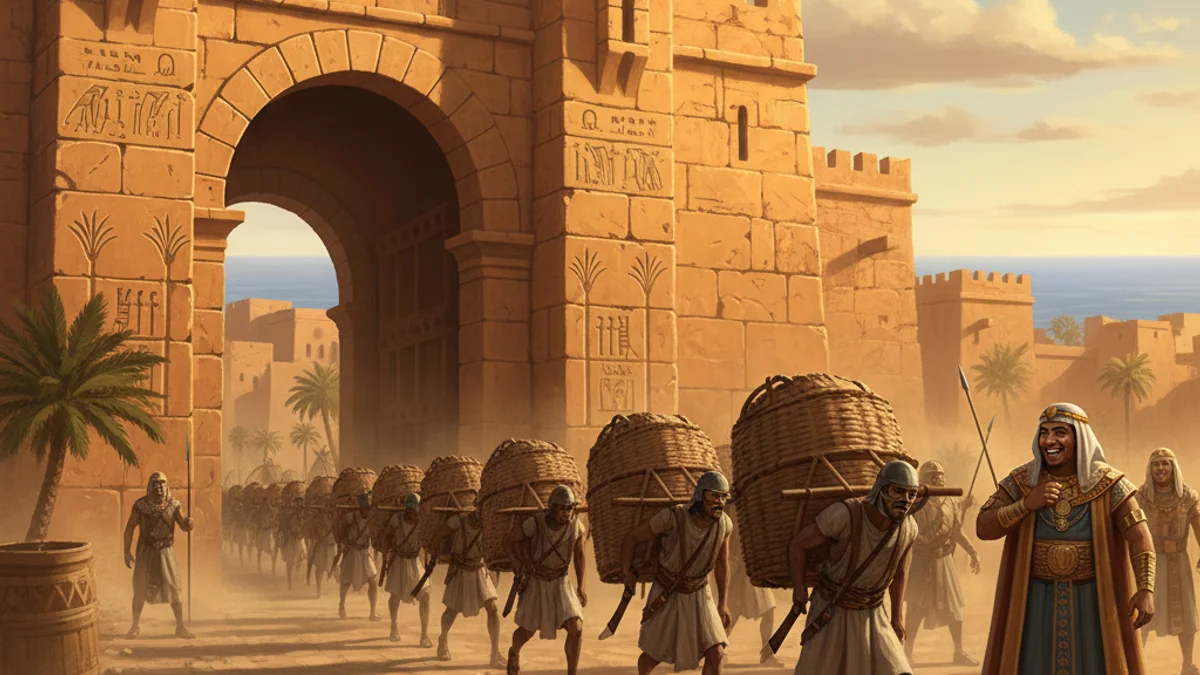
During the reign of Pharaoh Thutmose III, the city of Joppa rose in rebellion. Rather than risking a bloody and protracted siege, the Pharaoh's brilliant General Thutii devised a plan rooted in deception. Thutii traveled to the city under the guise of a deserter, claiming he had stolen the Pharaoh's great staff and fled for his life. He invited the Prince of Joppa to a feast, plying him with wine and false promises. Thutii convinced the Prince to allow five hundred large baskets into the city, claiming they were filled with the Pharaoh's plundered treasures intended as a tribute. The Prince, blinded by greed, opened the gates to the caravan. Once inside the safety of the city walls, two hundred Egyptian soldiers burst from the baskets, capturing the guards and the Prince himself. Through this masterstroke of strategy, Joppa was reclaimed without a single day of combat.
Deception and strategy are often more effective tools for victory than sheer force or numbers.
Advertisement
Questions about this story
What is the moral of The Taking of Joppa?
The story teaches that wit and strategy are often superior to brute strength in overcoming obstacles. It highlights the power of cleverness over conflict.
Who was General Thutii?
General Thutii was a real historical official serving under Thutmose III, though this specific tale is a work of ancient Egyptian historical fiction.
Is this story similar to the Trojan Horse?
Yes, it is one of the earliest known examples of the 'soldiers in a container' trope, predating the famous Greek story of the Trojan Horse.
Which Pharaoh is featured in this legend?
The story is set during the reign of Thutmose III of the 18th Dynasty, a Pharaoh renowned for his military conquests and expansion of the empire.
Advertisement