Story Summary
Experience the legend of The Samurai and the Tea Ceremony, where a humble tea master defeats a fierce ronin through the power of Zen focus and Bushido spirit.
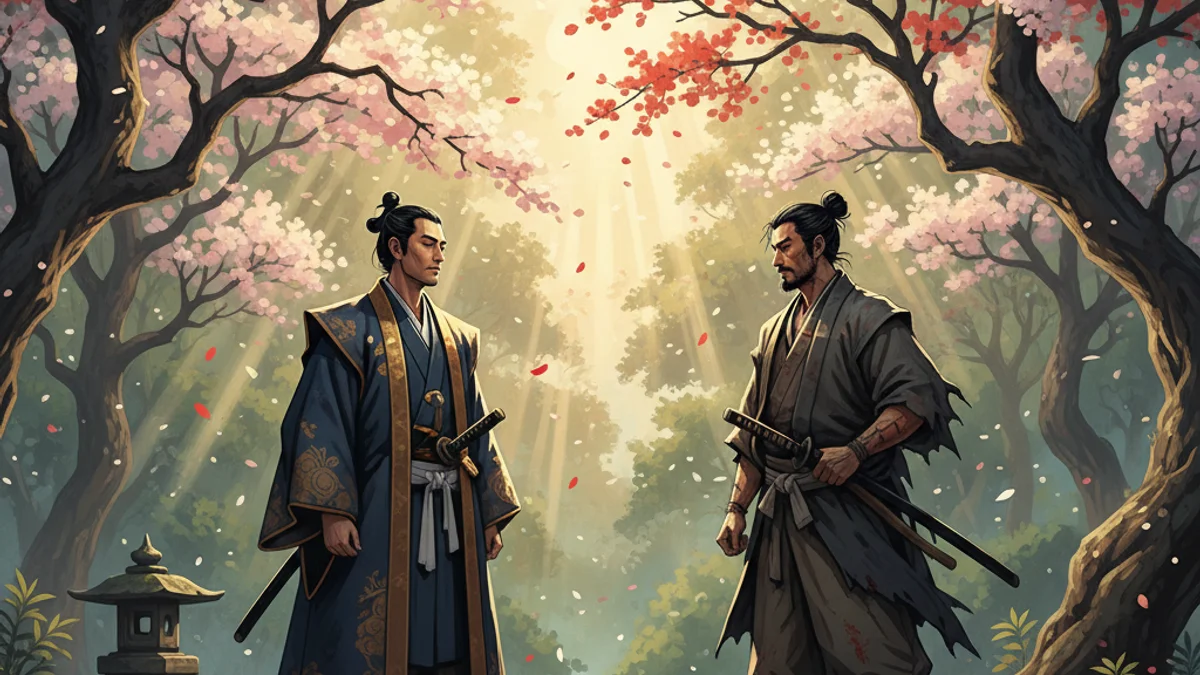
Lord Yamanouchi of Tosa once traveled to Edo accompanied by his personal tea master. To ensure the master's safety among the city's rowdy warriors, the lord dressed him in the formal robes of a samurai, complete with two swords. However, a fierce ronin soon challenged the 'samurai' to a duel to test his skill. Terrified, the tea master sought advice from a nearby sword master. After watching the man perform a tea ceremony, the sword master saw that his student possessed a spirit of perfect focus and grace. 'You need no sword lessons,' the master told him. 'Face your opponent as you perform the tea ceremony: with a clear mind, total presence, and no fear of death.' When the time for the duel came, the tea master drew his sword with such serene, unwavering composure that the ronin was stunned. Sensing he was facing a master who had already conquered his own ego and fear, the ronin bowed in apology and walked away without striking a single blow.
The Moral
Inner calm and absolute focus are more powerful than any weapon, as true mastery lies in the spirit rather than the sword.
“Face your death with the same grace and focus as you perform the tea ceremony.”
Fun Fact
Many famous historical samurai, including the great unifier Oda Nobunaga, were obsessed with the tea ceremony as a way to find stillness amidst the chaos of war.
Frequently Asked Questions
What is the moral of The Samurai and the Tea Ceremony?
The moral is that inner peace and total presence of mind can disarm even the most aggressive opponent. It teaches that mastery of oneself is the highest form of discipline and combat.
Was the tea master a real samurai warrior?
No, he was a servant dressed in samurai attire for protection during travel. His victory came from his expertise in the tea ceremony, not swordplay.
What does this story teach about Bushido?
It illustrates that the 'Way of the Warrior' is as much about mental discipline and Zen philosophy as it is about physical combat and weaponry.
What is 'Zanshin' in the context of this story?
Zanshin refers to the state of relaxed awareness and total focus shown by the tea master, which made the ronin believe he was facing a deadly expert.
Why did the ronin back down from the duel?
The ronin recognized the tea master's absolute lack of fear and perfect posture, concluding that only a legendary master could be so calm in the face of death.
Is the tea ceremony related to Japanese martial arts?
Yes, both emphasize discipline, focus, and the 'way' (Do). Historically, many samurai practiced tea ceremonies to cultivate the mental stillness needed for battle.
Discussion (0)
Share your thoughts on this story
No comments yet. Be the first to share your thoughts!