
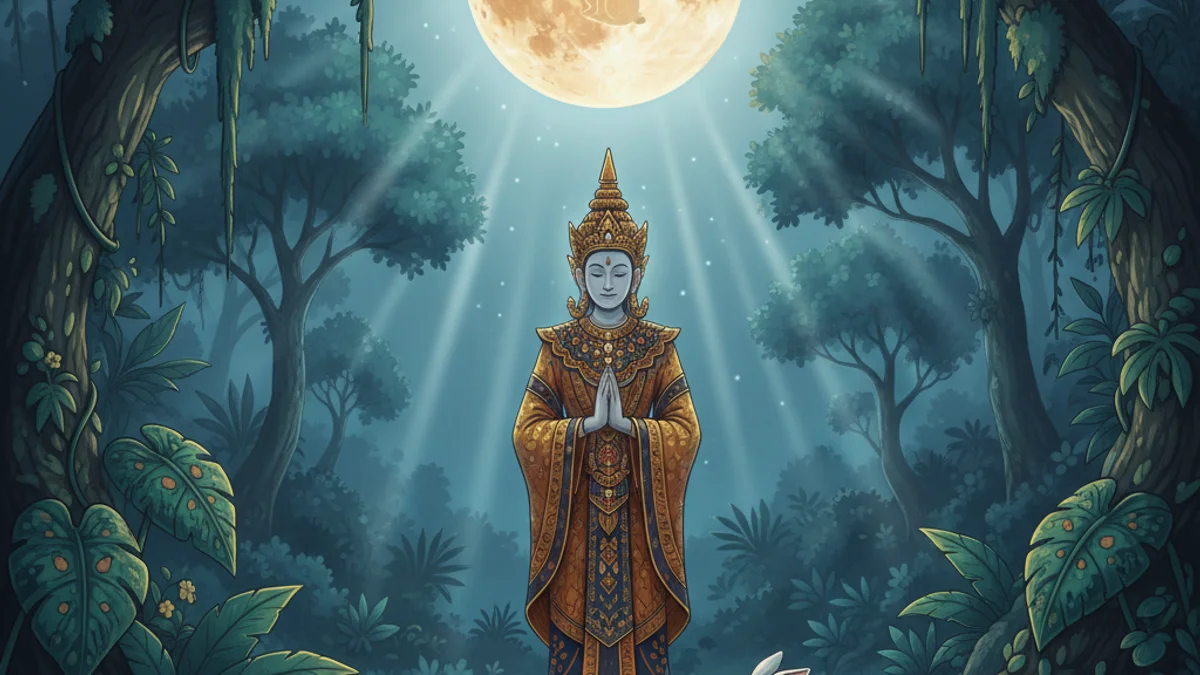
On a sacred full moon day, a rabbit, a monkey, a jackal, and an otter vowed to practice charity. Sakka, the King of the Gods, descended to Earth disguised as a starving beggar to test their sincerity. The otter gathered fish, the jackal found a lizard, and the monkey picked fruit. However, the rabbit, who ate only grass, had nothing to offer a human guest. He told the beggar to prepare a fire, and without a moment's hesitation, the rabbit jumped into the flames to offer his own body as a meal. Touched by this supreme act of self-sacrifice, Sakka kept the fire cool so the rabbit was not harmed. To honor such virtue, Sakka drew the likeness of the rabbit upon the face of the moon, where it remains to this day as a symbol of selfless devotion.
True generosity is not measured by the size of the gift, but by the depth of the sacrifice made for the sake of others.
Questions about this story
What is the moral of The Rabbit in the Moon?
The moral is that true virtue lies in selfless sacrifice and giving of oneself completely. It teaches that the purity of one's intention and the willingness to help others are the highest forms of merit.
Why did Sakka put the rabbit on the moon?
Sakka placed the rabbit's image on the moon so that people throughout the ages would see it and be inspired by the rabbit's noble act. It serves as an eternal memorial to the creature's supreme kindness and self-sacrifice.
Is The Rabbit in the Moon a Buddhist story?
Yes, it is a well-known Jataka tale, which are stories of the Buddha's previous lives. In this story, the rabbit represents the Bodhisattva practicing the perfection of generosity (Dana Parami).
What other animals are in the story?
In addition to the rabbit, the story features a monkey, a jackal, and an otter. While the other animals provided food they had found, the rabbit was the only one willing to offer his own life.
Advertisement

Good night.