
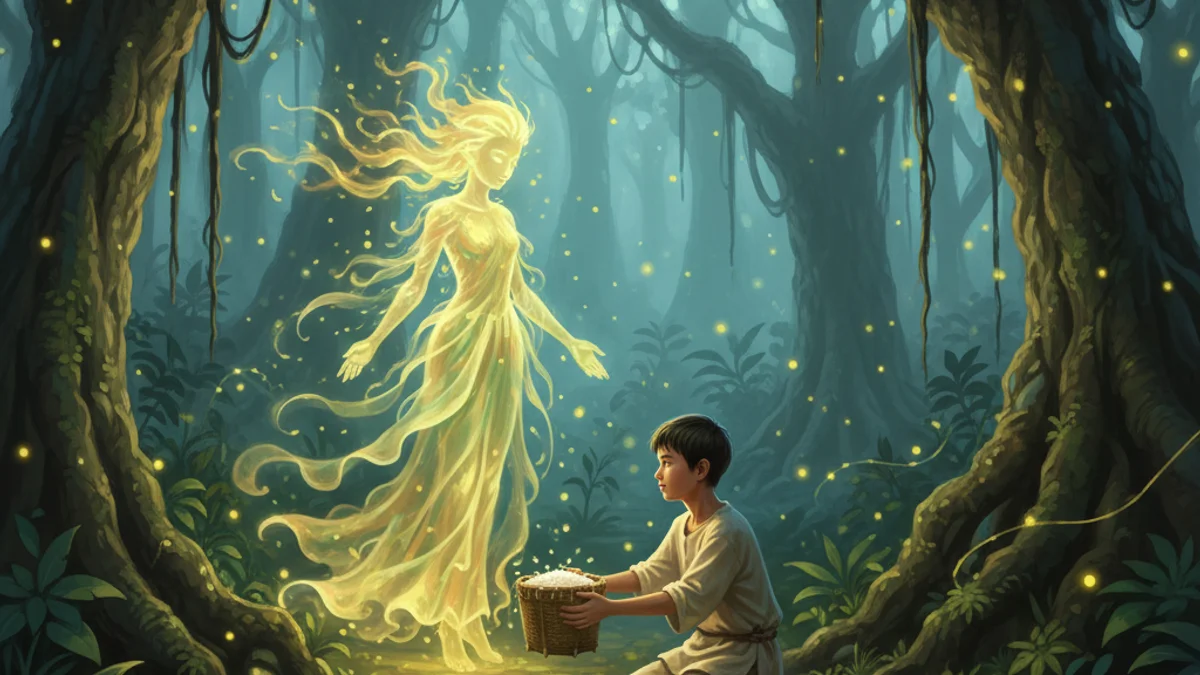
In a village bordering the deep Laotian jungle lived a poor orphan who survived by gathering fallen branches. One evening, he encountered a powerful forest spirit, a Phi, guarding a grove of golden fruit. Though terrified, the boy noticed the spirit looked weary and offered him his only handful of sticky rice. Moved by the child's selfless kindness, the spirit did not devour him. Instead, it bestowed upon him a magical silver drum that would provide food and silver whenever it was struck gently. When a greedy village headman heard of the fortune and tried to seize the drum by force, the instrument unleashed a swarm of bees to protect the boy. The orphan lived in prosperity, always sharing his wealth with those in need, while the spirit watched over him from the shadows of the teak trees.
True wealth is found in kindness and generosity, while greed only leads to misfortune.
Advertisement
Questions about this story
What is the moral of The Orphan and the Spirit?
The moral is that kindness and selflessness are rewarded by the universe. It teaches that even those with the least can find greatness through a pure heart.
What kind of spirit appears in this story?
The spirit is a 'Phi,' a common entity in Laotian folklore that represents the spirits of nature, ancestors, or guardians. They can be either benevolent or malevolent depending on how they are treated.
Why is the orphan a common character in Lao folklore?
The orphan represents the ultimate underdog who lacks social status and protection. His success serves as an inspiration, showing that merit and character are more important than birthright.
What does the silver drum symbolize?
The drum symbolizes divine or supernatural intervention that restores balance to the lives of the righteous. It also represents the rhythmic connection between the human and spirit worlds.
Advertisement

