Story Summary
Experience the touching Inuit legend of The Polar Bear's Son, where an old woman's love for a cub challenges the jealousy of a village in the icy Arctic.
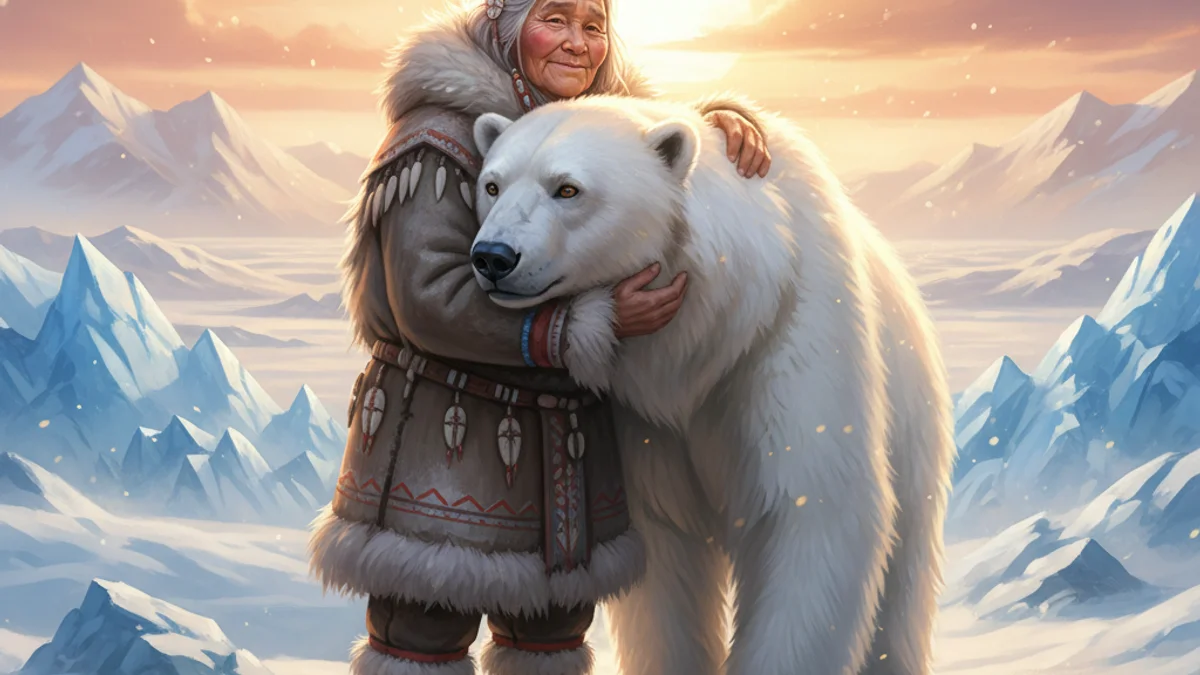
In a small village on the edge of the frozen sea, a lonely old woman lived in a tiny igloo. One day, while walking along the ice, she found a tiny, orphaned polar bear cub. She brought him home, named him Kunikdjuaq, and raised him as her own son. As the cub grew into a massive bear, he showed a gentle spirit and incredible hunting skills. He brought seals and fish to the old woman and shared his catch with the entire village. However, the men of the village grew envious of the bear's strength and prowess. They plotted to kill him, fearing his power. Heartbroken, the old woman warned Kunikdjuaq, urging him to flee to the distant ice fields to save his life. He left with a heavy heart, but the bond was never broken. For the rest of her life, the old woman would walk out onto the ice and call his name. Kunikdjuaq would always return to his mother, bringing her food and pressing his cold nose against her cheek in a loving embrace.
The Moral
True family is built on love and kindness rather than blood, and such bonds can withstand even the greatest of distances.
“Go, my son, for their hearts have turned cold, but remember that mine will always be warm for you.”
Fun Fact
In Inuit culture, the polar bear is known as 'Nanuk' and is considered the most powerful spirit animal, often depicted as a teacher of hunting skills.
Frequently Asked Questions
What is the moral of The Polar Bear's Son?
The story teaches that kindness and compassion create a family bond that transcends species. It also warns against the destructive nature of jealousy and prejudice within a community.
Is The Polar Bear's Son a true story?
It is a traditional Inuit folk tale passed down through oral history. While it is a myth, it reflects the deep spiritual connection and mutual respect the Inuit people have for the polar bear.
What is the bear's name in the legend?
In many versions of the story, the polar bear is named Kunikdjuaq. The name emphasizes his identity as a beloved member of the woman's family rather than just a wild animal.
Why did the villagers want to kill the bear?
The village hunters were jealous of Kunikdjuaq's superior hunting abilities. Their fear of his power and their own insecurity led them to view him as a threat instead of a provider.
What cultural values does this Inuit story represent?
The story highlights the values of sharing resources, respecting nature, and the belief that animals possess souls and emotions similar to humans. It emphasizes harmony between man and nature.
How does the story of the Polar Bear's Son end?
The story ends with Kunikdjuaq living safely in the wild but remaining loyal to his human mother. He continues to visit her and provide for her until she passes away, maintaining their bond forever.
Discussion (0)
Share your thoughts on this story
No comments yet. Be the first to share your thoughts!