
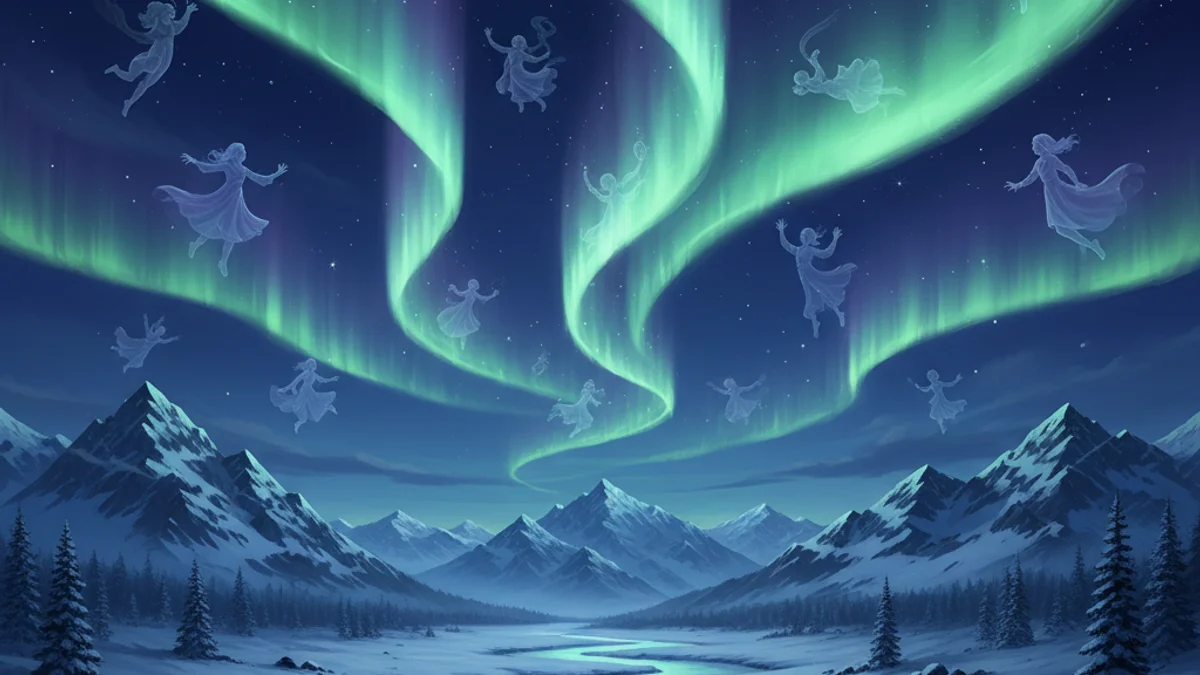
In the frozen silence of the Arctic night, the Inuit tell of a bridge between the living and the spirit world. They believe that the shimmering ribbons of color—the Aqsalijaat—are the spirits of ancestors engaged in a joyous game of soccer in the heavens. High above the tundra, these spirits kick a walrus skull across the dark sky, their swift movements creating the flickering curtains of green, violet, and crimson. For some, the lights are torches held by the dead to guide those still on earth, while others whisper that if you whistle at the lights, they will sweep down and whisk you away. It is a celestial celebration, a reminder that those who have passed are not truly gone, but are dancing forever in the eternal glow of the great beyond.
The natural world is a vibrant connection to our ancestors, reminding us that life continues in a joyful form even after death.
Advertisement
Questions about this story
What is the moral of The Origin of the Northern Lights?
Inuit lore suggests death is not an end but a transition to a joyful existence. It teaches us to view the wonders of nature as a spiritual connection to those we have lost.
What do the Inuit call the Northern Lights?
Many Inuit groups refer to them as 'Aqsalijaat,' which translates to 'the ones who play with a ball.' This name refers to the legend of spirits playing soccer in the sky.
Is it true that whistling at the Northern Lights is dangerous?
According to Arctic folklore, whistling is believed to summon the lights closer. Some legends warn that if you whistle, the spirits may descend and snatch you away to the heavens.
What is used as a ball in the celestial soccer game?
In many traditional stories, the spirits are said to use a walrus skull as a ball. Conversely, some regions tell of walrus spirits playing with a human skull.
Advertisement
