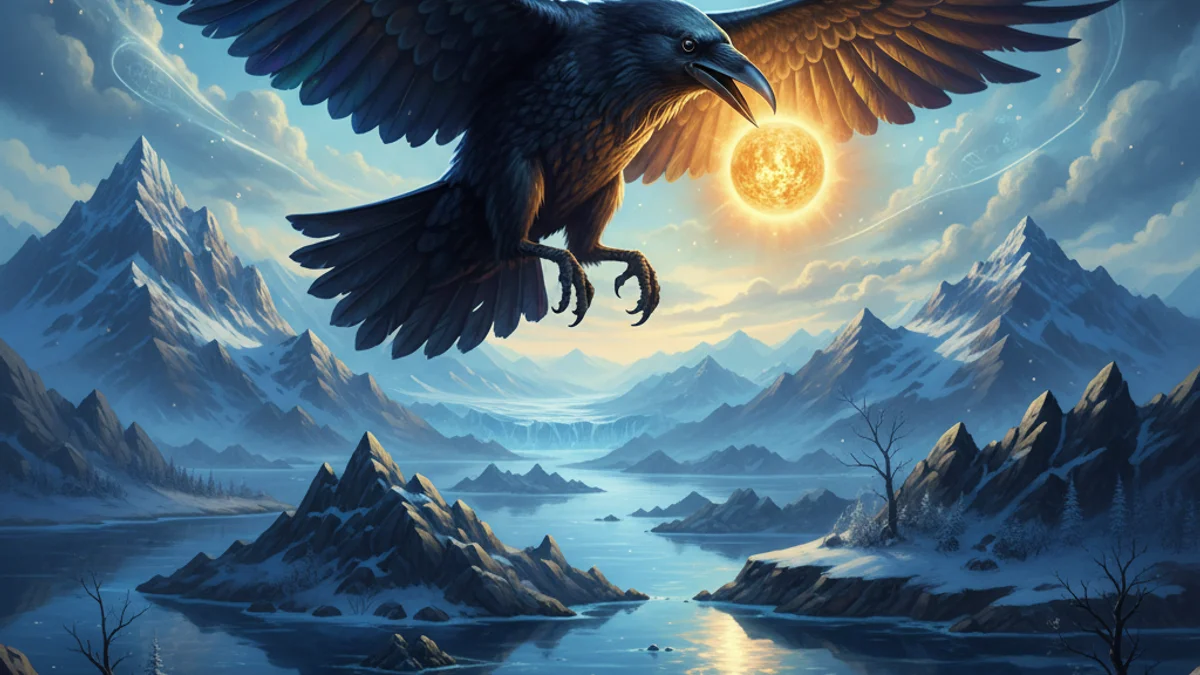
In the beginning, there was only darkness and the endless, icy sea. Raven, a trickster with feathers that shimmered like the northern lights, grew tired of the gloom and the cold. Using his powerful beak, he began to pull the land up from the depths of the ocean, shaping the rugged mountains and vast tundras of the North. Finding the world still too dark, Raven used his wits to transform into a speck of dust, entering the home of a selfish old chief who kept the world's light hidden in carved boxes. Raven stole the stars, the moon, and finally the sun, tossing them into the heavens to banish the night. On a lonely beach, he found a giant pea pod; when it burst open, the first humans stepped out. To ensure they could survive, Raven carved animals from driftwood and stone, breathing life into them so that the people would have food, clothing, and companions in the new world he had forged.
True creation requires both cleverness and a willingness to share the world's gifts for the benefit of all living things.
Questions about this story
What is the moral of How Raven Made the World?
The moral is that the world is built through ingenuity and the sharing of essential resources. It teaches that light and life are meant for everyone, not to be hoarded by a single individual.
Who is Raven in Inuit and Arctic mythology?
Raven is a complex figure known as both a creator and a trickster. He is credited with shaping the land and bringing light to humanity, often through cleverness and deception.
How did Raven bring light to the world?
Raven learned that a powerful chief was hoarding the sun, moon, and stars in boxes. He transformed himself into a child to infiltrate the chief's home and released the celestial bodies into the sky.
How were humans created in this Inuit legend?
In many versions of the story, the first humans emerged from a giant pea pod found on the shore. Raven assisted their birth and then created animals to sustain them.
Advertisement


Good night.
