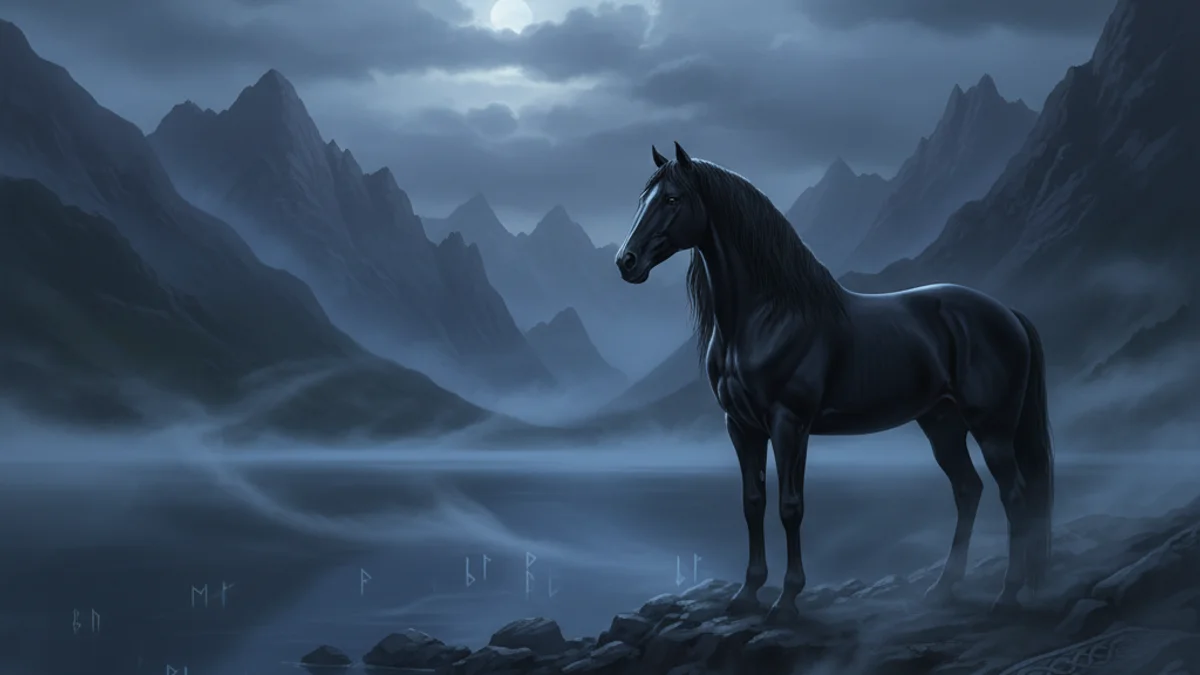
Long before the world spoke of monsters in the deep, the shores of Loch Ness were haunted by the Kelpie. This shape-shifting spirit often appeared as a magnificent jet-black stallion, its coat shimmering like wet silk. It would stand patiently by the water’s edge, saddled and bridled, appearing as a lost mount to any weary traveler. One evening, a tired wanderer spotted the beast and, lured by its beauty and the promise of a swift journey home, climbed onto its back. The moment his skin touched the horse, he found himself magically stuck to its hide. With a thunderous neigh and a spray of foam, the Kelpie plunged into the icy depths of the loch. The traveler’s cries were swallowed by the waves, a grim reminder that not everything beautiful is benevolent. Legends say the Kelpie still waits, shifting its form to catch the unwary near the misty banks of Scotland's Great Glen.
Be wary of things that seem too good to be true, for beauty often masks a dangerous trap.
Questions about this story
What is the moral of The Loch Ness Kelpie?
The moral is to practice caution and skepticism toward things that appear suddenly and perfectly suited to our needs. It warns that outward beauty can often be a facade for hidden, lethal intentions.
What is a kelpie in Scottish mythology?
A kelpie is a shape-shifting water spirit inhabiting the lochs and pools of Scotland. While it usually appears as a horse, it can also take human form to lure people toward the water.
Is the Loch Ness Kelpie the same as Nessie?
While both haunt the same waters, they are different; the Kelpie is a supernatural spirit from ancient folklore, whereas Nessie is modernly described as a biological cryptid or dinosaur-like creature.
How can someone escape a kelpie?
In many legends, the only way to escape a kelpie once stuck to it is to cut off the part of your body that is attached. Some stories also suggest that capturing the kelpie's bridle gives the human total control over the beast.
Advertisement
Good night.
