
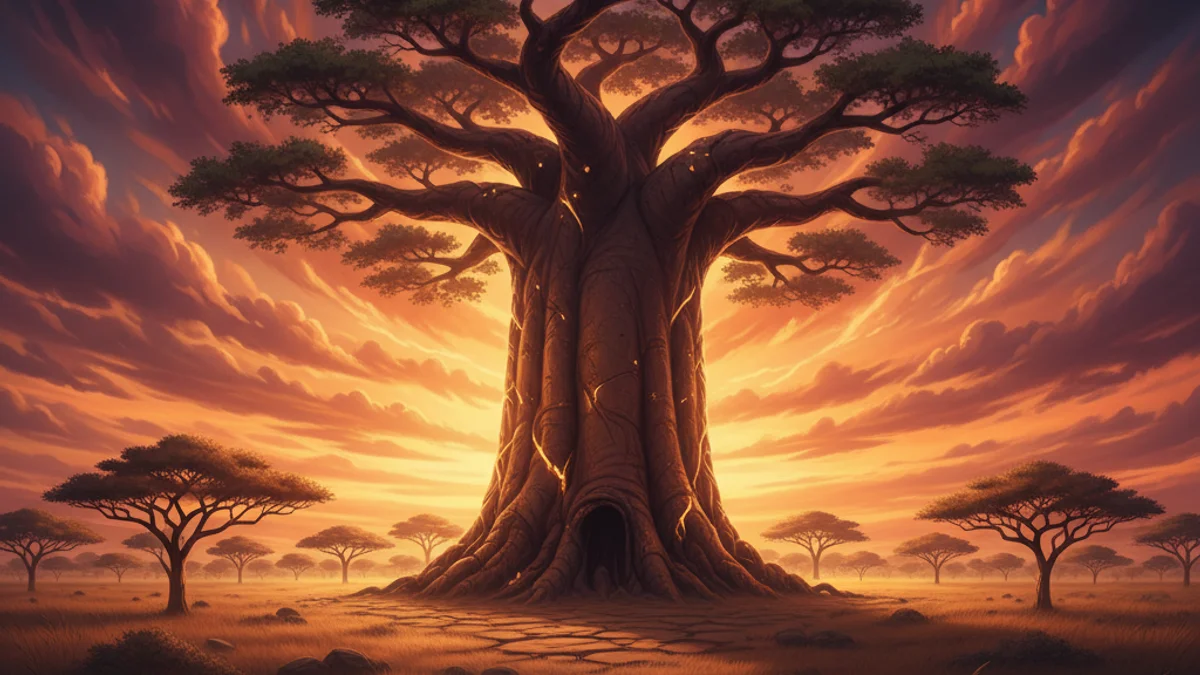
In the beginning, the Baobab was among the most beautiful trees in Africa. With its sleek bark and lush leaves, it stood tall and proud. However, the Baobab was never satisfied. When it saw the slender Palm tree, it cried to the Creator that it wanted to be taller. When it saw the Flame tree's crimson blossoms, it complained that it lacked color. When it saw the Fig tree’s heavy fruit, it demanded its own. The Great Spirit watched as the Baobab filled the savanna with its vanity and endless grievances. Finally, losing patience with the tree’s ungratefulness, the Creator reached down, plucked the Baobab from the earth, and replanted it upside down. From that day on, the Baobab grew with its gnarled roots reaching toward the sky, forced into silence so it could no longer complain about its appearance.
True peace comes from gratitude and humility; constant complaining and vanity will eventually lead to your downfall.
Questions about this story
What is the moral of The Legend of the Baobab Tree?
The moral is to be grateful for what you have rather than focusing on what you lack. It teaches that vanity and pride can lead to a loss of status or beauty.
Why is the Baobab tree called the upside-down tree?
According to the legend, the Creator planted the tree upside down to stop it from complaining about its looks. Its branches now resemble roots reaching into the sky.
What did the Baobab tree complain about?
The tree was envious of other plants, complaining that it wasn't as tall as the palm tree, as colorful as the flame tree, or as fruitful as the fig tree.
Where does the legend of the Baobab tree originate?
This legend is a prominent part of African folklore, particularly among tribes in the Zambezi valley and various regions of Southern and East Africa.
Advertisement

Good night.
