
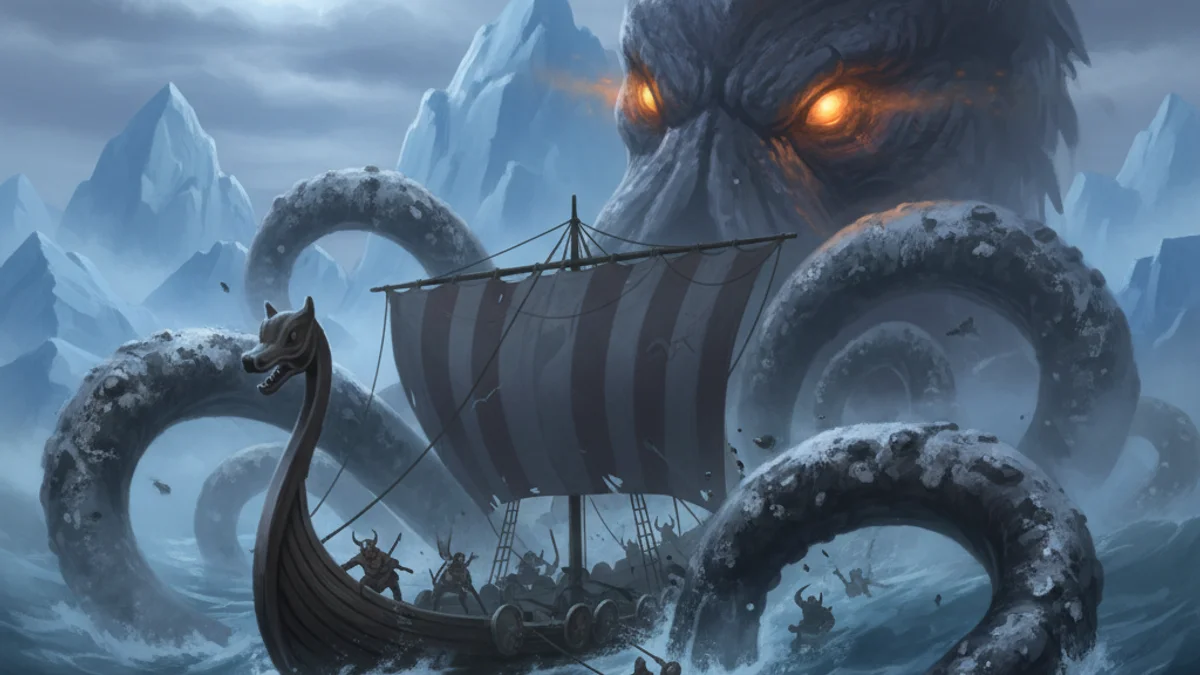
In the chilling depths of the North Sea, between the coasts of Norway and Greenland, dwells a creature of unimaginable scale: the Kraken. For centuries, Norse sailors told tales of a monster so vast its back appeared like a cluster of islands or a series of shifting sandbanks. When the Kraken surfaced, it was not just its teeth that sailors feared, but the massive whirlpool it created as it descended, dragging entire fleets into the lightless abyss. It lived on the ocean floor, feasting on schools of fish and waiting in a slumber that lasted for ages. According to ancient lore, the Kraken remains hidden in the deep, a silent titan of the tides. Legend says it will only truly emerge from its watery tomb at the end of the world, rising in heat and fury during the events of Ragnarok to witness the final twilight of the gods.
The Kraken represents the untamable power of nature and the humility humans must feel when facing the vast, unknown mysteries of the world.
Questions about this story
What is the moral of The Kraken?
The legend serves as a reminder that the natural world contains forces far beyond human control. It teaches us to respect the power of the sea and the mysteries we cannot understand.
Is the Kraken a real creature?
The myth was likely inspired by real sightings of the giant squid (Architeuthis dux). These deep-sea creatures can grow to immense lengths, fueling the imaginations of ancient mariners.
Where does the Kraken legend come from?
The Kraken originates from Scandinavian folklore and Norse mythology, specifically from the waters off the coasts of Norway, Greenland, and Iceland.
What does the Kraken look like in Norse mythology?
Earlier accounts described it more like a giant crab or whale-like creature as large as an island. Over time, it evolved into the tentacled, octopus-like monster common in modern media.
Advertisement

Good night.
