
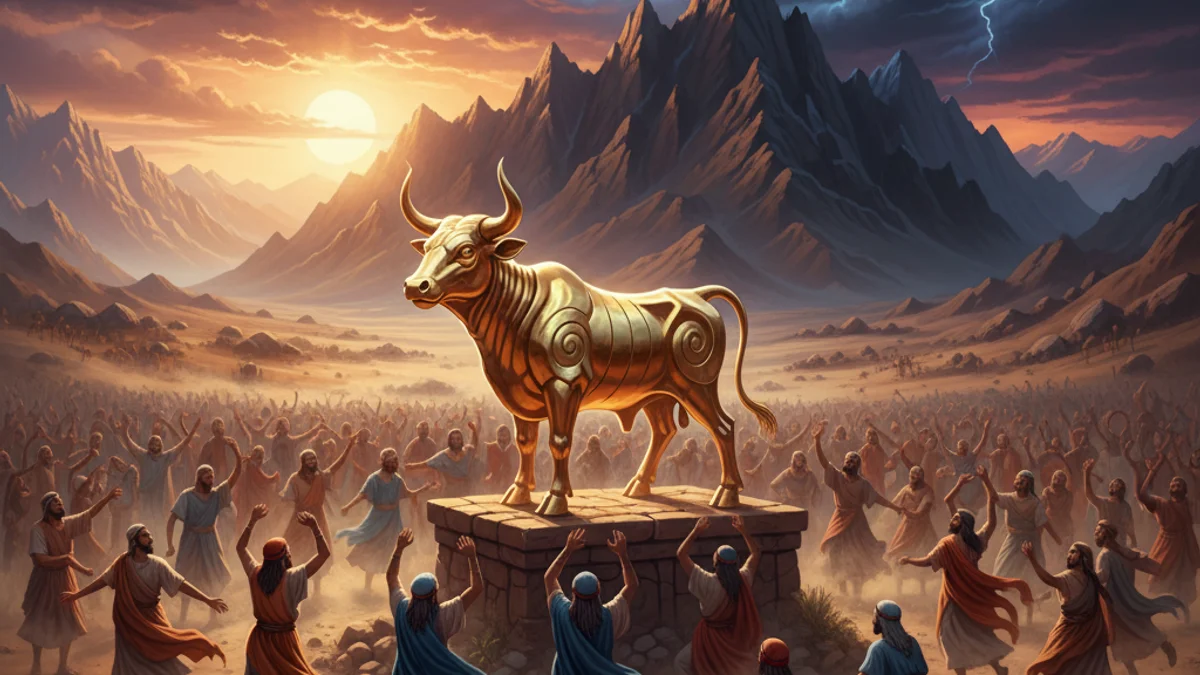
When Moses ascended Mount Sinai to receive the Law, he left the Israelites at the base, promising to return. But as forty days and nights passed, the people grew restless and fearful. 'Where is this Moses who brought us out of Egypt?' they cried, feeling abandoned by their leader and their God. Desperate for a tangible deity to guide them, they pressured Aaron to fashion a god for them. Aaron gathered their gold jewelry, cast it into a furnace, and formed a Golden Calf. The people broke into wild celebration, offering sacrifices and declaring the idol their deliverer. High above, God informed Moses of the betrayal. Descending the mountain with the two stone tablets of the Ten Commandments, Moses saw the revelry and, in a fit of holy rage, smashed the tablets at the foot of the mountain. He destroyed the idol, ground it to dust, and forced the people to confront their lack of faith, reminding them that true divinity cannot be captured in gold.
Faith requires patience and steadfastness, warning that when we lose sight of our values during times of waiting, we are prone to creating false idols.
Questions about this story
What is the moral of The Golden Calf?
The moral is that faith requires patience and spiritual maturity. It warns against seeking easy, physical substitutes for difficult spiritual truths when leaders or signs are absent.
Who was responsible for making the Golden Calf?
Aaron, the brother of Moses, fashioned the calf after the Israelites pressured him for a visible god. He collected their gold and cast the image while Moses was away on the mountain.
Why did the Israelites want a golden idol?
They were afraid and impatient because Moses had been gone for forty days. Used to the visible gods of Egypt, they wanted a physical representation of power they could see and follow.
What did Moses do when he saw the Golden Calf?
Filled with anger and grief, Moses smashed the two stone tablets containing the Ten Commandments. He then destroyed the idol and demanded the people choose between the idol and the true God.
Advertisement

Good night.
