
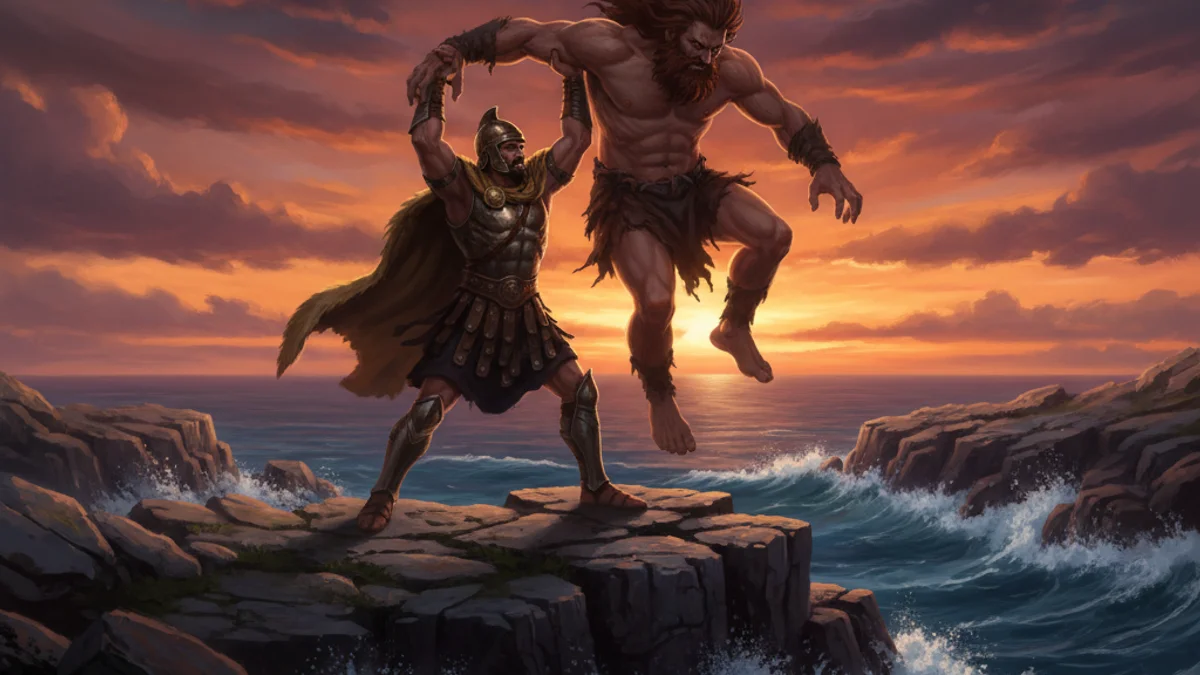
When Brutus of Troy arrived on the shores of the island then known as Albion, he found a land inhabited by a race of monstrous giants. The greatest and most terrible among them was Gogmagog, a twelve-cubit-tall behemoth of immense strength. Brutus’s loyal companion, Corineus, a man who loved nothing more than a trial of strength, sought a final confrontation with the titan. During a feast, the giants staged a bloody ambush, but the Trojans fought them back until only Gogmagog remained alive. Corineus challenged the giant to a wrestling match on the high cliffs of the south coast. The struggle was fierce; the giant crushed three of Corineus’s ribs with a massive bear hug. Enraged and fueled by a surge of adrenaline, Corineus heaved the giant onto his shoulders, ran to the very edge of the precipice, and hurled Gogmagog into the churning sea. The giant shattered against the rocks below, marking the symbolic end of the old world and the birth of Britain.
Physical size and brute strength are ultimately inferior to the determination, skill, and spirit of those fighting for their future.
Questions about this story
What is the moral of The Gogmagog Giants?
The story teaches that even the most imposing obstacles can be overcome through courage and persistence. It emphasizes that the old ways must sometimes give way to new civilizations through struggle and bravery.
Who was Corineus in British folklore?
Corineus was a legendary warrior and companion to Brutus of Troy, known for his incredible strength. He is credited with defeating the giants and becoming the first ruler of Cornwall, which was named in his honor.
Where did the fight between Corineus and Gogmagog take place?
Traditionally, the epic wrestling match is said to have occurred at Plymouth Hoe in Devon, England. For centuries, figures of the giants were carved into the turf there to commemorate the legendary event.
Is Gogmagog one giant or two?
While ancient texts describe one giant named Goëmagot, later London traditions split the name into two separate giants, Gog and Magog. These figures now stand as wooden statues in London's Guildhall as guardians of the city.
Advertisement
Good night.
