
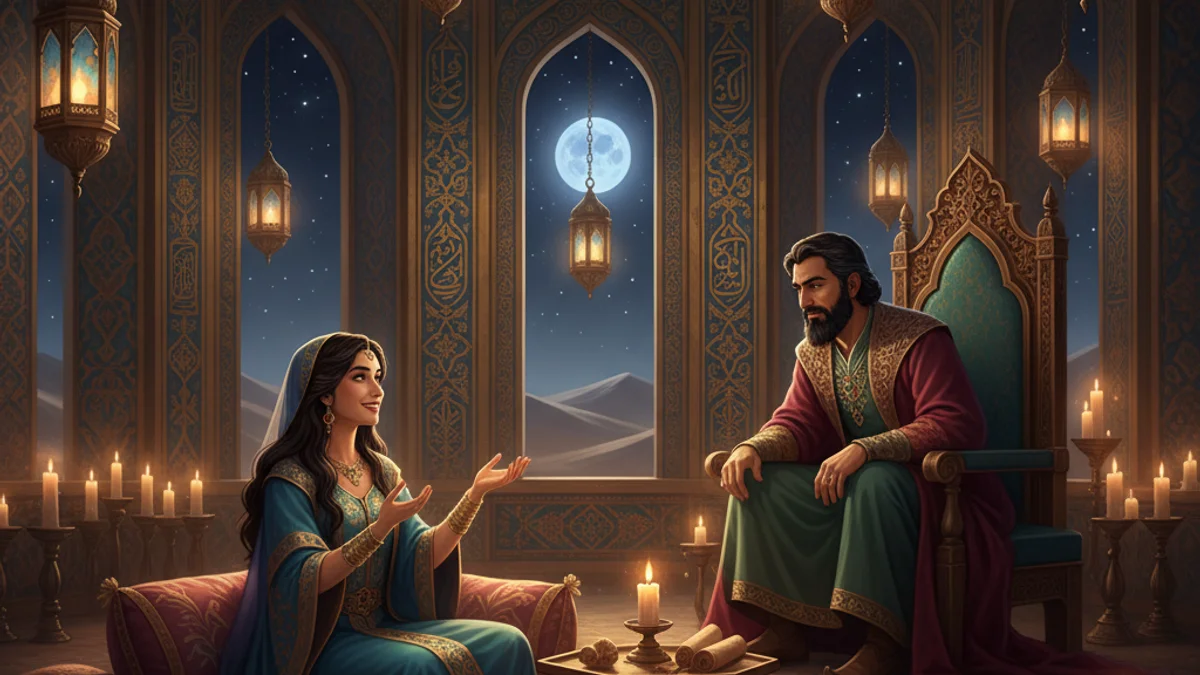
King Shahryar, betrayed by his first wife, descends into a vengeful madness, vowing to marry a new bride every night only to execute her the following morning. This cycle of cruelty devastates the kingdom until Scheherazade, the Vizier’s courageous daughter, volunteers to marry the King. She devises a brilliant plan: on their wedding night, she begins a captivating story but stops at the climax just as dawn breaks. To hear the conclusion, the King spares her life for one more day. For one thousand and one nights, Scheherazade weaves a tapestry of interconnected tales, leaving the King in constant suspense. Through her wisdom and storytelling, she heals the King's broken heart, eventually convincing him to abandon his bloody vow and name her his permanent queen, saving the women of her land.
Intellect, wisdom, and the power of storytelling can overcome tyranny and heal a hardened heart.
Questions about this story
What is the moral of The Frame Story of Scheherazade?
The moral is that wit, patience, and the power of narrative can conquer brute force and hatred. It demonstrates how art and empathy can transform a person's character and heal deep psychological wounds.
Why did King Shahryar kill his wives?
After discovering his first wife was unfaithful, the King became convinced that all women were inherently untrustworthy. He vowed to marry a new woman each night and kill her the next morning to prevent any future betrayal.
Who helped Scheherazade with her plan?
Scheherazade’s sister, Dunyazad, played a crucial role by sitting near the bed and asking for one last story before dawn. This request allowed Scheherazade to begin her tales and secure her survival each morning.
How many stories did Scheherazade tell?
While the collection is titled One Thousand and One Nights, the number of stories varies by version. The title is often considered a metaphorical expression for an infinite or very large number of tales told over nearly three years.
Advertisement
Teach next
Good night.
