
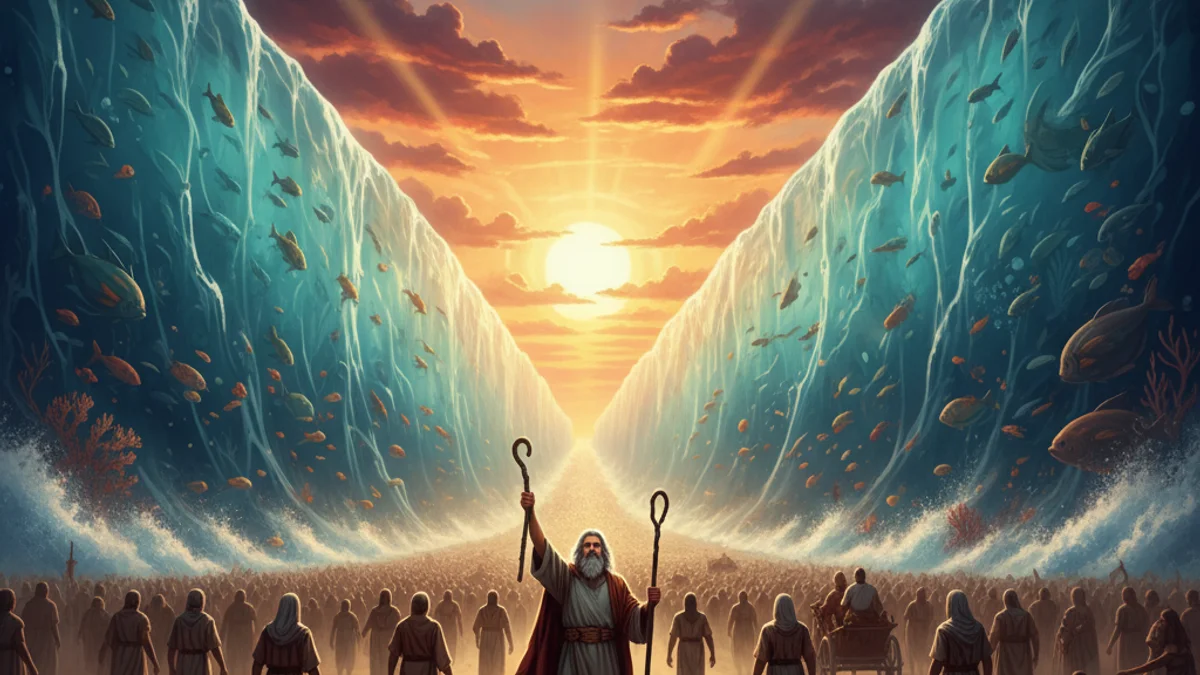
For generations, the Israelites lived as slaves in Egypt, crushed under the heavy hand of Pharaoh. Their cries for help reached the Heavens, and God chose Moses, a humble shepherd, to be His messenger. Alongside his brother Aaron, Moses appeared before Pharaoh with a divine command: 'Let my people go.' When Pharaoh hardened his heart, ten devastating plagues struck Egypt, from the turning of the Nile into blood to the final, somber night of the Passover. Broken, Pharaoh finally relented. As the Israelites fled toward the wilderness, the Egyptian army pursued them, trapping them against the shores of the Red Sea. In a moment of supreme faith, Moses raised his staff; the waters miraculously parted, creating a dry path for the people to cross. When the Egyptian chariots followed, the sea collapsed, securing the Israelites' freedom. This journey from bondage to the foot of Mount Sinai marked the birth of a nation defined by its covenant with God.
True freedom is achieved through unwavering faith in the Divine and the courage to stand against oppression.
Questions about this story
What is the moral of The Exodus from Egypt?
The story teaches that liberation requires both divine intervention and the human courage to pursue freedom. It emphasizes that no earthly power is greater than faith and justice.
Who led the Israelites out of Egypt?
Moses was the primary leader chosen by God, aided by his brother Aaron who served as his spokesperson and his sister Miriam who led the people in song.
What were the ten plagues of Egypt?
The plagues included blood, frogs, lice, flies, livestock pestilence, boils, hail, locusts, darkness, and the death of the firstborn. They were divine signs intended to humble Pharaoh.
Why did the Red Sea part during the Exodus?
The Red Sea parted as a miracle from God to save the Israelites from the pursuing Egyptian army. It served as the final act of liberation from their former captors.
Advertisement

Good night.
