
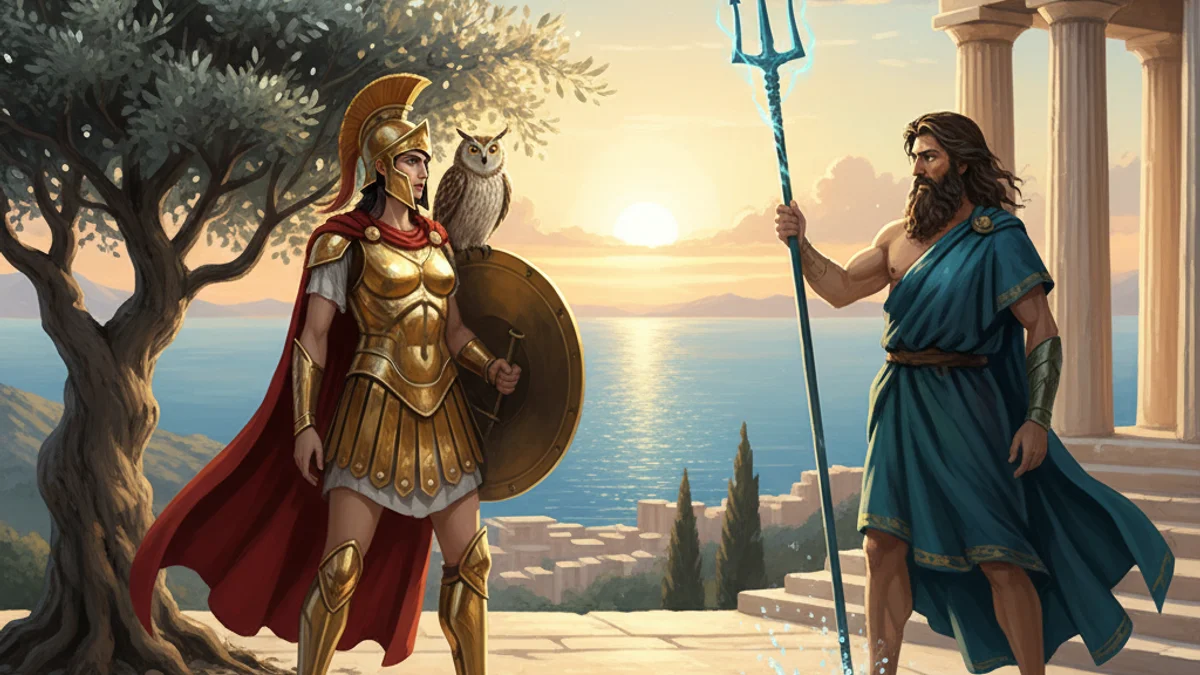
In the early days of Greece, a magnificent city was built on a rocky crag overlooking the sea. Both Athena, goddess of wisdom, and Poseidon, god of the oceans, claimed the city as their own. To settle the dispute, Zeus decreed a contest: each deity would present a gift to the citizens, and the best gift would determine the city’s patron. Poseidon stepped forward and struck the earth with his mighty trident, and a spring of water gushed forth. However, the water was as salty as the sea, proving useless for drinking or crops. Athena then stepped forward and planted a single seed. Within moments, a silver-leafed olive tree sprouted from the soil, offering shade, wood for heat, and oil for food and light. King Cecrops and the people recognized that while Poseidon offered power, Athena offered prosperity and peace. They chose her gift, naming the city Athens in her honor.
Practical wisdom and gifts that sustain life are far more valuable than displays of raw power.
Questions about this story
What did Athena and Poseidon offer to the city?
Poseidon offered a saltwater spring by striking the earth with his trident, while Athena planted the first olive tree, providing food, oil, and wood.
Why did the Athenians choose the olive tree over the salt spring?
The salt spring was impressive but unusable for drinking or agriculture. The olive tree provided practical benefits like nutrition, light, and fuel, ensuring the city's prosperity.
Who was the judge of the contest between Athena and Poseidon?
King Cecrops, the half-man half-serpent first king of Athens, served as the judge, though some versions suggest the twelve Olympian gods made the final decision.
How did Athens get its name?
The city was named Athens after the goddess Athena won the contest against Poseidon, officially becoming its patron deity and protector.
Advertisement



Good night.
