
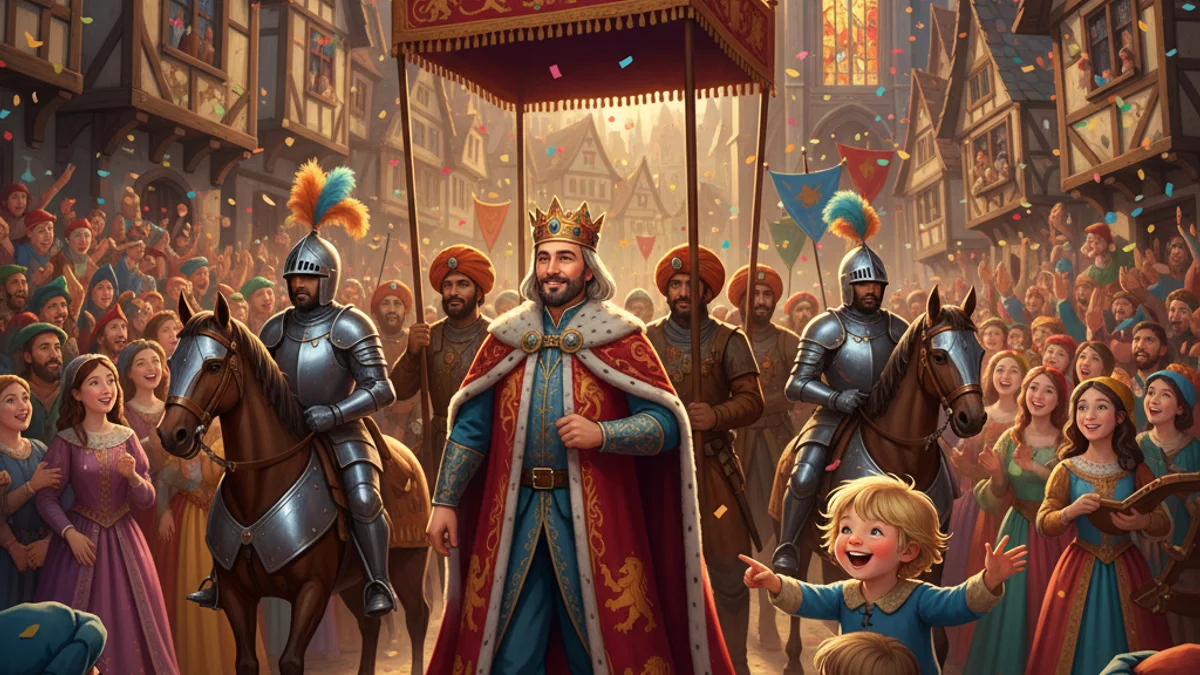
Once there was an Emperor who cared for nothing but fine clothes. Two swindlers arrived, claiming they could weave a fabric so extraordinary it was invisible to anyone unfit for their office or unusually stupid. The Emperor, eager to test his court, gave them gold and silk. Though the looms remained empty, his ministers—fearful of appearing incompetent—praised the non-existent colors and patterns. Finally, the day of the grand procession arrived. The Emperor paraded through the streets in his 'new clothes,' his courtiers holding an invisible train. The townspeople, not wanting to seem foolish, cheered for the beautiful garments. Suddenly, a small child cried out, 'But he has nothing on at all!' The whisper spread until the whole crowd shouted the truth. The Emperor shivered, knowing they were right, but he held himself stiffer than ever and finished the procession.
Pride and vanity can blind people to the truth, and it takes great courage to speak out against a popular lie.
Questions about this story
What is the moral of The Emperor's New Clothes?
The story warns against vanity and the fear of social non-conformity. It highlights how people often ignore the obvious truth to avoid appearing foolish or incompetent to others.
Who is the author of this famous fairy tale?
The story was written by the Danish author Hans Christian Andersen and first published in 1837. It was inspired by a Spanish story from the medieval period but adapted for a wider audience.
Why did the Emperor believe the swindlers?
The Emperor was consumed by his own vanity and the desire to identify who in his kingdom was unfit for their duties. This arrogance made him an easy target for the clever tricksters.
What does the idiom 'the emperor has no clothes' mean?
It refers to a situation where everyone realizes something is wrong or false but remains silent to avoid social embarrassment. It is often used to describe political or corporate delusions.
Advertisement

Good night.
