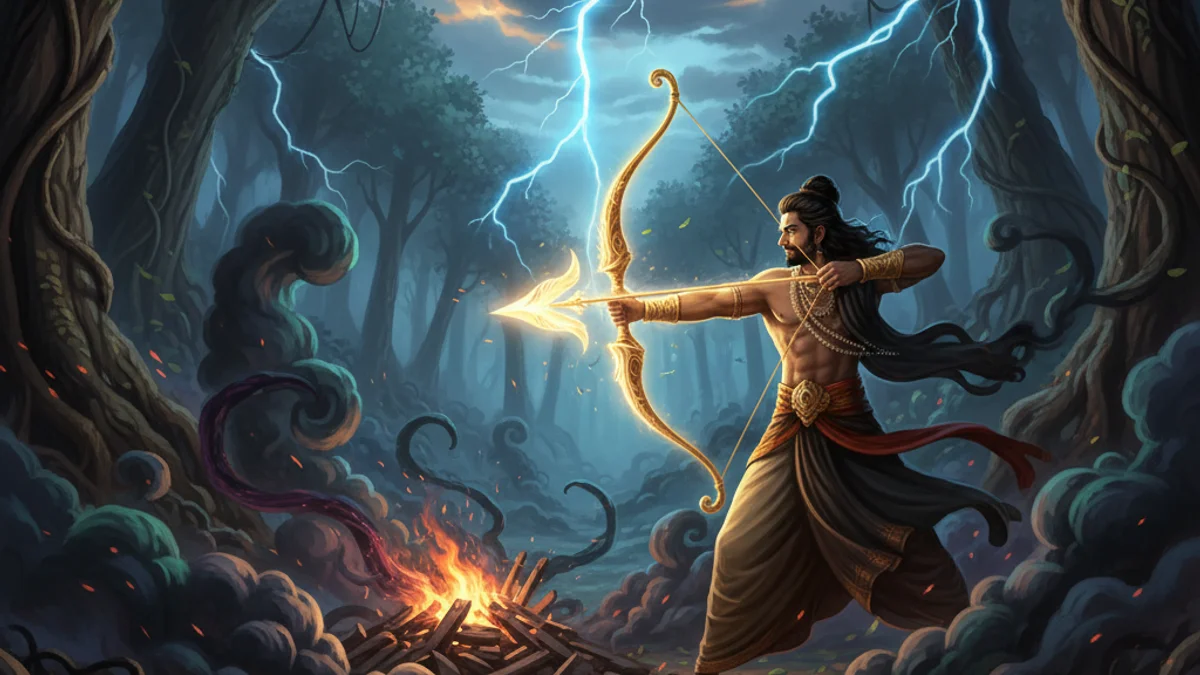
As the war between Rama and Ravana reached its peak, Ravana’s son, Indrajit, emerged as the most terrifying warrior. Having previously conquered the heavens and captured Indra, he possessed mastery over illusions and celestial weapons. To become truly invincible, Indrajit began the Nikumbhila Yagna, a secret sacrifice to the goddess Pratyangira. Vibhishana, aware of the ritual’s power, warned Rama that Indrajit must be stopped before the sacrifice concluded. Lakshmana, accompanied by Hanuman and guided by Vibhishana, breached the sacred grove. Interrupted and furious, Indrajit engaged Lakshmana in a fierce battle that shook the earth. Indrajit used his illusions to vanish and strike from the shadows, but Lakshmana remained steadfast. Finally, Lakshmana invoked the power of Rama’s righteousness and launched the Aindrastra. The divine arrow severed Indrajit’s head, ending the life of Lanka’s greatest protector and dealing a fatal blow to Ravana’s campaign.
Skill and power are ultimately defeated when they are used to uphold injustice instead of dharma.
Advertisement
Questions about this story
What is the moral of The Death of Indrajit?
The story teaches that even the greatest talent and power cannot save someone who fights for an unrighteous cause. It emphasizes that dharma (righteousness) eventually triumphs over adharma (evil).
Who killed Indrajit in the Ramayana?
Lakshmana, the brother of Lord Rama, killed Indrajit. He was guided by the wisdom of Vibhishana, who knew Indrajit's secret weaknesses and his reliance on the Nikumbhila ritual.
What was the Nikumbhila Yagna?
The Nikumbhila Yagna was a secret sacrificial ritual performed by Indrajit. If he had successfully completed it, he would have received a divine chariot that would have made him invincible in any battle.
How did Indrajit get his name?
Indrajit was born as Meghnad, but he earned the title 'Indrajit' after he successfully defeated Indra, the King of the Gods, and brought him to Lanka as a prisoner.
Advertisement