Story Summary
Discover the tragic turning point in the Epic of Gilgamesh. The Death of Enkidu explores grief, mortality, and the end of a legendary brotherhood in ancient Uruk.
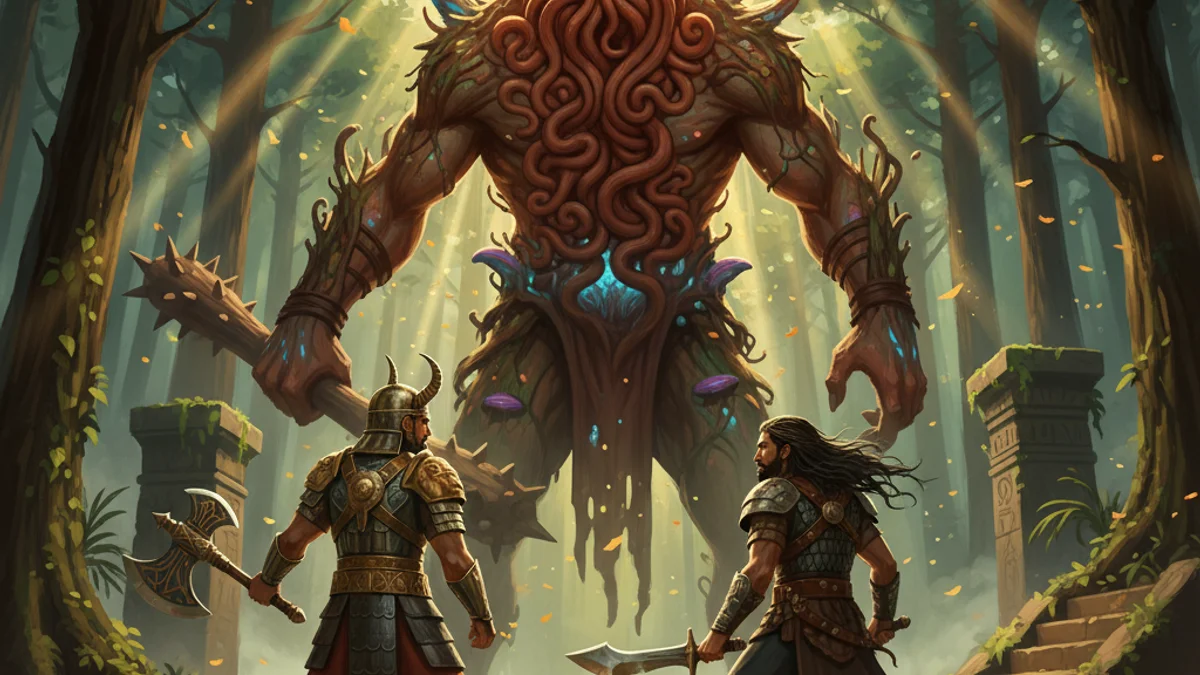
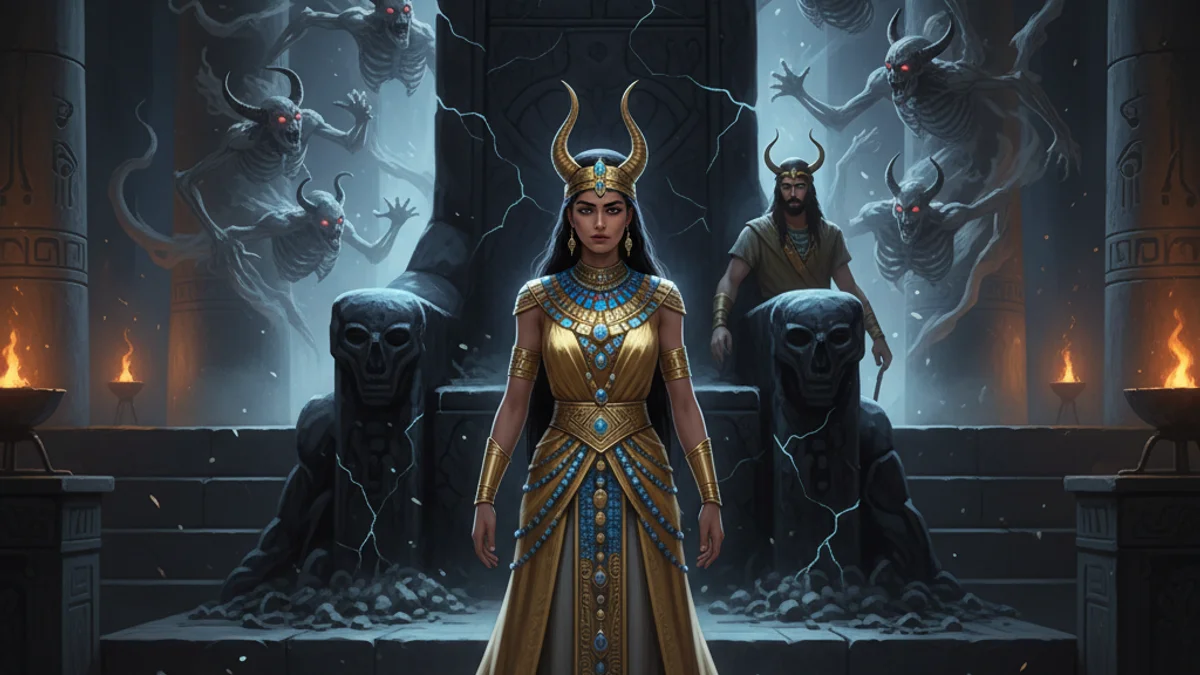
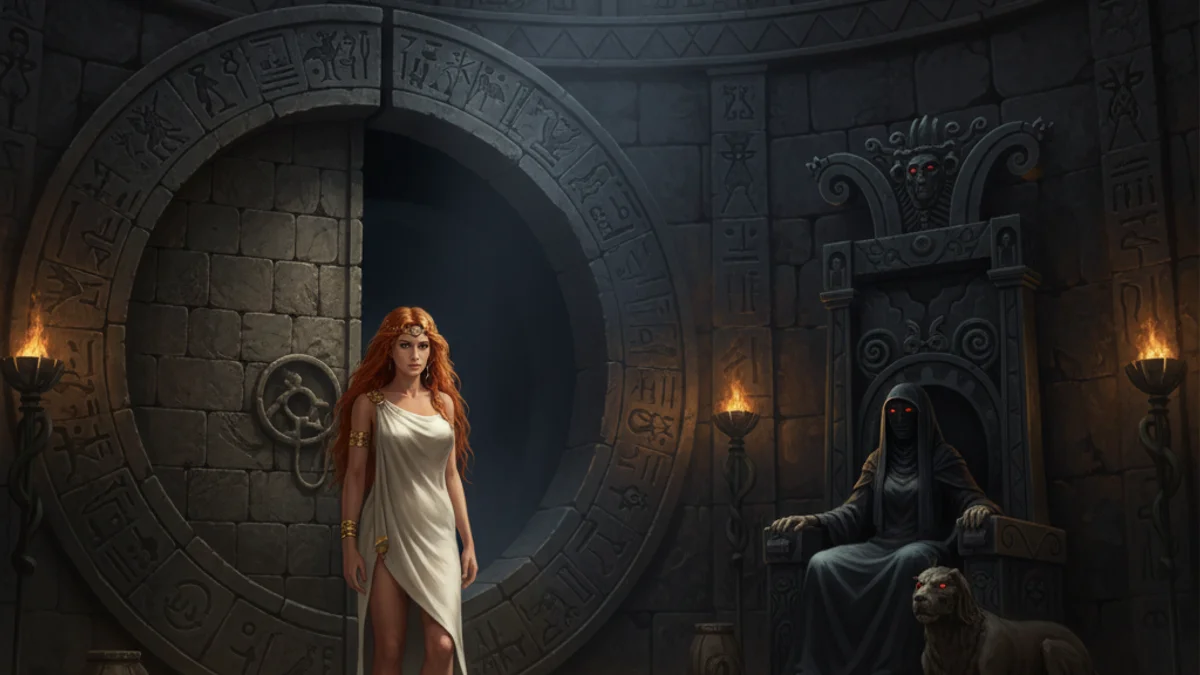
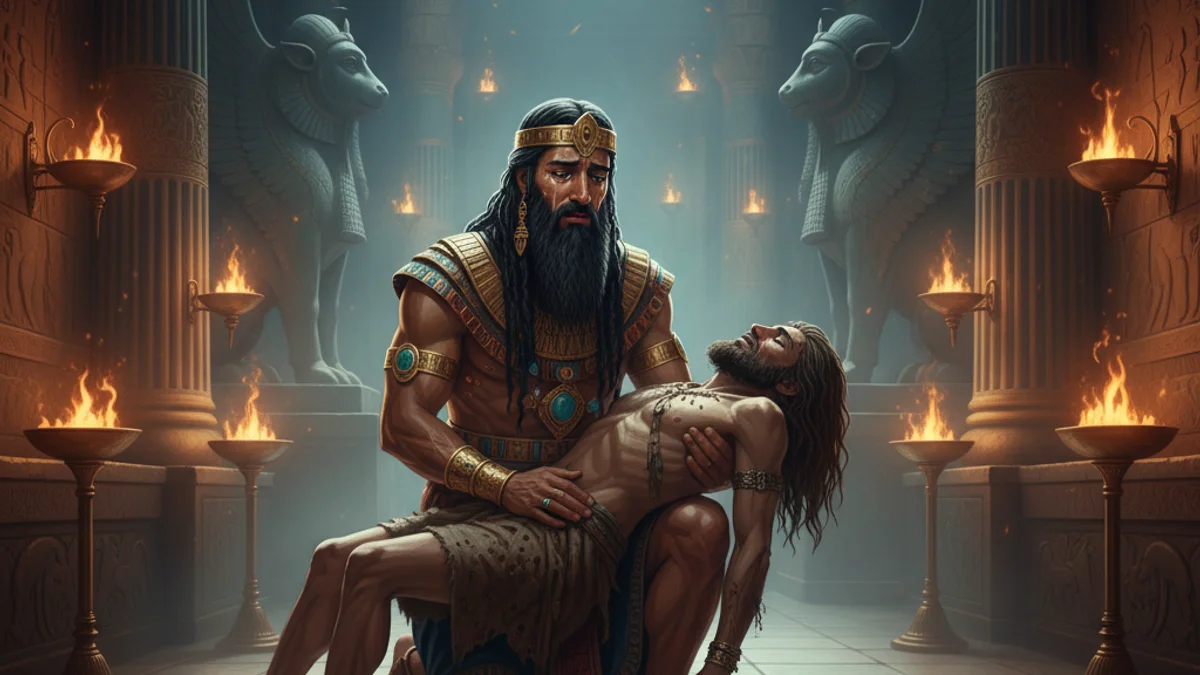
After their shared triumphs over the forest guardian Humbaba and the celestial Bull of Heaven, the gods grew vengeful. They decreed that for these acts of defiance, one of the heroes must die. They chose Enkidu. The wild man, who had once run with gazelles before finding brotherhood with King Gilgamesh, fell into a sudden, wasting sickness. As the fever took hold, Enkidu suffered terrifying visions of the House of Dust—a bleak underworld where former kings and priests lived in eternal darkness, eating clay and wearing feathers like birds. For twelve days, his strength withered while Gilgamesh watched in helpless agony. Enkidu cursed the day he left the wild, though the god Shamash reminded him of the friendship and glory he had gained. Finally, Enkidu breathed his last. Gilgamesh, shattered by the loss, refused to let go of his friend's body until he saw the first sign of decay. This confrontation with the finality of death broke the king's spirit, leading him to abandon his throne and wander the wilderness in a desperate, lonely quest for the secret of immortality.
The Moral
Mortality is the shared fate of all living things, and the death of a loved one often forces us to confront our own limitations and the meaning of existence.
“My friend, the swift horse, the panther of the wild... now the sleep of death has surged over you.”
Fun Fact
The Epic of Gilgamesh, containing Enkidu's story, is considered the oldest piece of great literature in the world, dating back to approximately 2100 BCE.
Frequently Asked Questions
What is the moral of The Death of Enkidu?
The story emphasizes that death is an inescapable part of the human condition that even heroes cannot conquer. It teaches that the pain of loss is the catalyst for self-discovery and the search for deeper meaning.
Why did the gods decide Enkidu had to die?
The gods were insulted by the duo's arrogance. Specifically, Enlil was furious that they killed Humbaba, and Ishtar was vengeful after they slaughtered the Bull of Heaven.
How does Enkidu's death affect Gilgamesh?
It transforms him from a proud, near-invincible king into a man terrified of his own mortality. His grief is so profound that he abandons civilization to seek the secret of eternal life.
What was the House of Dust in the story?
The House of Dust was the Sumerian vision of the afterlife, described as a gloomy, dusty realm where the dead live in darkness and eat clay, regardless of their status in life.
Who does Enkidu curse and then bless before dying?
He initially curses the hunter and the temple prostitute Shamhat for civilizing him, but the god Shamash convinces him to bless Shamhat for giving him the life that led to his friendship with Gilgamesh.
What does the worm symbolize in the story?
The worm that eventually crawls from Enkidu's body is the ultimate symbol of physical decay. It is the moment Gilgamesh is forced to accept that his friend is gone and that he, too, will eventually die.
Discussion (0)
Share your thoughts on this story
No comments yet. Be the first to share your thoughts!