
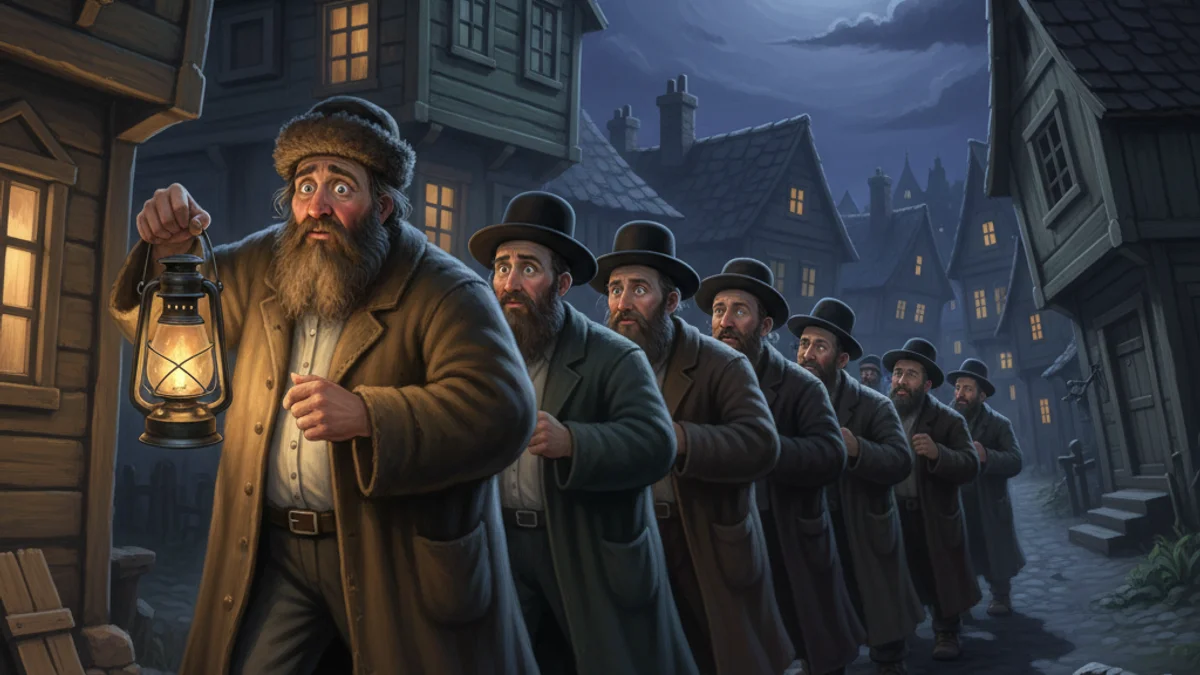
The citizens of Chelm decided they needed a night watchman to protect the town from thieves. They hired a man and paid him a few kopecks a week. However, the town elders soon grew worried. 'What if a thief steals the watchman's wages while he is asleep during the day?' they asked. To solve this, they hired a second watchman to guard the first man's money. But then a new fear arose: who would guard the second watchman's wages? They hired a third to watch the second, and a fourth to watch the third. This continued until half the town was employed to watch the other half. In the end, the treasury was empty, the citizens were exhausted from watching each other, and the town remained entirely unguarded against actual thieves.
Over-complicating a simple solution often leads to a cycle of absurdity that solves nothing and drains resources.
Questions about this story
What is the moral of The Chelm Night Watchman?
The story teaches that over-analyzing a problem can lead to 'analysis paralysis' or absurdly complex solutions. It warns against the folly of creating new problems while trying to secure a simple fix.
Who are the 'Fools of Chelm'?
The Wise Men of Chelm are recurring characters in Jewish folklore who are famous for their 'inverted logic.' They approach every situation with great seriousness and intellectual effort, but their conclusions are always hilariously impractical.
Why did the elders hire more watchmen?
They were worried that the watchman's own salary would be stolen while he slept during the day. This led to a circular logic where every new person hired also needed a guard for their own wages.
What is the origin of Chelm stories?
These stories originated in Eastern European Jewish communities, specifically in the 19th century. They served as a form of social satire and lighthearted entertainment that celebrated the quirks of community life.
Advertisement

Good night.
