
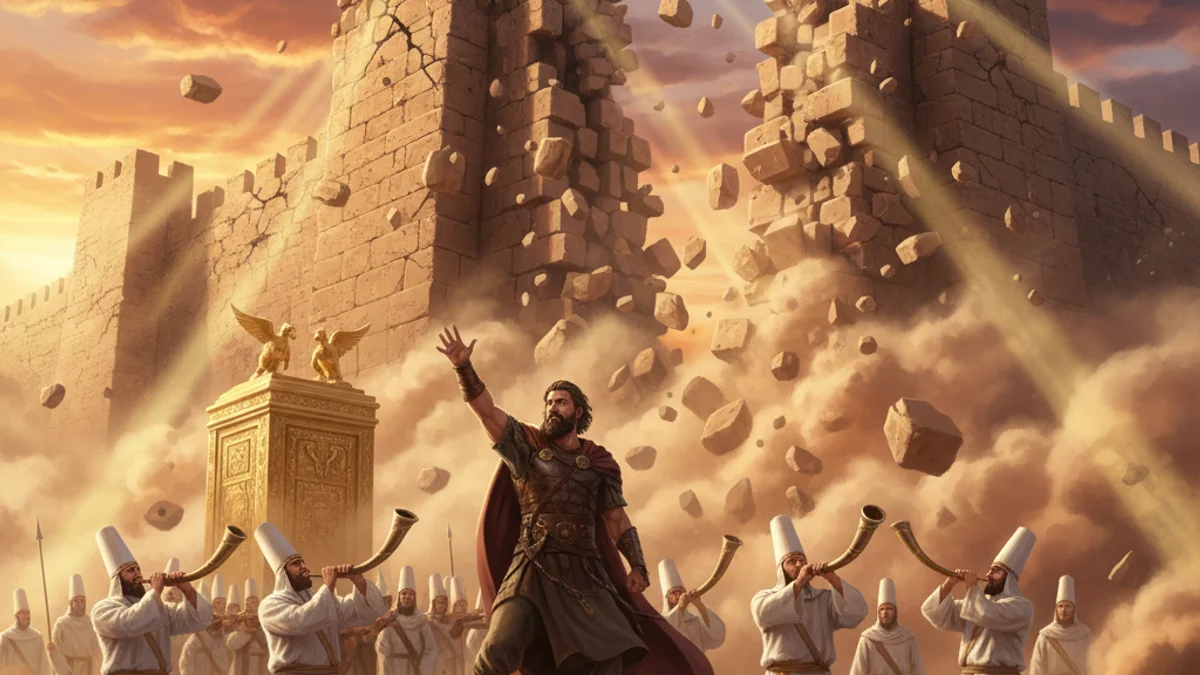
Following the death of Moses, Joshua took command of the Israelites as they prepared to enter the Promised Land. Their first great obstacle was Jericho, a city fortified by massive, impenetrable walls. God provided Joshua with a unique strategy: instead of a siege, the army was to march around the city once a day for six days, led by seven priests blowing rams' horns and carrying the Ark of the Covenant. On the seventh day, they marched around the city seven times. At Joshua's signal, the priests blew a final, thunderous blast and the people let out a great shout. In a display of divine power, the walls of Jericho collapsed instantly, allowing the Israelites to charge straight in and claim the city through their faith and obedience.
True strength comes from faith and obedience to divine guidance, even when the instructions seem impossible or unconventional.
Questions about this story
What is the moral of Joshua and Jericho?
The story teaches that faith and obedience to God's word can overcome even the most formidable obstacles. It highlights that spiritual strength and unity are more powerful than traditional military might.
How many times did the Israelites march around Jericho?
They marched around the city once a day for six days. On the seventh day, they circled the city seven times before the walls finally fell.
What was the significance of the trumpets used?
The trumpets were shofars made from rams' horns, which were sacred instruments used to announce divine presence and assembly. Their blast signaled the moment of God's intervention.
Who was Rahab and why was she spared?
Rahab was a woman in Jericho who had hidden Israelite spies earlier. Because of her kindness and faith, Joshua commanded that she and her family be protected during the city's fall.
Advertisement

Good night.
