
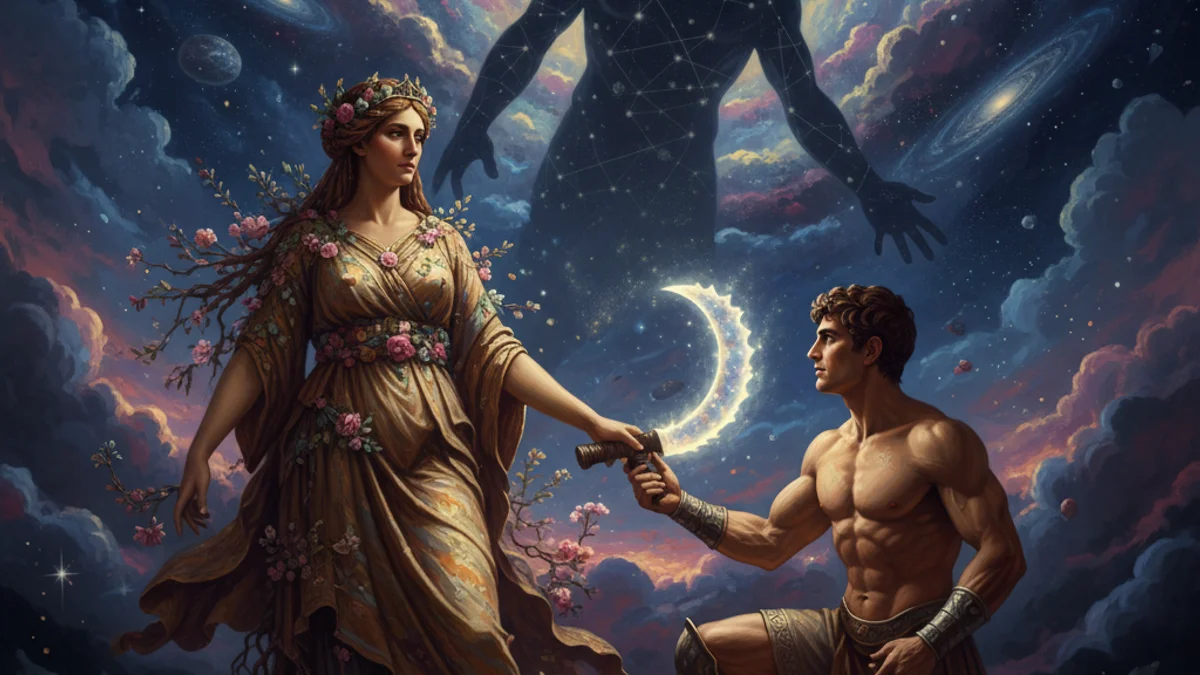
In the beginning, Uranus (the Sky) reigned over Gaia (the Earth). Though they were husband and wife, Uranus was a cruel tyrant who loathed his own offspring. He hid the Hecatoncheires and the Cyclopes deep within the bowels of the earth, causing Gaia immense physical and emotional agony. Driven to desperation, Gaia fashioned a great sickle of flint and pleaded with her children, the Titans, to avenge her. Only the youngest, Cronus, possessed the courage to act. When Uranus descended to cover the Earth at night, Cronus lay in wait. With a swift stroke of the adamantine blade, he castrated his father, casting the severed remains into the sea. This violent act ended Uranus’s reign, separated the Sky from the Earth forever, and allowed the Titans to emerge and rule the cosmos.
Tyranny and the suppression of others eventually invite a rebellion that cannot be contained.
Advertisement
Questions about this story
Why did Cronus castrate Uranus?
Cronus castrated Uranus at the request of his mother, Gaia, to stop Uranus's cruelty and to free his siblings who were imprisoned within the earth.
What happened to the blood of Uranus?
When the blood of Uranus fell upon the Earth, it gave rise to the Furies, the Giants, and the Meliae (ash-tree nymphs).
How was Aphrodite born in this myth?
According to Hesiod, Aphrodite was born from the white sea foam produced when the severed genitals of Uranus were thrown into the ocean.
What does this myth symbolize in nature?
The story symbolizes the permanent separation of the Sky from the Earth, creating the space necessary for life to exist and flourish between them.
Advertisement

