
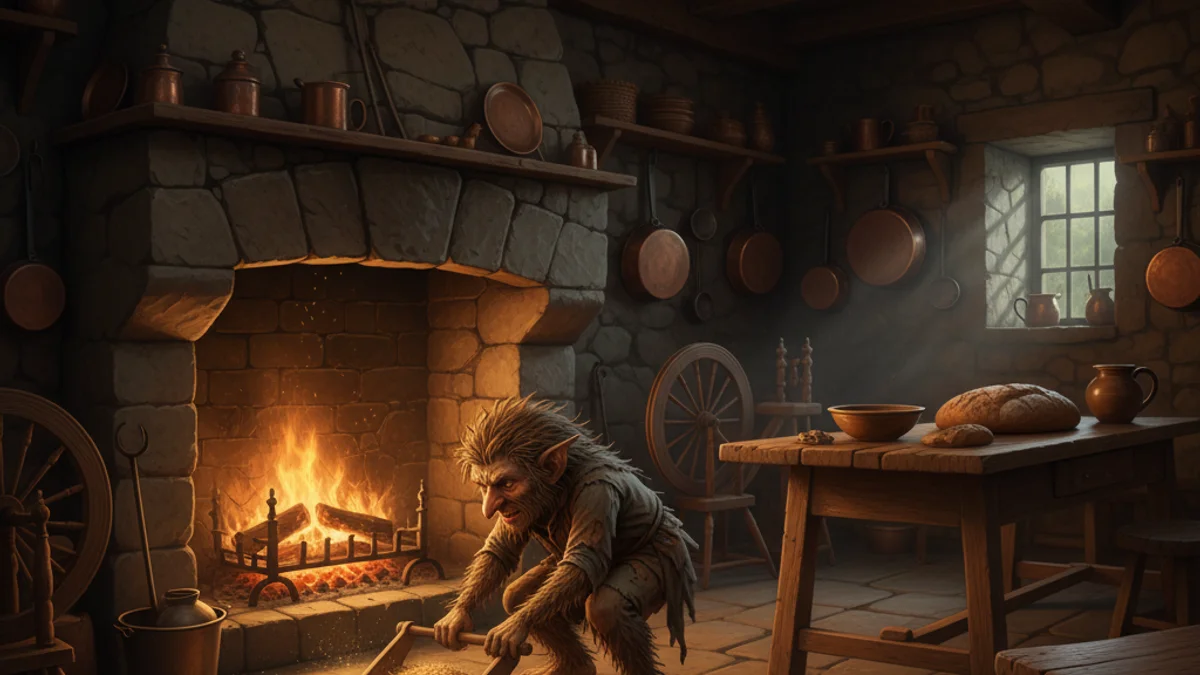
In the misty Highlands of Scotland, a hardworking spirit known as a Brownie lived at a quiet farmstead. Night after night, while the farmer and his wife slept, the small, shaggy creature emerged from the shadows. He threshed the corn, churned the butter, and tidied the hearth, asking for nothing but a single bowl of rich cream left by the fire. The farm prospered under his silent care. However, the mistress, seeing the Brownie’s tattered rags, felt a wave of pity. She sewed him a fine green coat and a matching hood, leaving them by his bowl. When the Brownie found the gift, he did not rejoice. To a spirit of his kind, clothing represented wages or an attempt to bind his freedom. He donned the clothes and sang, 'A new gown, a new hood! Brownie will do no more good!' With those words, he vanished into the night, for a Brownie’s service is a labor of love that cannot be paid for with mortal gold or garments.
Respect the boundaries and traditions of others; charity is only helpful when it aligns with the recipient's needs and nature.
Questions about this story
What is a Brownie in Scottish folklore?
A Brownie is a solitary household spirit said to live in farmhouses where they perform chores at night in exchange for small food offerings like cream or porridge.
Why did the Brownie leave after receiving clothes?
In folklore, giving a Brownie clothes is often seen as a way of 'paying' them, which offends their sense of independence or signals that their service is no longer a voluntary bond of friendship.
What kind of work does a Brownie do?
They are known for manual farm labor, such as grinding corn, herding sheep, churning butter, and cleaning the home while the residents sleep.
What is the best way to keep a Brownie happy?
According to legend, you must never offer them payment or praise them too loudly; simply leaving a bowl of milk or cream is the traditional way to show gratitude.
Advertisement


Good night.
