
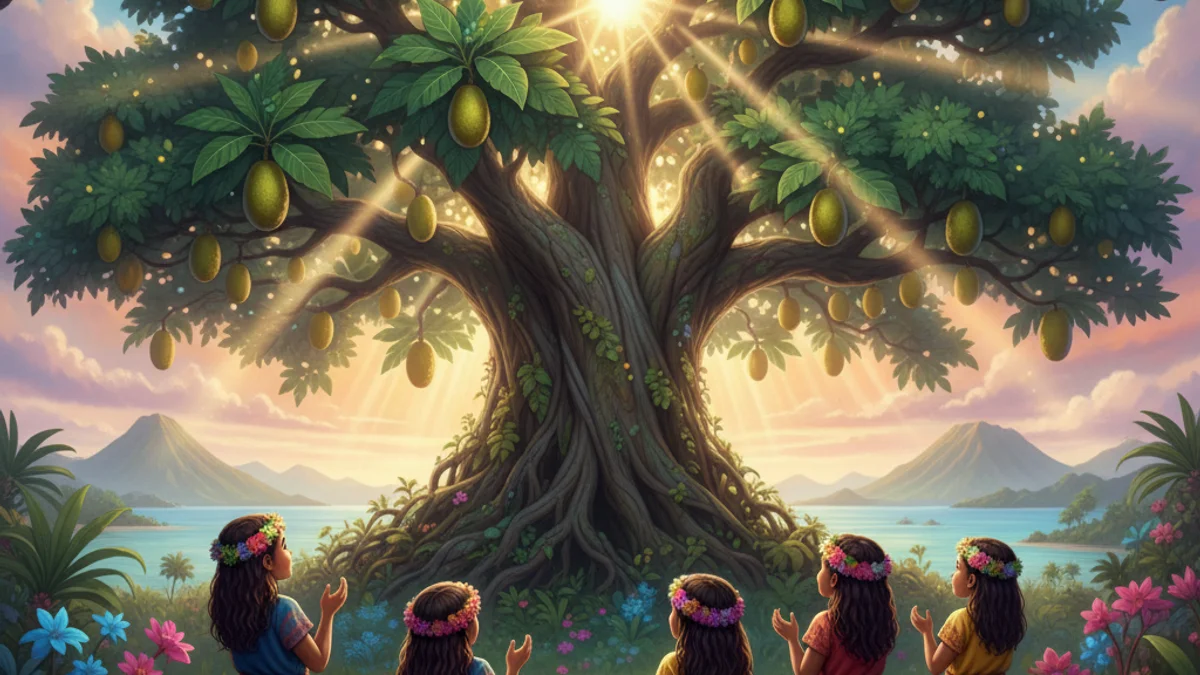
Long ago on the island of Chuuk, a devastating famine gripped the land. A mother named Soukachau watched her children wither with hunger, her heart breaking as the island's resources vanished. Determined to save them, she led her family to a secluded spot and shared a final, solemn promise: her love would sustain them even after she was gone. She instructed her children to bury her body in the earth and tend to the soil with care. After her passing, the children followed her wishes through their tears. Soon, a magnificent tree sprouted from the grave, growing rapidly toward the heavens. Its wide, emerald leaves offered deep shade, and its heavy, starchy fruit provided rich nourishment. This was the first breadfruit tree, a living monument to a mother's eternal sacrifice, ensuring that her people would never face starvation again.
True love is selfless and has the power to provide for others long after the giver is gone.
Questions about this story
What is the moral of The Breadfruit Tree?
The story teaches that selfless love and sacrifice can create life-sustaining legacies. it emphasizes the sacred bond between parents and children and the islanders' gratitude for their natural resources.
Which Pacific island does this legend come from?
While breadfruit myths exist across the Pacific, this specific version is a foundational folk tale from Chuuk in the Federated States of Micronesia. Other variations can be found in Hawaiian and Tahitian mythology.
Why did the mother sacrifice herself in the story?
She sacrificed herself because a severe famine was killing her children and her people. She transformed her physical form into a food source to ensure their survival when there was nothing else to eat.
What does the breadfruit tree represent in Micronesian culture?
The tree represents life, fertility, and ancestral protection. It is a staple food source that symbolizes the earth's ability to provide for those who respect and care for it.
Advertisement



Good night.
