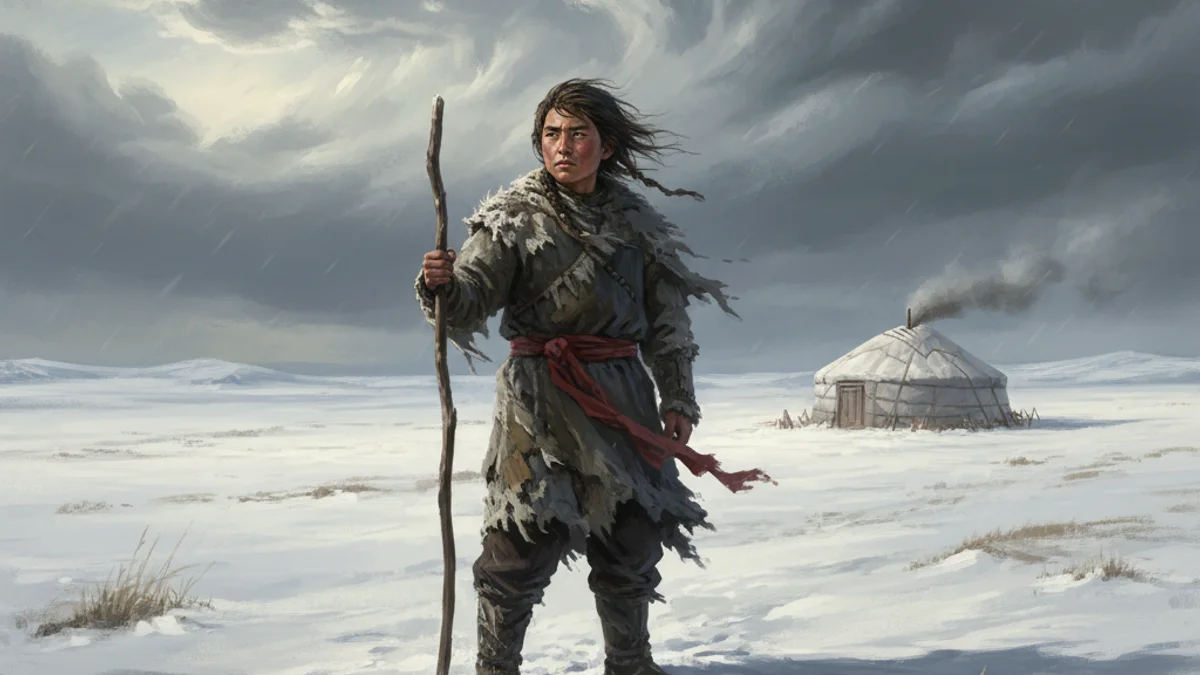
Before he was Genghis Khan, he was Temujin, a boy cast into the crucible of the Mongolian steppe. Following the poisoning of his father, Yesugei, by Tartar rivals, Temujin's own clan, the Tayichi'ut, abandoned his family, fearing the burden of a widow and young children. Left with nothing but their shadows, his mother Hoelun led them into the Khentii Mountains. They survived on wild onions, roots, and small fish—food deemed beneath noble warriors. Internal strife nearly broke them when Temujin, feeling his leadership threatened, killed his half-brother Bekter over a disputed hunt. Captured later by his former clan and forced to wear a heavy wooden collar called a cangue, Temujin eventually staged a daring midnight escape. These years of starvation, betrayal, and relentless pursuit did not break him; instead, they forged a man of iron will who understood that survival required absolute unity and unbreakable discipline.
True strength is forged in the fires of adversity, and resilience is the foundation of destiny.
Advertisement
Questions about this story
What is the moral of Temujin's Childhood Hardships?
The story teaches that hardship and suffering can serve as a catalyst for greatness, forging the resilience and strategic mind necessary for leadership.
Why was Temujin's family abandoned by their clan?
After the death of Temujin's father, the clan leaders viewed Hoelun and her children as a liability and sought to seize their power and livestock.
Who was the most influential person in Temujin's early life?
His mother, Hoelun, was his primary influence; her strength and resourcefulness kept the family alive during their years of exile and starvation.
Why did Temujin kill his half-brother Bekter?
Temujin killed Bekter to assert his authority as the family leader and to stop Bekter from seizing the family's meager resources for himself.
Advertisement