
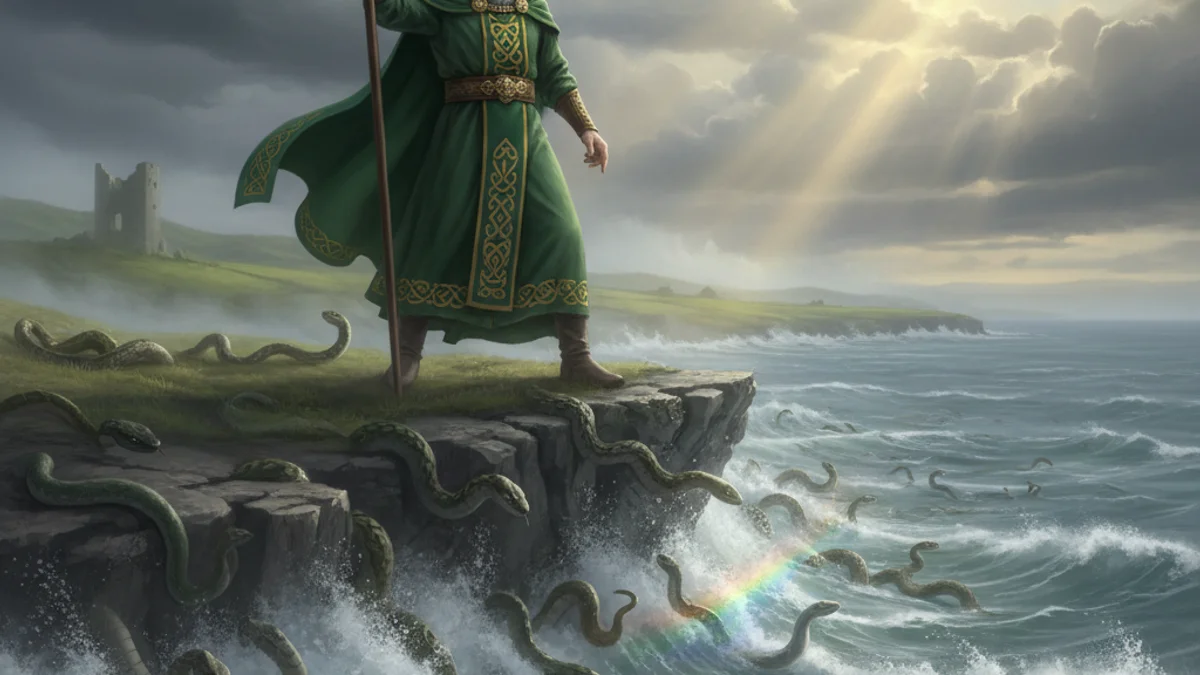
In the fifth century, Saint Patrick retreated to the summit of a high mountain now known as Croagh Patrick to fast and pray for forty days. During his vigil, he was besieged by a swarm of native serpents that hissed and coiled around him, representing the lingering darkness of the old world. Undeterred by their venomous presence, Patrick stood tall upon the rocky precipice. Raising his sacred staff, the Bachal Isu, he commanded the creatures in the name of his faith to leave the shores of the Emerald Isle forever. Driven by a divine force, the snakes fled from the mountain, tumbling over the cliffs and into the cold depths of the Atlantic Ocean. From that day forward, it is said that no snake has ever again slithered upon Irish soil, leaving the land purified and ready for a new era of spiritual light.
Faith and spiritual conviction provide the authority to overcome even the most persistent and venomous obstacles in life.
Questions about this story
What is the moral of Saint Patrick and the Snakes?
The moral is that through unwavering faith and divine intervention, one can cast out evil and purify their environment. It emphasizes the triumph of spiritual light over symbolic darkness.
Did Saint Patrick actually banish real snakes from Ireland?
Scientifically, Ireland has not had native snakes since the last ice age due to its geography. The story is widely considered a myth or a legend passed down through generations.
What do the snakes symbolize in the legend of Saint Patrick?
In Christian tradition, snakes often symbolize evil or paganism. Banishing the snakes likely represents Patrick's success in converting Ireland to Christianity and removing old druidic practices.
Where did Saint Patrick go to banish the snakes?
According to legend, the banishment occurred at the peak of Croagh Patrick, a mountain in County Mayo. This site remains a major destination for pilgrims today.
Advertisement



Good night.
