Library / Early Christian Saints Lives
Saint Nicholas and the Three Daughters
Early Christian Saints Lives

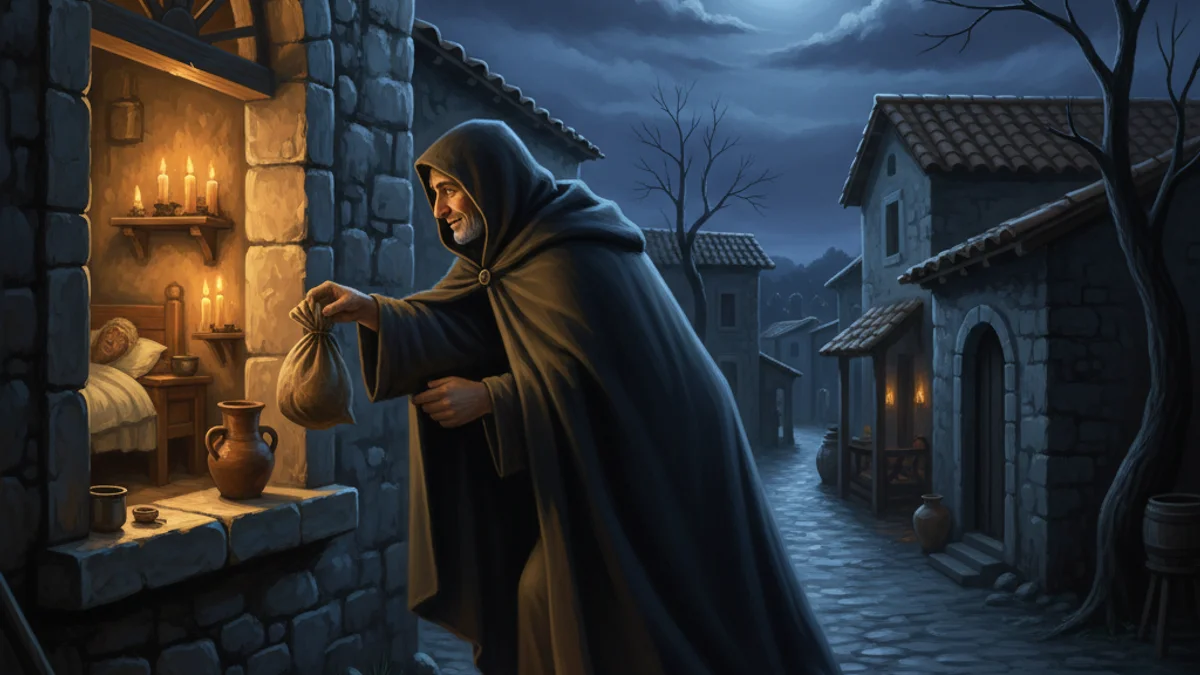
In the ancient city of Myra, there lived a nobleman who had fallen into deep poverty. Desperate and unable to provide dowries for his three daughters, he feared they would be forced into a life of shame to survive. Hearing of their plight, the young Bishop Nicholas felt a call to help, but he wished to do so without wounding the family's pride. Under the cover of darkness, Nicholas crept to their humble home and tossed a bag of gold through an open window, providing a dowry for the eldest daughter. A few days later, he returned and threw a second bag for the middle daughter. Driven by curiosity, the father stayed awake on the third night. When Nicholas tossed the final bag of gold, the father rushed outside and caught the bishop by his cloak. Nicholas begged the man to keep the secret of his identity, telling him that the glory belonged to God alone. This act of hidden mercy saved the daughters and transformed the family's fate forever.
True charity is most powerful when done in secret, preserving the dignity of the recipient and seeking no personal glory.
Questions about this story
What is the moral of Saint Nicholas and the Three Daughters?
The moral is that true generosity should be humble and anonymous. By giving in secret, Nicholas protected the family's dignity and ensured the focus remained on the gift rather than the giver.
How did this story influence the legend of Santa Claus?
This story is the primary source for the tradition of secret gift-giving. The bags of gold tossed into the home eventually evolved into the tradition of Santa Claus leaving gifts in stockings or shoes.
Why did the father need gold for his daughters?
In that historical period, a woman needed a dowry to be eligible for a respectable marriage. Without it, the daughters faced a future of extreme poverty or being forced into modern-day forms of servitude.
Where did the story of Saint Nicholas and the Three Daughters take place?
The story took place in the 4th century in the city of Myra, which is located in modern-day Turkey. Nicholas was the Bishop of the Christian church in that city.
Advertisement
Good night.
