
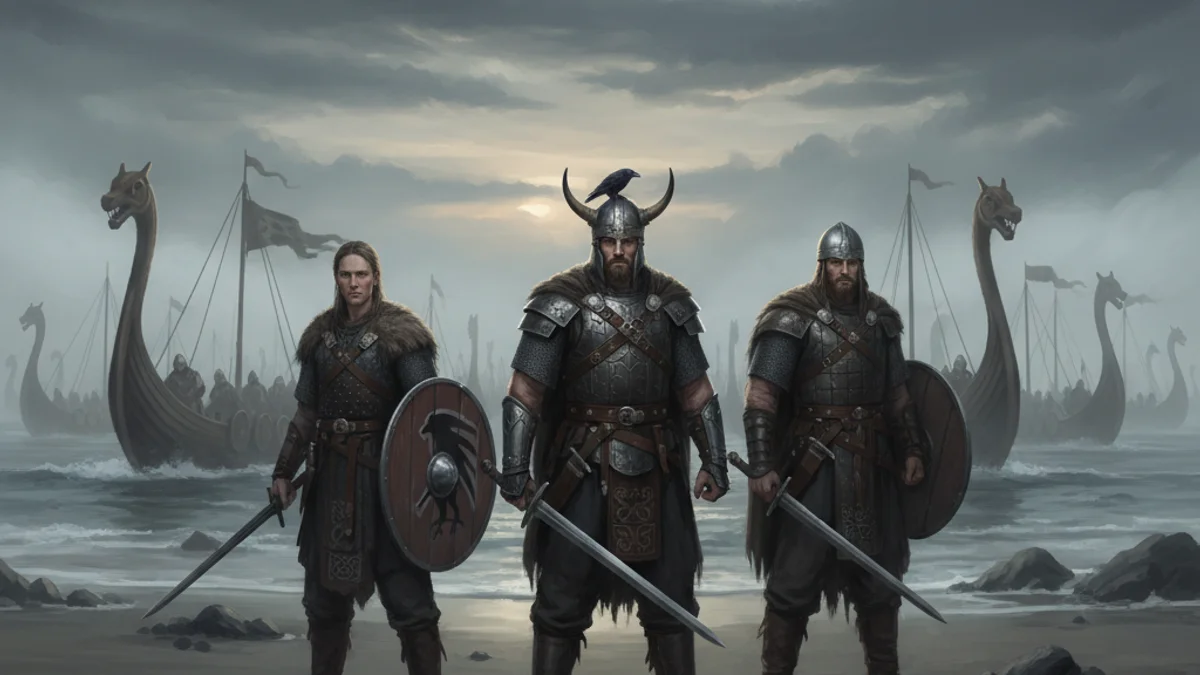
When word reached Scandinavia that the legendary Ragnar Lothbrok had been executed in a pit of vipers by King Ælla of Northumbria, a cold fury gripped his sons. Ivar the Boneless, the eldest and most cunning, gathered his brothers—Bjorn Ironside, Sigurd Snake-in-the-Eye, Hvitserk, and Ubba—to assemble a force unlike any seen before: the Great Heathen Army. They crossed the North Sea, landing on the shores of England not merely for plunder, but for retribution. After a series of brutal battles, the city of York fell to the Norsemen. King Ælla was eventually captured, facing the full weight of the brothers' grief. In a grim ritual known as the Blood Eagle, the sons of Ragnar exacted their revenge, ensuring that their father’s death was honored with the blood of his killer. Their conquest forever changed the map of England, cementing the legacy of the Lothbrok lineage in both history and saga.
Honor and legacy are maintained through action and the fulfillment of blood oaths.
Questions about this story
What is the moral of Ragnar's Sons' Revenge?
The moral is that honor and family legacy are paramount, often requiring great sacrifice and unity to uphold. It highlights the Norse belief that a father's death must be answered with decisive action.
Who were the sons of Ragnar Lothbrok?
The primary sons mentioned in the sagas were Ivar the Boneless, Bjorn Ironside, Sigurd Snake-in-the-Eye, Hvitserk, and Ubba. Each brother was a legendary warrior who led a portion of the Viking forces.
What was the Great Heathen Army?
The Great Heathen Army was a massive coalition of Norse warriors from Denmark, Norway, and Sweden. Unlike earlier Viking raids, this army sought to conquer and settle large parts of England starting in 865 AD.
How did King Ælla die in Norse mythology?
According to the sagas, King Ælla was captured by Ragnar's sons and subjected to the 'Blood Eagle.' This was a gruesome execution method involving the carving of the back to resemble wings.
Advertisement

Good night.
