
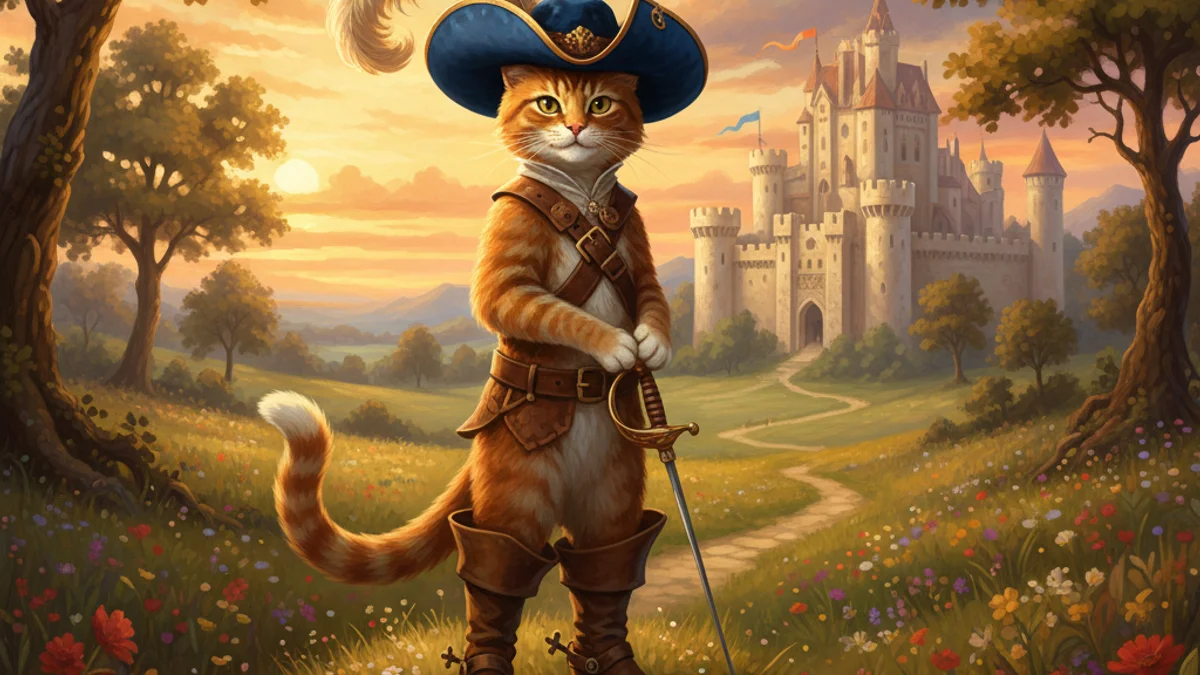
A miller left his three sons his only possessions: a mill, an ass, and a cat. The youngest son, receiving only the cat, lamented his luck until the feline spoke, asking for a pair of boots and a bag. Dressed as a gentleman, the cat began catching game and presenting it to the King as gifts from his fictional master, the 'Marquis of Carabas.' One day, Puss orchestrated a scheme where his master appeared to be drowning; the King rescued him and provided fine clothes. Puss then ran ahead of the royal carriage, threatening peasants to say the lands belonged to the Marquis. Finally, the cat reached the castle of a wealthy ogre. Through flattery, Puss dared the ogre to turn into a mouse, then promptly ate him. When the King arrived at the castle, he was so impressed by the 'Marquis' that he offered him his daughter’s hand in marriage. The miller’s son lived in luxury, and Puss became a great lord, only chasing mice for sport.
Wit, charm, and resourcefulness can be far more valuable than a physical inheritance.
Questions about this story
What is the moral of Puss in Boots?
The moral is that intelligence and industriousness are more important than inherited wealth. A person can change their destiny through quick thinking and a bit of daring.
Who wrote the most famous version of Puss in Boots?
The most well-known version was written by the French author Charles Perrault in 1697. It was part of his famous collection 'Tales of Mother Goose.'
How did Puss in Boots defeat the ogre?
Puss used flattery to trick the shapeshifting ogre into showing off his powers. After the ogre transformed into a tiny mouse, the cat immediately pounced and ate him.
Why did the cat ask for a pair of boots?
The boots served as a symbol of status and humanity, allowing the cat to move through the world of men and be taken seriously as a messenger for a nobleman.
Advertisement

Good night.
