
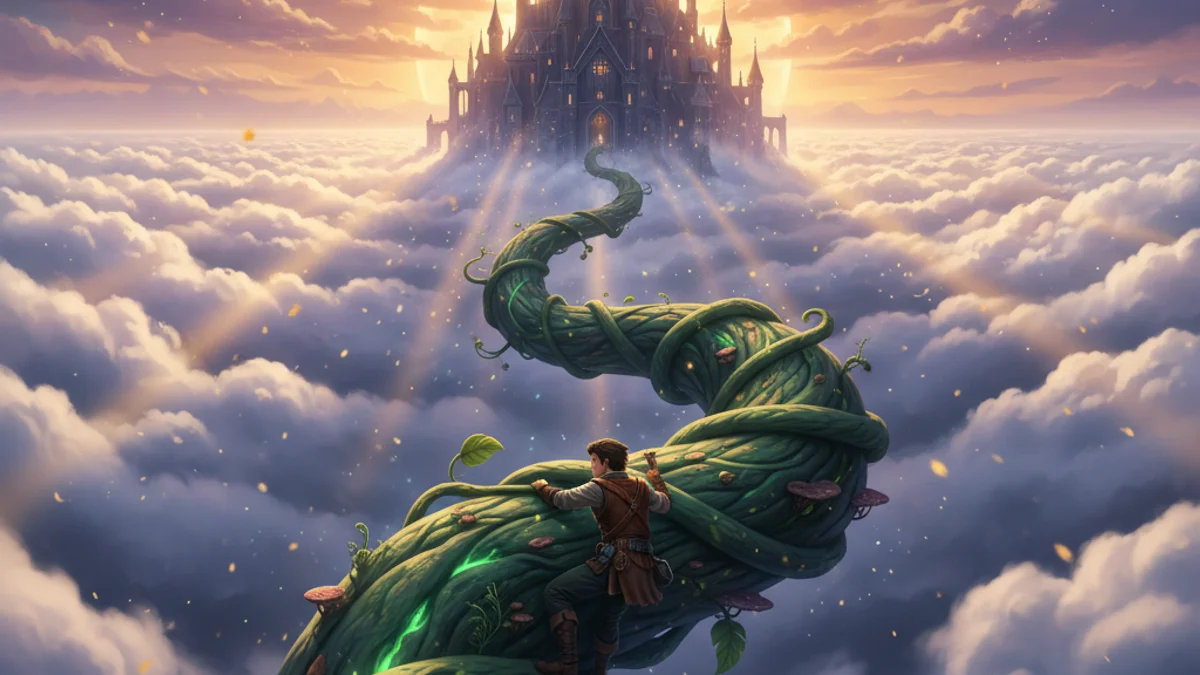
Once, a poor widow and her son Jack lived in a small cottage. Facing starvation, the mother sent Jack to sell their last cow. On the way, Jack met a mysterious man who offered five magic beans for the animal. Jack agreed, but his mother, furious at his foolishness, threw the beans out the window and sent him to bed hungry. Overnight, a colossal beanstalk grew into the heavens. Jack climbed it and discovered a castle in the clouds inhabited by a fearsome giant. With the help of the giant’s wife, Jack hid and managed to steal a bag of gold, then a hen that laid golden eggs, and finally a magical singing harp. On his final escape, the giant chased Jack down the beanstalk. Reaching the ground, Jack grabbed an axe and chopped the vine down. The giant fell to his death, and Jack and his mother lived in prosperity forever after.
Fortune often favors the bold and those who take risks, though one must be prepared to face the consequences of their actions.
Questions about this story
What is the moral of Jack and the Beanstalk?
The story suggests that resourcefulness and bravery can lead to success, even for the underdog. However, it also explores the ambiguous ethics of taking what belongs to others to survive.
What items did Jack steal from the giant?
Jack successfully took three treasures from the giant's castle: a bag of gold coins, a hen that laid golden eggs, and a magical golden harp that could sing by itself.
Who is the antagonist in Jack and the Beanstalk?
The primary antagonist is the Giant, a massive and man-eating creature who lives in a castle in the sky and chases Jack down the beanstalk.
Why did Jack's mother throw the beans away?
She was heartbroken and angry because she believed Jack had been cheated. She thought the beans were worthless and that they would now starve without the money from the cow.
Advertisement
Good night.
