
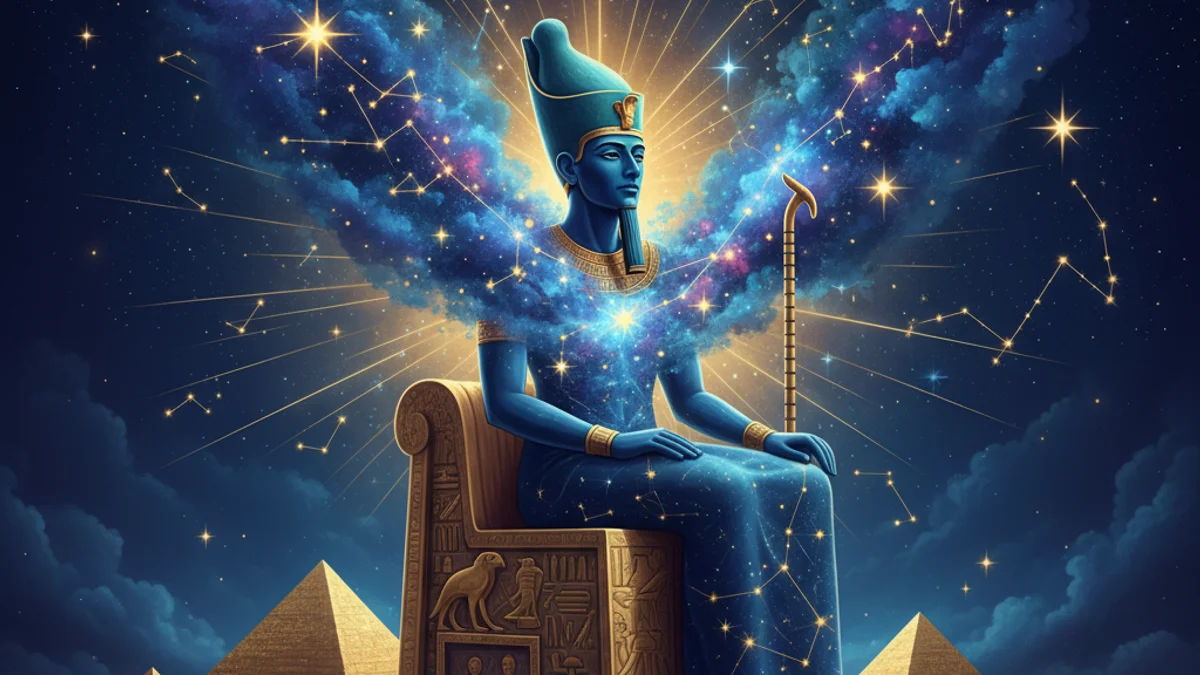
Before time began and the primeval mound rose from the waters of Nun, there was Ptah, the self-begotten master of all crafts. While other deities represented the raw forces of nature, Ptah sat in the silent void of Memphis, the center of the world. Within his heart, which the ancients believed was the seat of intelligence, he conceived the blueprint of the entire cosmos. He envisioned the stars, the Nile, the mountains, and the gods themselves in perfect harmony. When the vision was complete, he gave it form through the power of the tongue. By speaking their names aloud, he summoned the universe into reality. From his divine thoughts emerged the Ennead, and through his steady hands, he gave shape to the physical bodies of all living things. Ptah remains the eternal architect, reminding the world that every physical marvel begins as a whisper in the soul and a spark in the mind.
True creation begins in the heart and mind before it takes shape in the physical world. It teaches that intention and word carry the power to shape reality.
Questions about this story
What is the moral of Ptah the Creator Craftsman?
The story emphasizes that wisdom and thought are the foundations of all physical creation. It teaches that the power of the word and clear intention can bring even the most complex dreams into reality.
How did Ptah create the world differently from other gods?
Unlike gods who used physical actions, Ptah used the Memphite Theology of creation. He conceived the world in his heart and brought it into being simply by speaking its name aloud.
What are the symbols associated with Ptah?
Ptah is commonly depicted as a mummified man wearing a tight-fitting skullcap and holding a powerful scepter. This scepter combines the symbols of the Ankh for life, the Was for power, and the Djed for stability.
Where was the primary center of Ptah's worship?
Ptah was the patron deity of Memphis, the ancient capital of Egypt. His temple there was so famous that its name eventually evolved into the word 'Egypt' through the Greek language.
Advertisement
Good night.
