
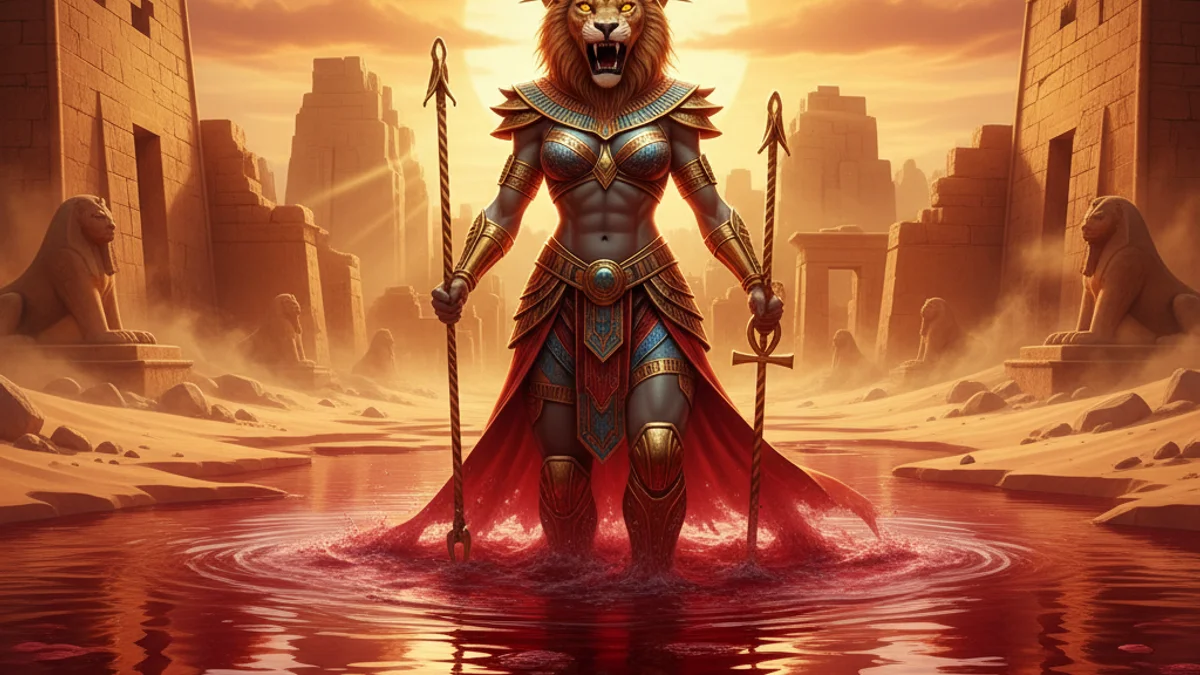
As the sun god Ra grew old, the humans of Earth began to lose their respect for his divine laws and plotted against him. To restore order, Ra sent his daughter, the Eye of Ra, to punish the rebels. She descended upon the world as the fierce lioness goddess Sekhmet. Her fury was unmatched, and she began a slaughter so great that the Nile ran red with blood. However, Sekhmet’s bloodlust became uncontrollable, and Ra soon realized she would not stop until all of humanity was extinct. To save the survivors, Ra devised a clever ruse. He ordered his servants to brew seven thousand jars of beer and dye them red with pomegranate juice to resemble blood. They spread the liquid across the fields where Sekhmet intended to hunt next. Finding the 'blood,' the goddess drank greedily until she became heavily intoxicated and fell into a deep sleep. When she finally awoke, her rage had vanished, and she transformed back into the gentle Hathor, sparing the human race.
Unchecked anger can quickly become a destructive force that harms the innocent; wisdom and temperance are required to balance power.
Questions about this story
What is the moral of Sekhmet's Rampage?
The story teaches that unchecked rage can become destructive and that wisdom and temperance are necessary to balance power. It illustrates how even divine justice must have limits to preserve life.
Why did Ra decide to punish humanity?
Ra grew old and noticed that humans were no longer following his laws and were plotting against him. He sent his Eye to restore order and punish those who had turned away from the divine.
How was Sekhmet finally stopped?
Ra realized Sekhmet would destroy everyone, so he ordered thousands of jars of beer to be dyed red with pomegranate juice. Sekhmet, thinking it was blood, drank until she fell into a deep sleep.
What is the relationship between Sekhmet and Hathor?
In many versions of the myth, Sekhmet and Hathor are two sides of the same deity. Hathor represents love and beauty, while Sekhmet represents the destructive, fiery heat of the sun.
Advertisement

Good night.
