
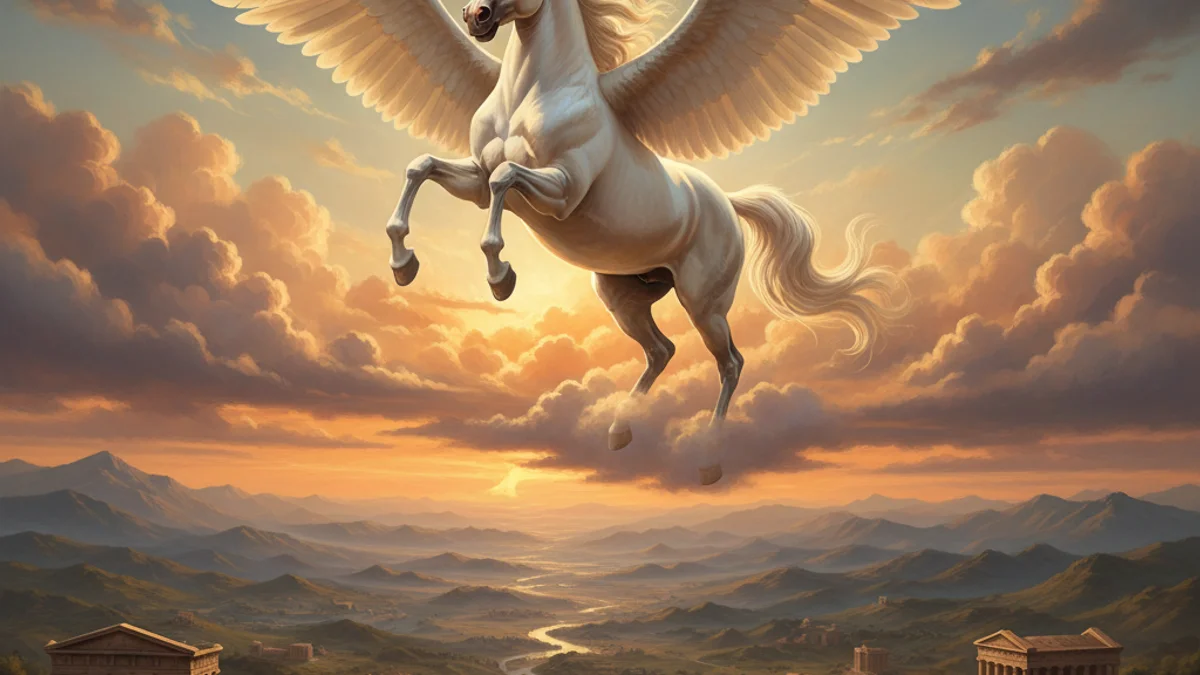
Born from the blood of the Gorgon Medusa, Pegasus was a divine winged stallion of pure white. He remained wild and free until the hero Bellerophon, aided by a golden bridle from the goddess Athena, managed to tame him. Together, the pair performed miraculous feats, most notably slaying the fire-breathing Chimera. However, their success bred a dangerous arrogance in Bellerophon. Believing himself worthy of the gods, the hero attempted to fly Pegasus to the peak of Mount Olympus. Zeus, offended by this mortal hubris, sent a gadfly to sting the horse. Pegasus reared in pain, throwing Bellerophon back to the earth. While the hero fell into disgrace, Pegasus continued his flight to the heavens, where he became the bearer of Zeus's thunderbolts and was eventually immortalized as a constellation.
Success and talent are gifts that should be handled with humility; prideful overreaching often leads to a sudden and tragic downfall.
Questions about this story
What is the moral of Pegasus the Winged Horse?
The moral is to remain humble despite achieving great heights. It warns that arrogance and overreaching one's mortal limits can lead to a swift and painful fall from grace.
How was Pegasus born in Greek mythology?
Pegasus was born from the blood of the Gorgon Medusa after she was beheaded by the hero Perseus. He is considered the offspring of Medusa and the sea god Poseidon.
How did Bellerophon tame Pegasus?
Bellerophon tamed the winged horse using a magical golden bridle given to him by the goddess Athena. He found Pegasus drinking at the Pierian spring and was able to subdue him peacefully.
What happened to Bellerophon at the end of the story?
Driven by hubris, Bellerophon tried to fly to Mount Olympus to join the gods. Zeus sent a gadfly to sting Pegasus, causing Bellerophon to fall to earth, where he lived the rest of his life in lonely misery.
Advertisement


Good night.
