
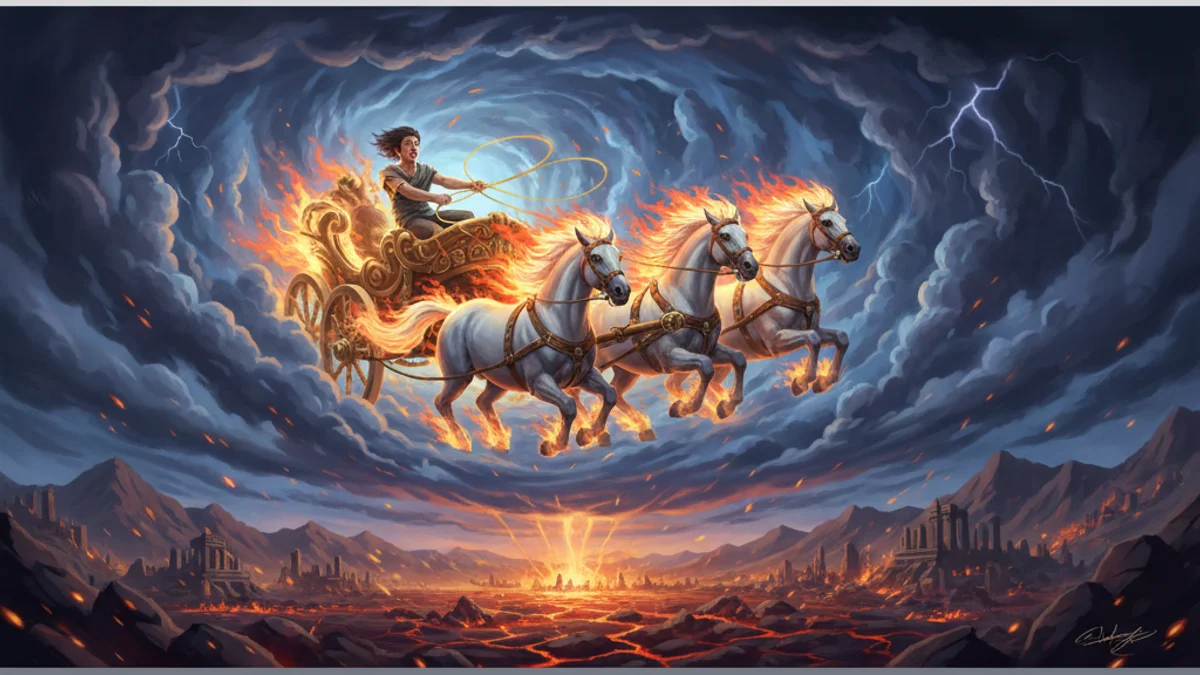
Phaethon, a mortal youth, journeyed to the radiant palace of the sun to seek proof of his divine parentage. His father, the Titan Helios, was so overjoyed to see his son that he swore an unbreakable oath by the River Styx to grant the boy any wish he desired. To Helios’s horror, Phaethon asked to drive the golden sun chariot across the sky for a single day. Helios pleaded with his son to reconsider, warning that the fiery steeds were too powerful for even the gods to command, but the boy remained stubborn. Bound by his word, Helios reluctantly handed over the reins. As soon as the chariot ascended, the horses sensed a weak hand and bolted from their path. They soared too high, causing the earth to freeze, and then plunged too low, scorching the African plains into deserts and boiling the oceans. To prevent the total destruction of the world, Zeus was forced to intervene, striking Phaethon down with a thunderbolt. The boy fell like a shooting star into the river Eridanus, a tragic victim of his own hubris.
One should recognize their own limitations and avoid letting pride drive them to undertake tasks far beyond their capabilities.
Questions about this story
What is the moral of Helios and Phaethon?
The moral centers on the dangers of hubris and the importance of listening to the wisdom of those more experienced. It warns that pursuing power or status beyond one's ability leads to catastrophe.
Why did Zeus have to kill Phaethon?
Phaethon lost control of the sun chariot, causing it to veer too close to the earth. Zeus struck him down with a thunderbolt to stop the chariot from burning the entire world and destroying all life.
How did the earth change during Phaethon's flight?
The myth explains that the chariot's erratic path created the Sahara Desert and dried up great rivers. It also suggests that the heat turned the skin of the Ethiopians black and froze the northern regions when the chariot flew too high.
What was the mistake Helios made?
Helios made a rash promise by the River Styx, an oath that even the gods cannot break, before knowing what his son would ask for. This left him powerless to refuse Phaethon’s dangerous request.
Advertisement

Good night.
