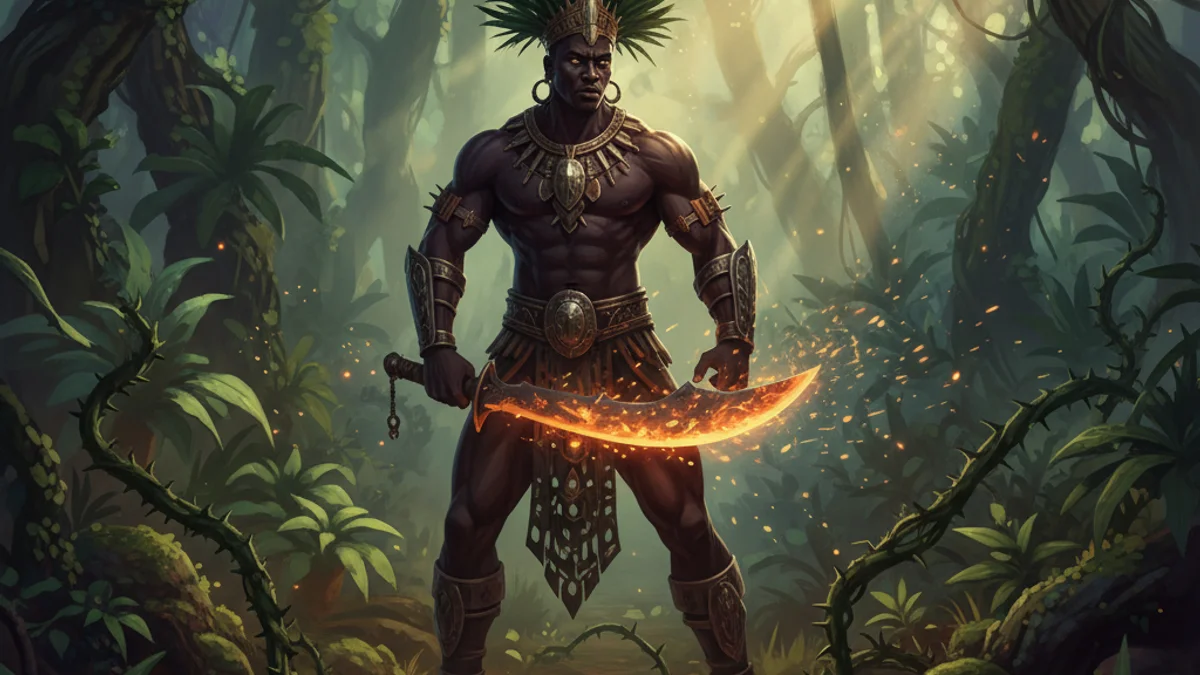
When the Orishas first descended from the heavens to the watery world below, they found their progress halted by a vast, impenetrable wilderness of dense vines and iron-hard trees. While the other gods stood back in hesitation, Ogun, the master of the forge, stepped forward. Armed with a blade of primordial iron he had fashioned himself, he hacked through the chaos, clearing a path for all the deities to reach the earth. For this service, the gods offered him a kingdom, but the solitary Ogun preferred the heat of the forge and the wildness of the forest. He became the patron of all who use tools, from the blacksmith to the hunter. However, his legend is also a cautionary one; when he finally accepted the crown of Ire, his fierce, unyielding nature led to a tragic outburst during a time of celebration, teaching the world that the same iron that builds civilization can also destroy it if not tempered by self-control.
Strength and technology are vital for progress, but they must be tempered with discipline and emotional restraint to avoid destruction.
Advertisement
Questions about this story
What is the moral of Ogun God of Iron?
The story teaches that while power and skill are necessary to overcome obstacles, they require great responsibility and emotional temperance to remain beneficial. Without self-control, great strength can lead to unintended tragedy.
Who is Ogun in African mythology?
Ogun is a major Orisha in the Yoruba religion, serving as the god of iron, tools, war, and craftsmanship. He is seen as the pioneer who made human civilization possible through technology.
What are Ogun's traditional symbols?
His primary symbols are iron, the machete, and the anvil. He is often associated with the color green and black, and is frequently depicted wearing palm fronds.
Why is Ogun called the 'Pathfinder'?
He earned this title by using his iron tools to clear the initial passage through the primordial barrier that prevented the other Orishas from reaching and inhabiting the Earth.
Advertisement