
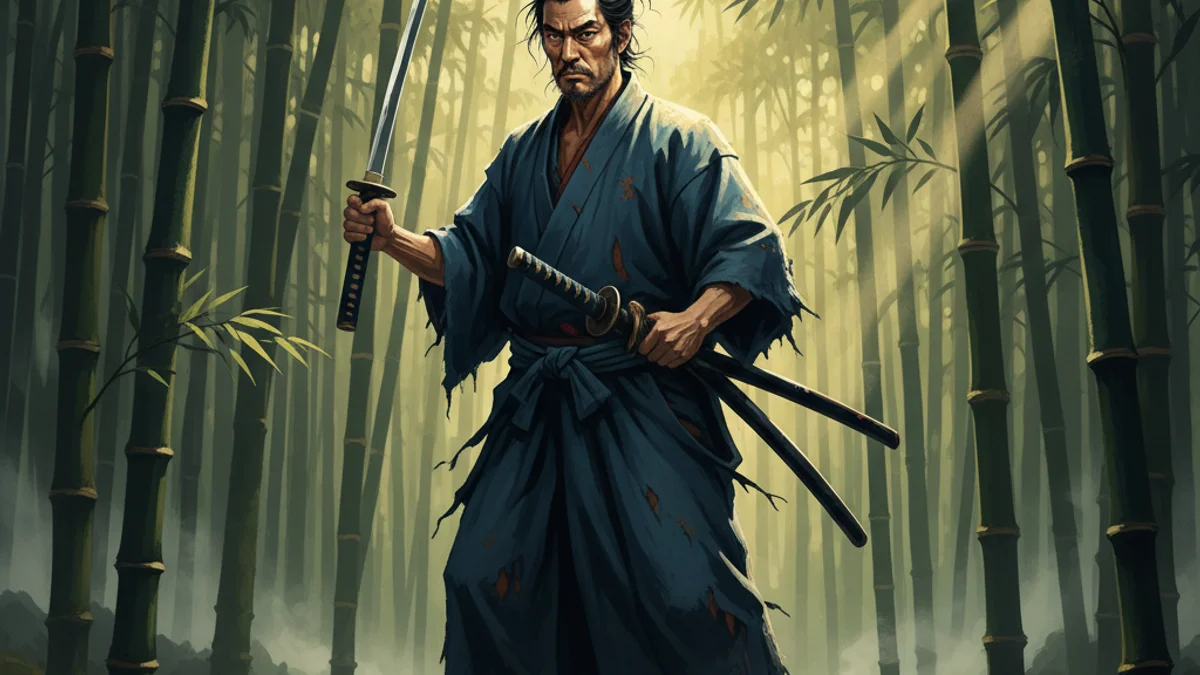
In the early Edo period of Japan, Miyamoto Musashi was a wandering ronin who realized that the traditional two-handed grip on a katana left the warrior's other hand useless. During his countless duels and the chaos of the Battle of Sekigahara, he observed that a warrior should never die with a weapon still in its scabbard. He began to practice wielding the long katana in his right hand and the short wakizashi in his left. This revolutionary approach, which he called Niten Ichi-ryū or 'Two Heavens as One,' allowed him to strike and parry simultaneously. While other schools mocked him for breaking tradition, Musashi proved the style's lethality by defeating dozens of opponents at once. He taught that true mastery comes from balance and the pragmatic use of every resource at one's disposal, ultimately remaining undefeated in over sixty duels throughout his life.
True mastery requires the flexibility to break with tradition and the wisdom to utilize every resource at your disposal.
Advertisement
Questions about this story
What is the moral of Musashi and the Two Swords?
The moral is centered on adaptability and resourcefulness. It teaches that one should not be bound by rigid traditions if a more effective and balanced path exists to achieve success.
What is the name of Musashi's two-sword style?
The style is called Niten Ichi-ryū, which translates to 'Two Heavens as One.' It is the foundation of his martial philosophy and is still studied by swordsmen today.
Why did Musashi decide to use two swords?
Musashi believed that it was a waste to have a weapon and not use it, especially in the heat of battle. He found that using both blades allowed for better defense against multiple attackers and greater versatility in close quarters.
Was Miyamoto Musashi a real historical figure?
Yes, Musashi was a real 17th-century Japanese swordsman, philosopher, and strategist. He is widely considered the greatest 'kensei' (sword saint) in Japanese history.
Advertisement
