
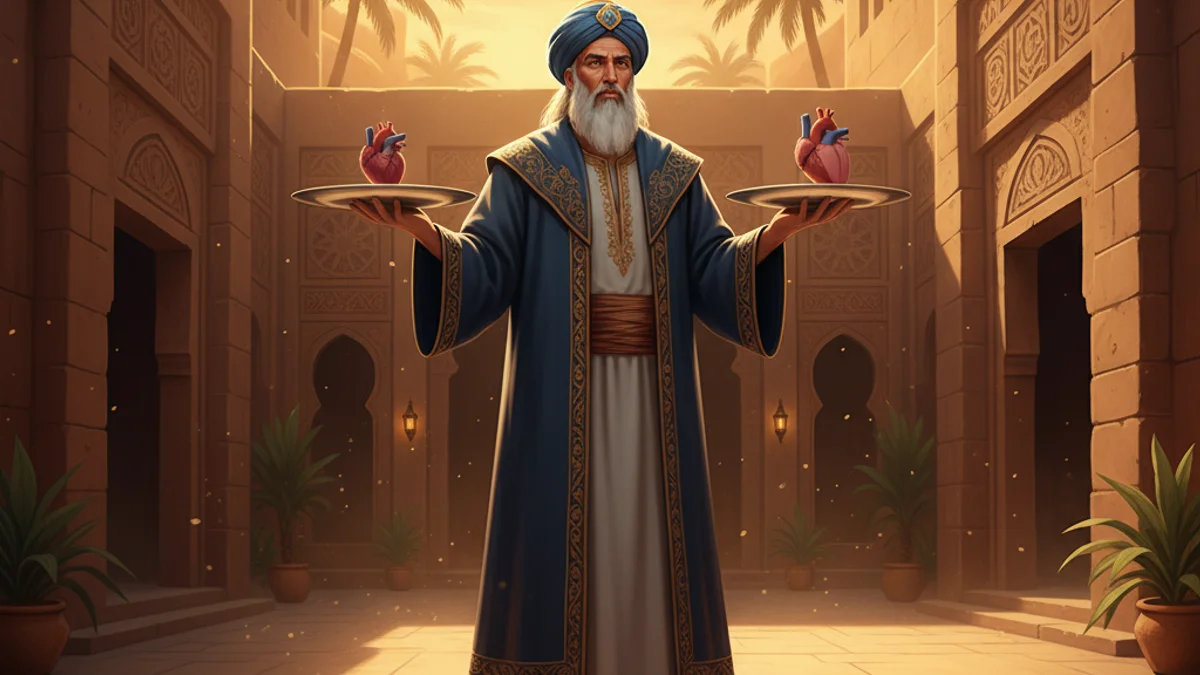
Luqman was a man of humble beginnings, often said to be enslaved, yet his mind possessed a wealth no gold could buy. His master, recognizing his wit, once tested him. 'Slaughter a sheep,' the master commanded, 'and bring me the two best parts of the animal.' Luqman complied, returning with the tongue and the heart. Days later, the master tested him again: 'Now, slaughter another sheep and bring me the two worst parts.' To the master’s surprise, Luqman returned once more with the tongue and the heart. When asked for an explanation, Luqman replied with calm gravity: 'Master, there is nothing better than these two when they are pure, and nothing more treacherous or foul when they are wicked.' From that day on, Luqman's reputation for wisdom spread across the lands, teaching that a person's value is found in their intentions and their speech.
The character of a person is defined by their heart and their words; they can be the source of great virtue or great destruction.
Questions about this story
What is the moral of Luqman's Wisdom?
The moral is that the tongue and the heart are the most influential parts of a human being. When used for good, they are the best of things, but when used for evil, they are the worst.
Who was Luqman in Middle Eastern folklore?
Luqman is a legendary sage known for his profound insight and piety. He is mentioned in the Quran and is celebrated across the Middle East as a philosopher and teacher.
Is Luqman considered a prophet?
Most Islamic scholars and historians classify Luqman as a 'Hakim' or wise man rather than a prophet. However, his wisdom is considered divinely inspired and of great spiritual value.
What are some other famous Luqman stories?
Aside from the sheep story, he is famous for the advice he gave to his son regarding humility, and the story of the man, the boy, and the donkey regarding public opinion.
Advertisement

Good night.
