
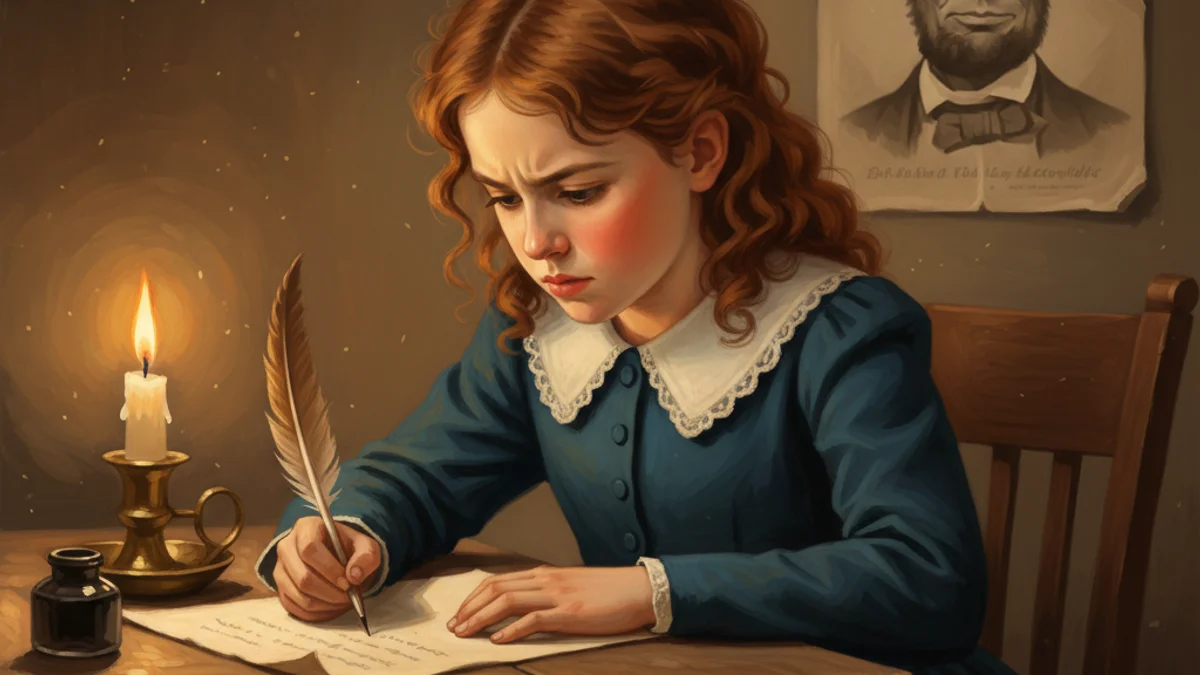
In the autumn of 1860, eleven-year-old Grace Bedell of Westfield, New York, looked at a campaign portrait of Abraham Lincoln and felt his face appeared too thin and gaunt. She sat down and wrote him a sincere letter, suggesting that if he grew whiskers, he would look much better and win more votes. She boldly told him that 'all the ladies like whiskers' and would tease their husbands into voting for him. To her surprise, the presidential candidate wrote back just days later. While he questioned if it might be seen as a 'piece of silly affection' to start growing a beard at his age, he took her advice to heart. By the time he set off on his inaugural train journey to Washington D.C. in February 1861, Lincoln sported the full beard that would become his trademark. During a stop in Westfield, he asked for Grace by name from the crowd, stepped off the train to meet her, and told her, 'You see, I let these whiskers grow for you, Grace.'
Great leaders value the perspectives of others, proving that even a small voice can influence the course of history.
Questions about this story
What is the moral of Lincoln and Grace Bedell?
The moral is that every individual, regardless of age, has the power to influence others through honest communication. It also shows that true leaders remain humble and open to suggestions from the people they serve.
Did Abraham Lincoln really grow a beard because of a girl?
Yes, historical records and personal letters confirm that 11-year-old Grace Bedell's suggestion played a pivotal role in Lincoln's decision. He grew the beard between his election and his inauguration.
What did Grace Bedell say in her letter to Lincoln?
She told him his face was too thin and that he would look better with whiskers. She also mentioned that her brothers would vote for him and that other women would encourage their husbands to do the same if he changed his appearance.
Did Lincoln ever meet Grace Bedell in person?
Yes, during his inaugural train trip to Washington in 1861, Lincoln made a special stop in Westfield, New York. He called Grace out from the crowd to show her his new beard and thank her for the advice.
Advertisement
Good night.
