
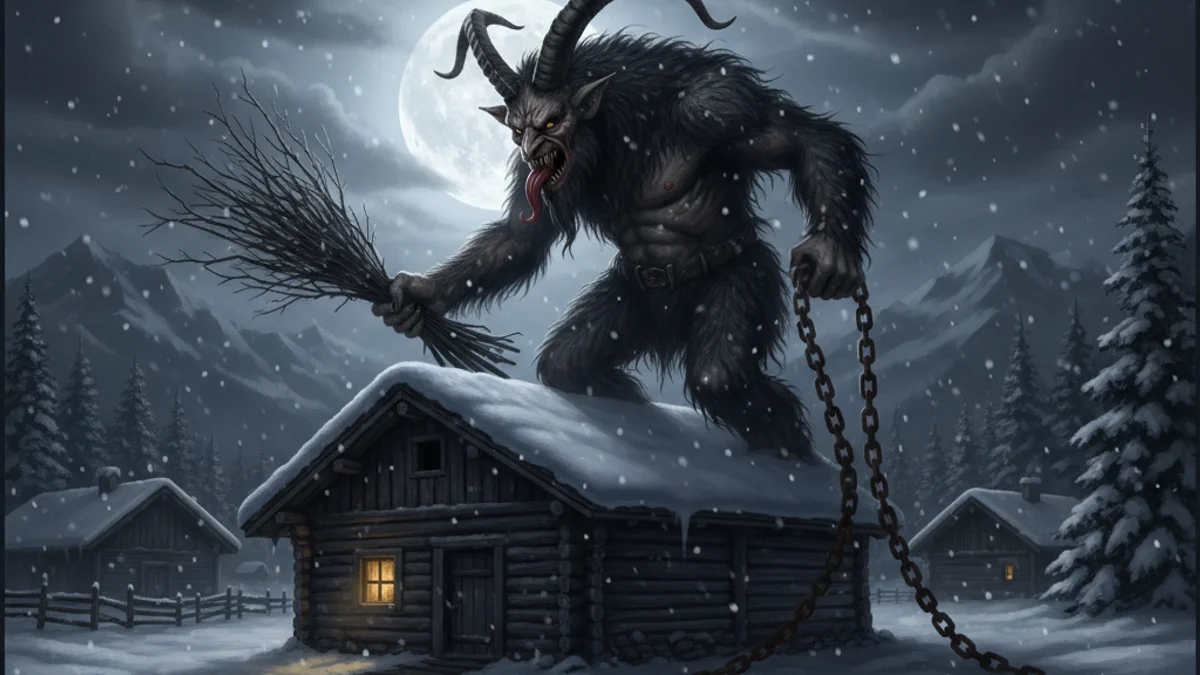
In the shadow of the snow-capped Alps, a dark tradition follows the light of the holiday season. While Saint Nicholas travels from home to home on the eve of December 6th to reward the virtuous with sweets and gold, he does not travel alone. Behind him, draped in heavy rusted chains and clattering bells, stalks Krampus—the half-goat, half-demon beast of winter. With curved horns, a lolling tongue, and one cloven hoof, Krampus is the shadow to the Saint’s light. While the good children wake to find treats in their boots, the wicked must fear the bundle of birch branches and the dark sack Krampus carries upon his back. He serves as a grim reminder that one’s actions throughout the year are always observed, and that those who choose the path of mischief may find themselves swatted with switches or, worse, spirited away into the cold, dark woods. For centuries, this duality has defined the winter season in Central Europe, ensuring that even in the darkest nights, the balance between reward and retribution is maintained.
Our actions carry weight and consequences; true goodness is choosing the right path even when the shadows are watching.
Questions about this story
What is the moral of Krampus the Christmas Demon?
The story serves as a cautionary tale that bad behavior has consequences. it teaches that while virtue is rewarded, those who choose to be wicked must face the repercussions of their actions.
Where did the legend of Krampus originate?
The legend of Krampus originates from the Alpine regions of Europe, specifically in countries like Austria, Germany, and Slovenia. It is a pre-Christian Germanic tradition that eventually merged with Christian winter celebrations.
When is Krampusnacht celebrated?
Krampusnacht, or Krampus Night, is celebrated on the evening of December 5th. This is the night before the Feast of Saint Nicholas, when the demon is said to roam the streets punishing the wicked.
What is the relationship between Krampus and St. Nicholas?
Krampus is often depicted as the 'shadow' or dark companion of Saint Nicholas. While the Saint focuses on rewards and benevolence, Krampus handles the discipline and punishment, creating a balance of light and dark.
Advertisement

Good night.
