
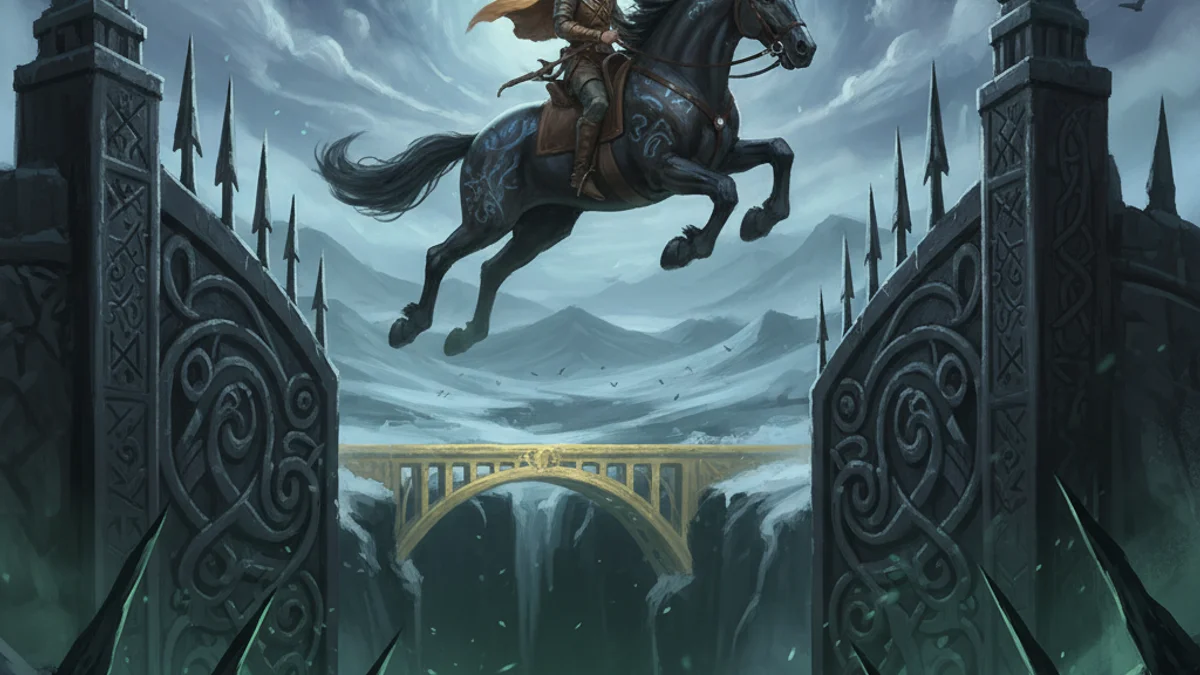
After the beloved god Baldur was slain by a mistletoe dart, despair gripped Asgard. Frigg, his mother, begged for a volunteer to ride to the realm of the dead to ransom his soul. Hermod the Nimble, son of Odin, stepped forward. Mounting Sleipnir, the eight-legged stallion, Hermod galloped for nine nights through deep, dark valleys until he reached the river Gjöll. He crossed the golden bridge guarded by the maiden Modgud and leaped over the gates of Hel. Inside the hall of Eljudnir, he found Baldur sitting in the seat of honor. Hermod pleaded with the goddess Hel, who agreed to release Baldur on one condition: every creature and object in the cosmos must weep for him. Hermod returned to Asgard with the news, but the giantess Thökk—Loki in disguise—refused to shed a tear, sentencing Baldur to remain in the underworld until Ragnarök.
Grief is a universal debt that cannot be bargained away, and even the greatest efforts can be thwarted by a single act of malice.
Questions about this story
What is the moral of Hermod's Ride to Hel?
The story teaches that death is an absolute power that even the gods cannot easily circumvent. It also highlights how a single individual's selfishness or malice can undermine the collective will and hope of an entire community.
Why did Hermod go to the underworld?
Hermod volunteered because he was the swiftest of the gods and possessed the courage to face the ruler of the dead. As the son of Odin, he was entrusted with the crucial task of negotiating the return of his brother, Baldur.
Who is Modgud in Norse mythology?
Modgud is the giantess maiden who guards the bridge Gjöll, which crosses the river of the same name. She stops Hermod to ask why he, a living being with the color of life, seeks to enter the realm of the silent dead.
What was Hel's condition for Baldur's release?
The goddess Hel agreed to release Baldur only if every living thing and inanimate object in the nine realms wept for him. This condition was nearly met until the giantess Thökk refused, claiming she would weep 'dry tears' for the dead god.
Advertisement


Good night.
