
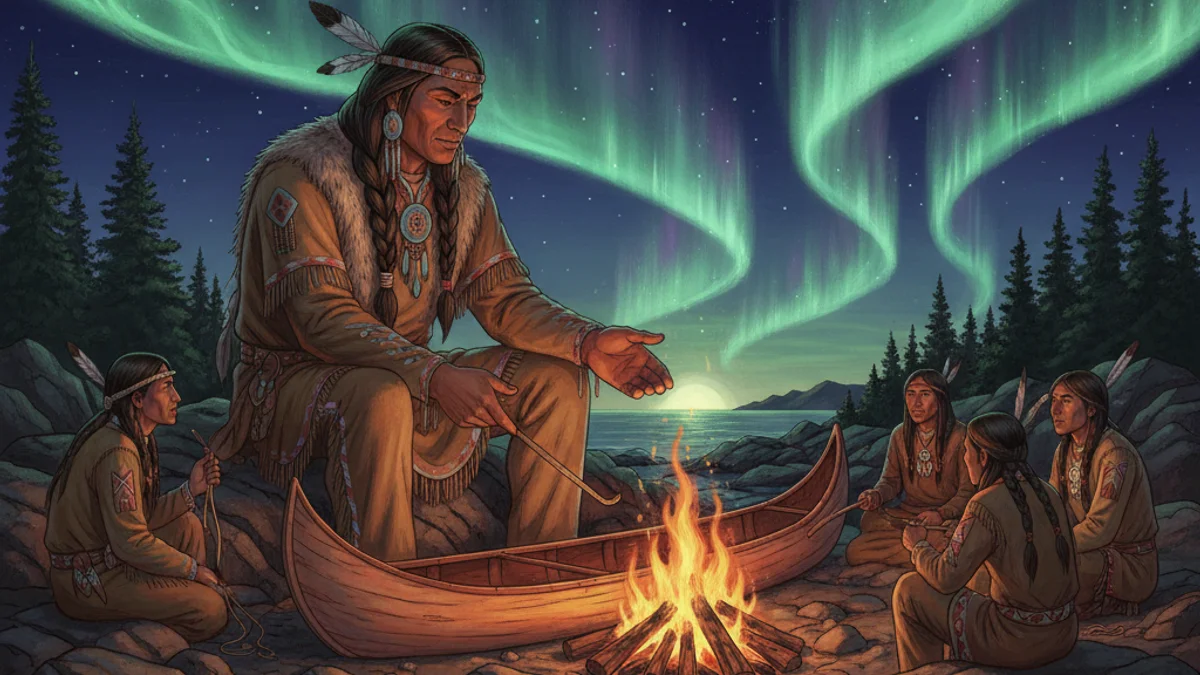
Long ago, after Glooscap had shaped the rivers and mountains, he turned his attention to the First People, the Wabanaki. He saw that while they had life, they lacked the knowledge to thrive in a world shared with powerful spirits and wild beasts. Glooscap became their great teacher. He showed them how to craft birchbark canoes that could glide silently over the water and how to fashion hooks from bone and nets from fiber to harvest the silver fish. He taught them the secret languages of the forest, explaining which plants could heal a fever and which roots could sustain a traveler. Most importantly, Glooscap taught the people that they were not masters of the earth, but part of a great circle. He told them to take only what they needed and to always give thanks to the animals that gave their lives for the tribe’s survival. Through his patience and wisdom, Glooscap transformed the people from struggling wanderers into a noble nation, instilling a legacy of respect for the land that remains to this day.
True heroism lies in sharing wisdom and living in balance with the natural world rather than seeking to dominate it.
Questions about this story
What is the moral of Glooscap the Teacher?
The moral is that survival and prosperity come through the acquisition of wisdom and maintaining a respectful, balanced relationship with nature. It emphasizes that a leader's greatest gift is education and empowerment.
Who is Glooscap in Native American mythology?
Glooscap is a legendary culture hero and transformer figure found in the folklore of the Wabanaki nations, including the Mi'kmaq, Maliseet, and Penobscot. He is often depicted as a benevolent giant with supernatural powers.
Which tribes tell the stories of Glooscap?
The stories of Glooscap originate from the Wabanaki Confederacy tribes located in what is now Atlantic Canada and the northeastern United States, specifically Maine and the Maritimes.
How did Glooscap help the first people?
He served as a divine educator, teaching them essential skills like hunting, fishing, canoe-making, and herbal medicine, while also protecting them from monsters and chaotic spirits.
Advertisement
Good night.
