
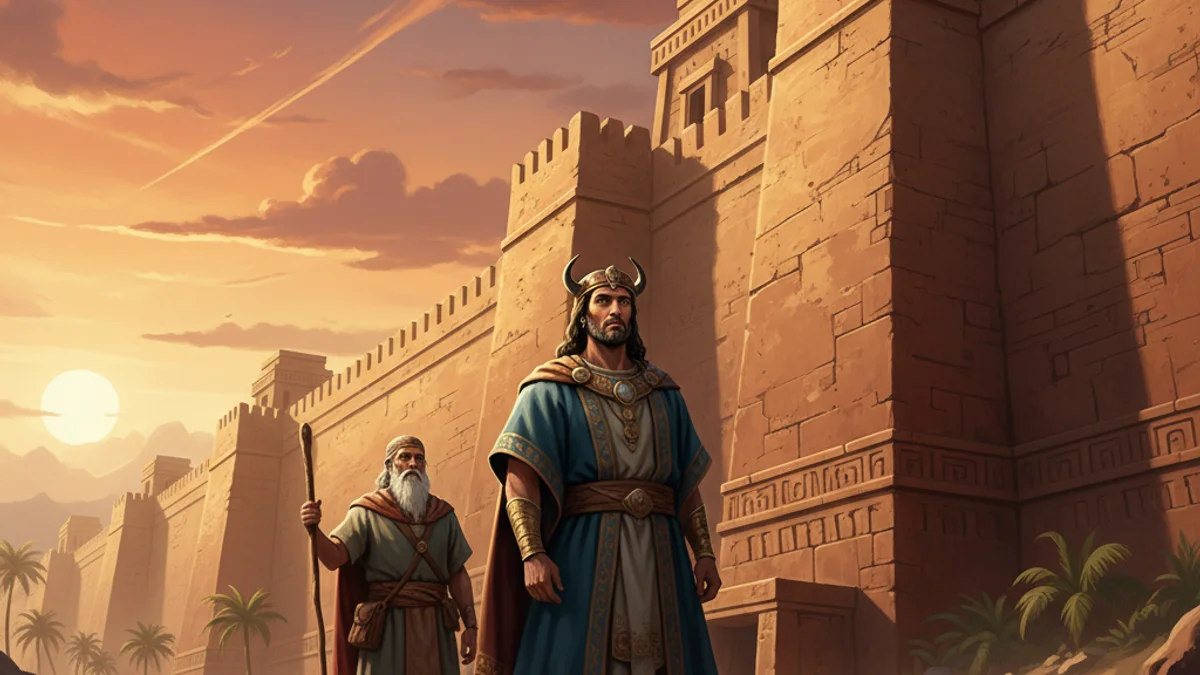
Weary from his long journey and heavy with the sting of loss, King Gilgamesh walked toward the massive gates of Uruk. He had traveled to the edge of the world to find the secret of eternal life, only to fail. He had lost the magical plant of rejuvenation to a serpent in a moment of carelessness, and he now stood before his kingdom as a simple mortal man. Beside him was Urshanabi, the ferryman of the dead. Gilgamesh did not weep for his lost youth. Instead, he pointed to the city's towering ramparts, the foundation of baked brick, and the lush orchards within the walls. He realized that while his flesh would one day turn to dust, the great city he built and the justice he provided for his people would endure for generations. In that moment of acceptance, the king found a peace that the gods had never promised him, entering his gates not as a conqueror of death, but as a wise guardian of life.
True immortality is not found in living forever, but in the lasting legacy of the work we leave behind and the lives we touch.
Questions about this story
Why did Gilgamesh return to Uruk without immortality?
After failing the tests of Utnapishtim and losing the plant of rejuvenation to a snake, Gilgamesh realized that eternal life was reserved for the gods.
What did the snake represent in the Epic of Gilgamesh?
The snake represents the loss of youth and the inevitability of nature, as it sheds its skin and leaves Gilgamesh behind with his mortality.
Who is Urshanabi in the story?
Urshanabi is the ferryman who traveled across the Waters of Death; he accompanies Gilgamesh back to Uruk to witness the king's final realization.
What is the significance of the walls of Uruk?
The walls symbolize Gilgamesh's lasting legacy; they represent the human achievement that survives long after an individual's life has ended.
Advertisement

Good night.
