
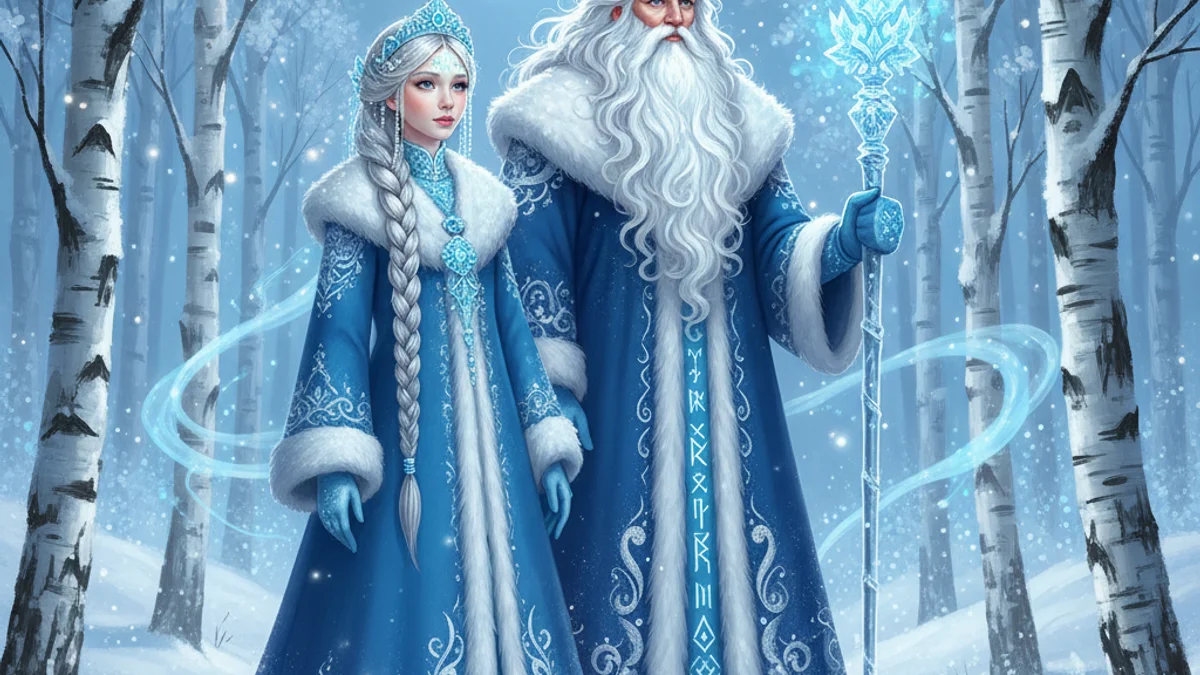
In a small village, an elderly couple who had spent their lives childless sat watching the local children play in the deep winter snow. Inspired by their laughter, the old man and woman stepped outside and carefully carved a beautiful girl out of the drifts. To their astonishment, the snow girl’s eyes blinked blue, her lips turned red, and she stepped into their arms as Snegurochka, the Snow Maiden. She brought immense warmth to their lonely home, but as the sun of spring began to thaw the earth, she grew pale and melancholy. She hid in the shadows of the birch trees, avoiding the golden rays she once loved. On a festive evening, her friends coaxed her into the woods to celebrate the arrival of summer. They built a bonfire and took turns jumping over the flames. When Snegurochka leaped, she did not land on the other side. Instead, she dissolved into a fine mist, floating upward to become a soft, white cloud in the sky. Though she was gone, her spirit remained as the companion of Father Frost, returning every winter to bring magic to those who believe.
Nature follows an eternal cycle that must be respected, and beauty, though sometimes fleeting, leaves a lasting impact on the heart.
Advertisement
Questions about this story
What is the moral of Father Frost and the Snow Maiden?
The story emphasizes that everything has its season and that we must cherish the time we have with loved ones. It also reflects the inevitable transition between the seasons of winter and spring.
Who is the Snow Maiden in Russian folklore?
Known as Snegurochka, she is the granddaughter and helper of Father Frost. Unlike many western holiday figures, she is a unique female character who assists in delivering gifts.
How was the Snow Maiden created?
In the most famous version of the tale, she was carved out of snow by an elderly, childless couple who wished for a daughter. Their love and the winter magic brought her to life.
Why does the Snow Maiden melt at the end of the story?
She melts because she is a creature of winter and cannot survive the heat of spring or summer. In the folklore, her jumping over a bonfire symbolizes the end of winter's reign.
Advertisement

