
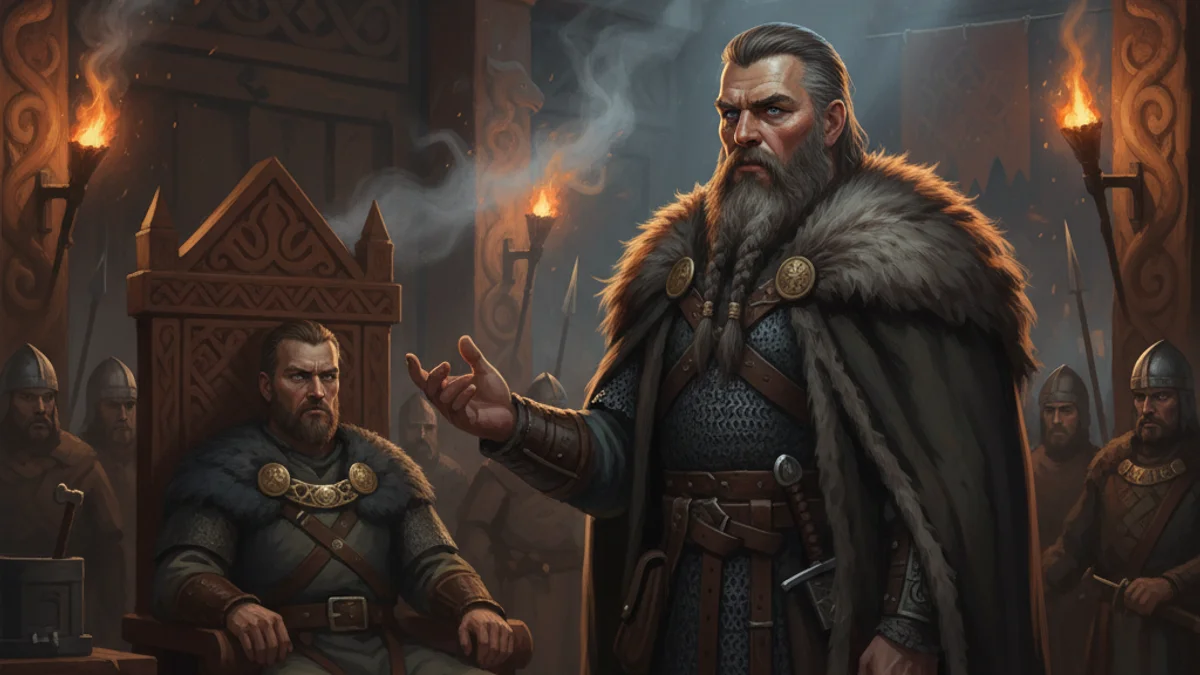
Egil Skallagrimsson was a Viking of contradictions: a ruthless warrior, a master of runes, and a legendary skald. Born in Iceland, Egil was a temperamental child who committed his first killing at age seven. His life was defined by a bitter feud with King Erik Bloodaxe and his sorcerous wife, Queen Gunnhild. After years of raiding and conflict, Egil was shipwrecked on the coast of Northumbria—territory controlled by his mortal enemy, Erik. Captured and facing certain execution, Egil’s friend Arinbjorn urged him to use his intellect. In a single night, Egil composed 'Head Ransom,' a masterful twenty-stanza poem praising the King. Despite his hatred for Egil, Erik was so moved by the poetic craft and the tradition of honoring a great skald that he spared Egil’s life. Later in life, after the tragic drowning of his sons, Egil composed 'Sonatorrek,' a poem that transformed his immense grief into a monumental piece of literature, proving that the pen and the sword were equally his instruments.
The power of creativity and the spoken word can overcome even the deadliest of enemies and provide a path through the deepest grief.
Questions about this story
What is the moral of Egil Skallagrimsson?
The story teaches that intelligence and art are as vital as physical strength. It demonstrates that mastery of language can resolve conflicts that weapons cannot, and provide emotional healing during times of loss.
Who was Egil Skallagrimsson?
Egil was a 10th-century Icelandic Viking, warrior, and poet. He is the protagonist of Egil's Saga, which portrays him as a complex hero who was both violent and deeply sensitive.
What is the poem 'Head Ransom'?
Head Ransom (Höfuðlausn) is the poem Egil composed in a single night to save himself from execution by King Erik Bloodaxe. It is a masterpiece of skaldic verse that praised the King's military prowess.
Was Egil Skallagrimsson a real historical figure?
While the saga contains legendary elements, most historians believe Egil was a real person. Many of the poems attributed to him are considered authentic examples of 10th-century skaldic poetry.
Advertisement

Good night.
