
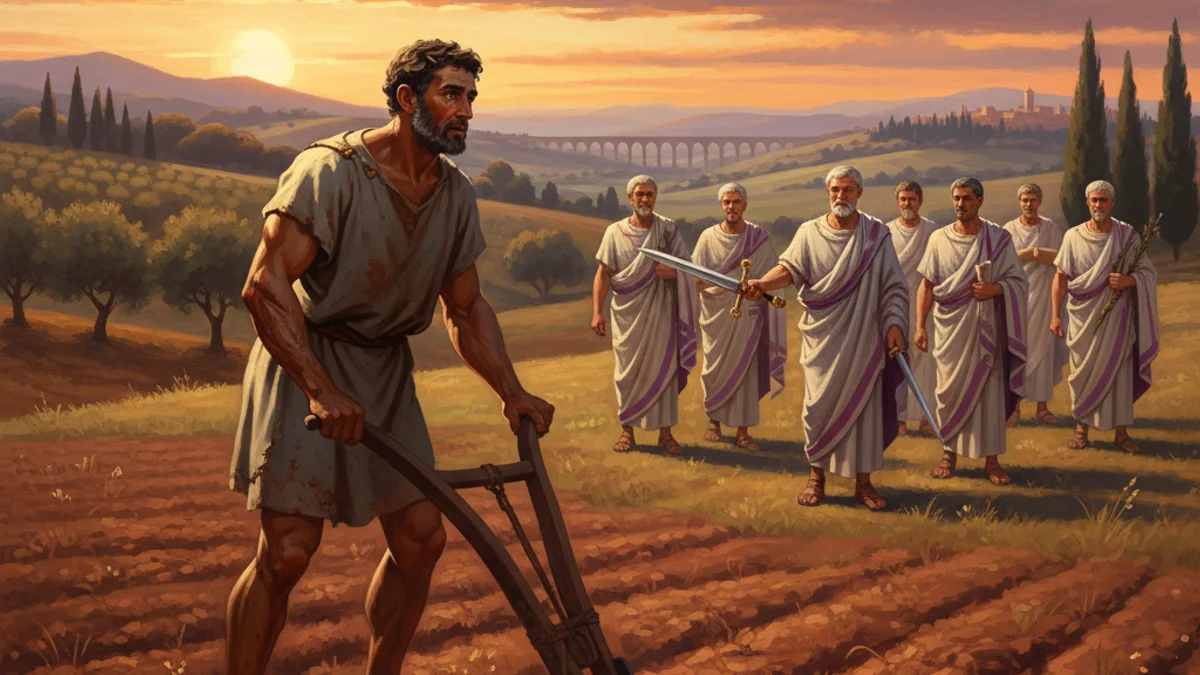
In 458 BCE, the Roman Republic faced an existential threat as the Aequi tribe surrounded a Roman army in the Alban Hills. With the city in a panic, the Senate turned to the only man they believed could save them: Lucius Quinctius Cincinnatus. A former consul who had retired to a small four-acre farm, Cincinnatus was found by the Senate's messengers while he was mid-toil, working his fields with a plow. Upon hearing that he had been named Dictator with absolute power, he wiped the sweat from his brow, called for his toga, and left his farm behind. In just fifteen days, Cincinnatus raised an army, marched to the mountains, defeated the Aequi, and secured a peace treaty. Despite having the legal right to rule Rome for six months, he resigned his dictatorship immediately after his victory. Only sixteen days after leaving his fields, Cincinnatus returned to his plow, choosing the life of a humble citizen over the allure of absolute power.
True greatness lies in fulfilling one's duty to the community without seeking personal power or permanent status.
Questions about this story
What is the moral of Cincinnatus Called from the Plow?
The moral is that civic virtue and duty to one's country are more important than personal ambition or the pursuit of power. It highlights the ideal of the 'citizen-soldier' who serves when needed and returns to private life once the crisis is resolved.
Who was Cincinnatus in Roman history?
Lucius Quinctius Cincinnatus was a Roman statesman and military leader who served as consul and later as dictator. He became a legendary figure of the early Republic, epitomizing the virtues of modesty, integrity, and extreme devotion to the state.
How long was Cincinnatus dictator?
Although he was granted the office of Dictator for a term of six months, Cincinnatus held the position for only sixteen days. He resigned as soon as he had defeated the Aequi and ensured the safety of Rome.
Why is Cincinnatus considered a hero?
He is considered a hero because he saved Rome during a military crisis and, more importantly, because he willingly gave up absolute power. His refusal to become a tyrant set a precedent for leadership in the Roman Republic.
Advertisement



Good night.
