
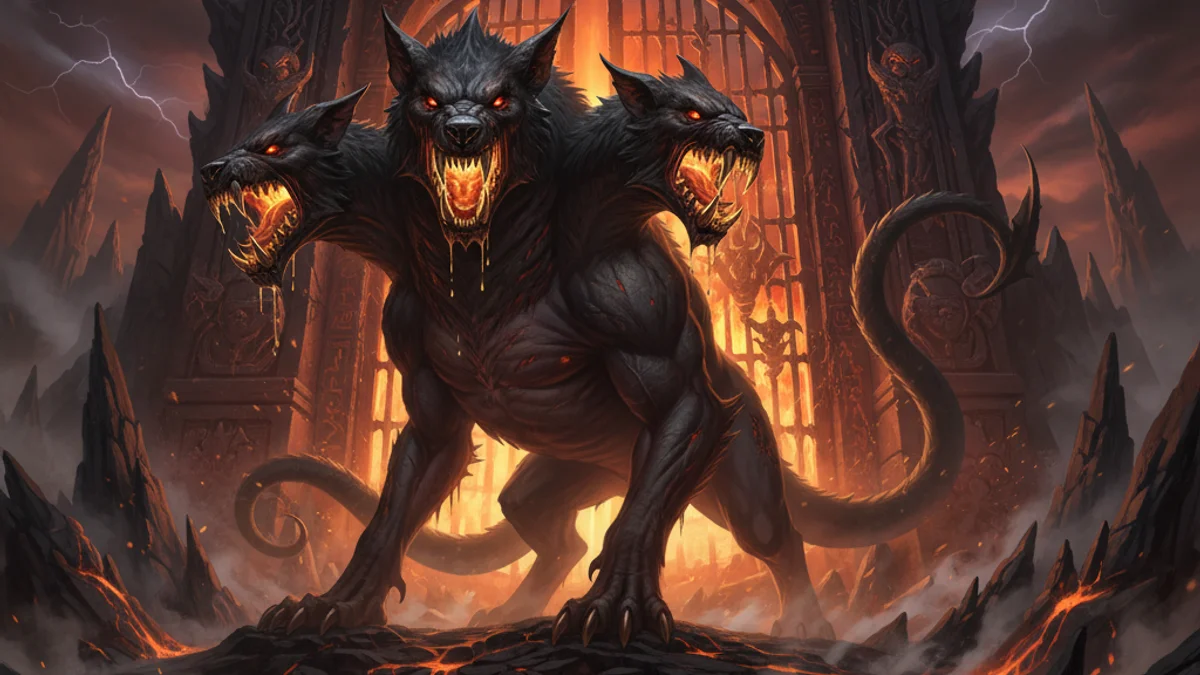
At the threshold of the Underworld, where the Styx flows into the darkness, stands Cerberus the Guardian. A monstrous three-headed hound with a serpent for a tail and a mane of snakes, he was the loyal servant of Hades. His duty was absolute: to allow the dead to enter but never to leave, and to devour any living soul who dared trespass. For eons, his three pairs of eyes remained vigilant, scanning the gloom. Yet, even the fiercest guardian faced challenges. The musician Orpheus lulled him to sleep with a celestial melody, proving that art can soften even the hardest heart. Later, the hero Heracles wrestled the beast into submission using only his bare hands as his final labor, showing that courage can conquer the most terrifying of obstacles. Despite these rare bypasses, Cerberus remains the eternal symbol of the boundary between life and death, a tireless sentinel whose bark echoes through the halls of eternity.
True vigilance requires more than just strength; even the strongest defenses can be overcome by creativity, music, or unmatched perseverance.
Questions about this story
What is the moral of Cerberus the Guardian?
The story teaches that while duty and strength are vital, they are not invincible. It suggests that different challenges require different solutions, whether it be the beauty of music or the power of physical resolve.
Who were the parents of Cerberus?
In Greek mythology, Cerberus was the offspring of the monsters Typhon and Echidna. This lineage made him a brother to other famous creatures like the Hydra and the Chimera.
How did Heracles capture Cerberus?
Heracles descended into the Underworld and asked Hades for permission to take the hound. Hades agreed on the condition that Heracles could overpower the beast using no weapons, which the hero achieved through raw strength.
What does Cerberus symbolize in mythology?
Cerberus represents the finality of death and the strict boundary between the mortal world and the afterlife. His three heads are often said to represent the past, present, and future.
Advertisement
Teach next

Good night.
