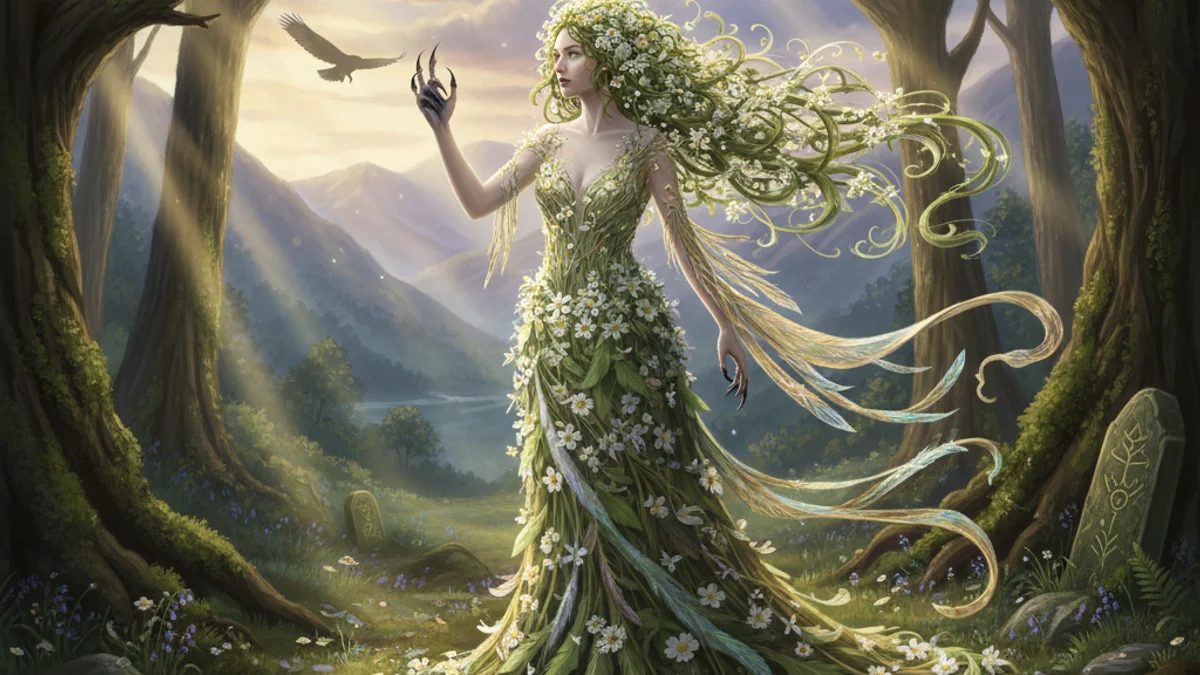
Lleu Llaw Gyffes suffered under a curse from his mother, Arianrhod: he could never wed a human wife. To circumvent this, the master magicians Math and Gwydion gathered the blossoms of oak, broom, and meadowsweet, breathing life into a woman of peerless beauty whom they named Blodeuwedd. Though she married Lleu, her heart was not bound by their enchantments. While Lleu was away, she fell passionately in love with a hunter named Gronw Pebyr. Together, they plotted to slay Lleu, tricking him into revealing the only complex, ritualistic way he could be killed. When Gronw struck, Lleu did not die but transformed into an eagle and flew away. Gwydion eventually found the wounded bird and restored Lleu to human form. For her treachery, Gwydion refused to kill Blodeuwedd; instead, he transformed her into an owl, destined to hide from the sun and be shunned by all other birds forever.
True nature and free will cannot be manufactured or suppressed without consequences, and betrayal eventually leads to a loss of one's identity.
Questions about this story
What is the moral of Blodeuwedd the Flower Woman?
The story suggests that you cannot force someone to love or be something they are not, as Blodeuwedd's manufactured existence led to inevitable rebellion. It also serves as a cautionary tale about the permanence of consequences following a betrayal.
Who created Blodeuwedd and why?
Blodeuwedd was created by the magicians Math and Gwydion. They used magic to fashion her from flowers so that Lleu Llaw Gyffes could have a wife, bypassing a curse that prevented him from marrying a human woman.
What flowers was Blodeuwedd made from?
She was created from the blossoms of the oak, the broom, and the meadowsweet. These specific plants are deeply rooted in Welsh folklore and provide the origin for her name, which means 'Flower Face'.
How was Blodeuwedd punished for her betrayal?
Gwydion transformed her into an owl. This punishment meant she could never show her face in the daylight and would be forever attacked and shunned by all other birds.
Advertisement
Good night.
