
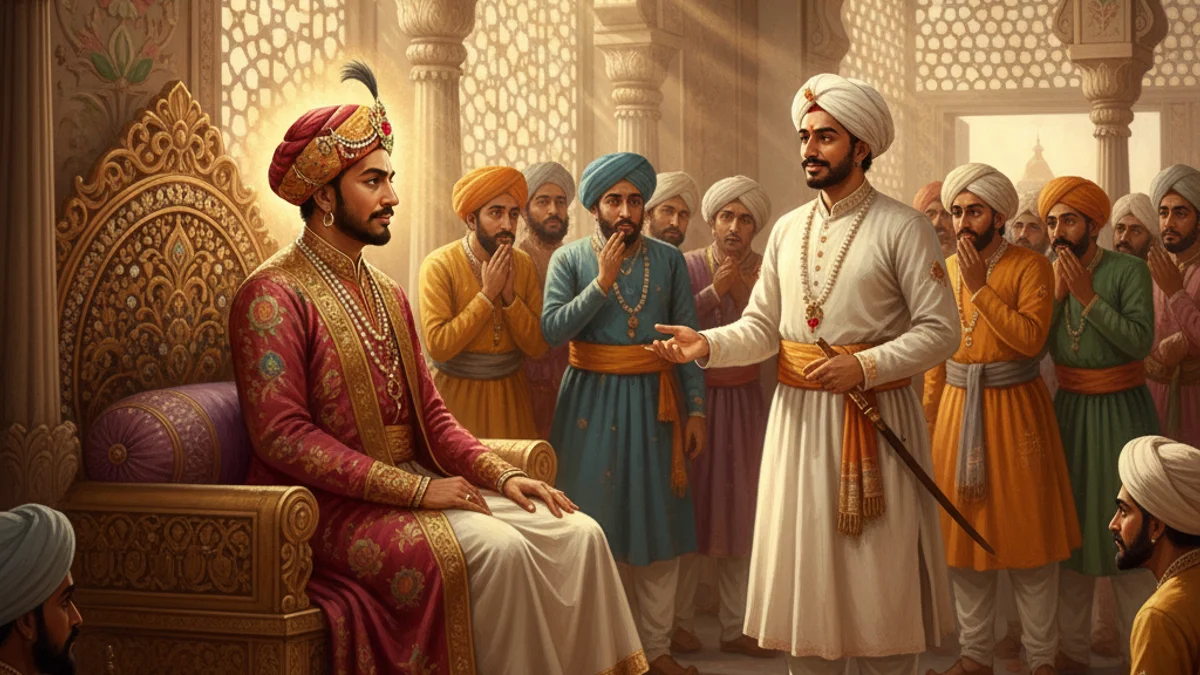
One day, Emperor Akbar entered his court with a furrowed brow and posed a startling question to his ministers: 'If someone were to pull a hair from my mustache, what punishment should they receive?' The courtiers, eager to show their loyalty, vied to suggest the most brutal penalties. Some shouted for public flogging, others demanded life imprisonment, and the most extreme suggested the culprit be beheaded immediately. Amidst the clamor, Birbal remained silent and composed. When Akbar turned to him for an answer, Birbal calmly replied, 'Your Majesty, I believe you should give that person some delicious sweets.' The court fell into a shocked silence, and Akbar demanded an explanation for such an absurd suggestion. Birbal smiled and said, 'Who else but your own beloved grandson would have the courage to touch your mustache? Such a gesture from a child should be met with grandfatherly love, not the wrath of an Emperor.' Akbar burst into laughter, delighted by Birbal’s profound insight and wisdom.
True wisdom lies in understanding the context and the relationship behind an action before passing judgment.
Questions about this story
What is the moral of Birbal's Sweet Reply?
The story teaches us that context is everything. Before reacting with anger or judgment, one must consider who committed the act and their underlying intentions.
Why did Birbal suggest giving sweets as a punishment?
Birbal realized that no commoner would dare touch the Emperor's mustache. He deduced that only a grandchild playing with their grandfather would do such a thing, making sweets the only appropriate response.
What did the other courtiers suggest to Akbar?
The other courtiers suggested harsh and violent punishments, including public flogging, imprisonment, and even execution, to prove their loyalty to the Emperor.
How did Akbar react to Birbal's explanation?
Akbar was highly impressed and laughed heartily. He appreciated Birbal's ability to see the human side of the situation rather than just the literal offense.
Advertisement
Good night.
