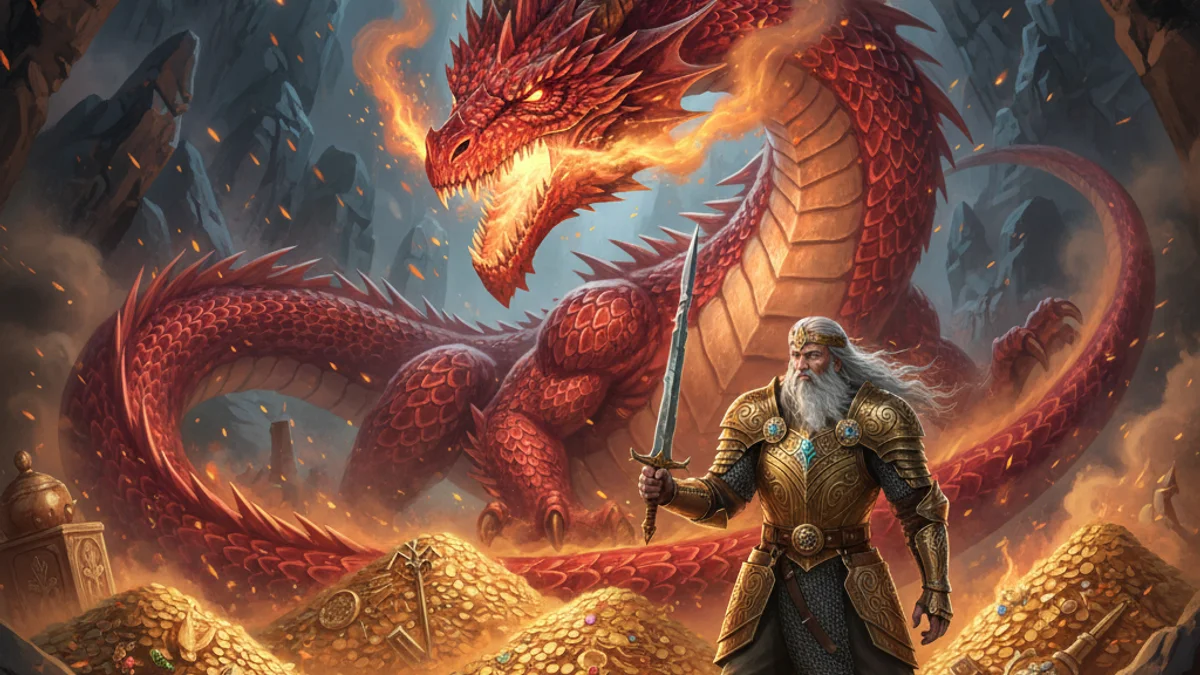
After fifty years of peaceful rule over the Geats, King Beowulf's reign was threatened when a thief stole a gem-studded goblet from a hidden dragon's hoard. Consumed by rage, the dragon emerged from its barrow, breathing fire that reduced the countryside and the king’s great hall to ash. Though aged, Beowulf refused to let his people suffer. He donned his heavy armor and commanded a specialized iron shield to withstand the heat. Alongside eleven of his warriors, he sought the dragon's lair. As the battle commenced, the dragon's flames were too fierce, and Beowulf's sword, Naegling, snapped against the beast's impenetrable scales. Terrified, his men fled, save for the loyal young Wiglaf. Together, the old king and the young warrior struck the fatal blow, but the dragon’s venomous bite proved mortal. Beowulf died knowing his people were safe, his legacy sealed in gold and blood.
True heroism is defined by a commitment to duty and the courage to face inevitable death for the sake of one's community.
Questions about this story
What is the moral of Beowulf and the Dragon?
The story teaches that true greatness lies in selfless sacrifice. Even in old age, Beowulf chooses to face certain death to protect his kingdom, proving that duty outweighs personal safety.
How did Beowulf die?
Beowulf was killed by a venomous bite to the neck delivered by the dragon. Although he lived long enough to see the dragon defeated, the poison was too potent for him to survive.
Who helped Beowulf fight the dragon?
Out of Beowulf's twelve companions, only the young warrior Wiglaf remained to fight. The others fled in fear, highlighting Wiglaf's exceptional loyalty and future potential as a leader.
Why did the dragon attack Beowulf's kingdom?
The dragon awoke in a fury after a thief entered its barrow and stole a single golden cup from its massive hoard. It sought revenge by burning everything in its path.
Advertisement

Good night.
