
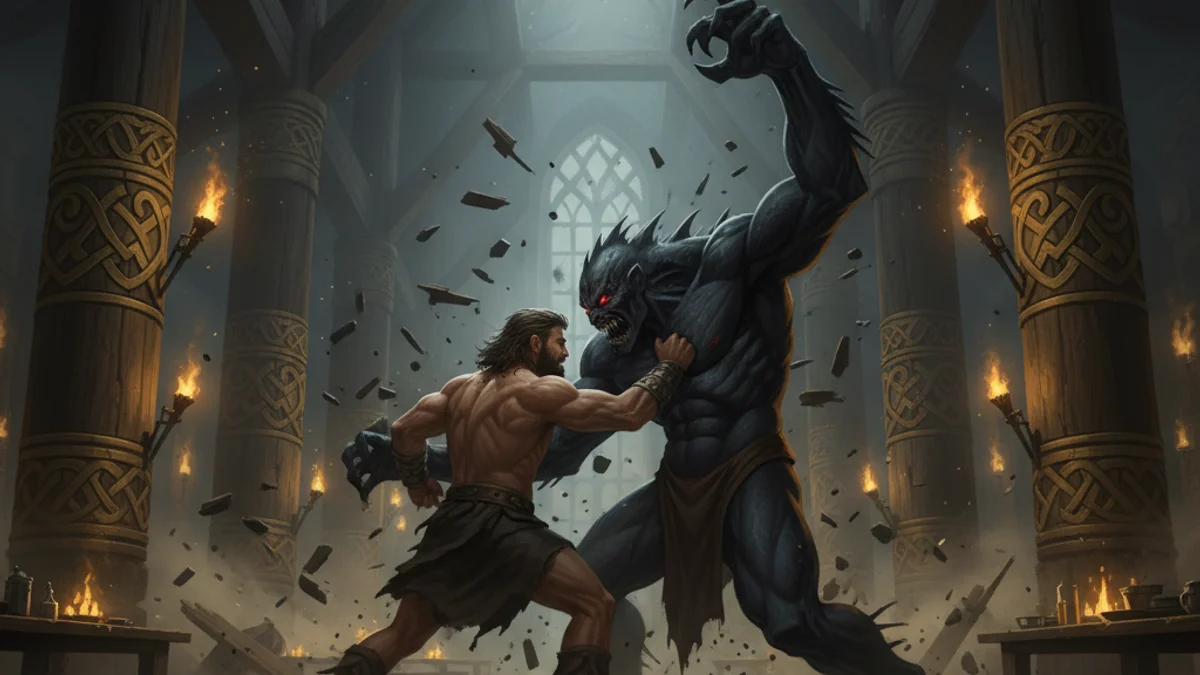
In the kingdom of the Danes, King Hrothgar built a magnificent mead hall called Heorot, a place of joy and song. But the clamor of celebration tormented Grendel, a monstrous descendant of Cain who dwelled in the nearby marshes. For twelve years, Grendel haunted the hall, snatching and devouring warriors under the cover of night. Hearing of Hrothgar’s plight, the Geatish hero Beowulf sailed across the sea with fourteen brave men. He vowed to purge the evil without the use of a sword, matching the monster's brute strength with his own. That night, as the warriors slept, Grendel burst through the iron-bound doors. Beowulf met him in a titanic struggle, his grip like iron. The hall shook as the hero tore the monster’s arm from its shoulder. Mortally wounded, Grendel fled into the darkness to die, leaving his severed limb as a trophy of Beowulf’s legendary victory.
True heroism is defined by the courage to face darkness and the selfless will to protect others from injustice.
Questions about this story
What is the moral of Beowulf and Grendel?
The story teaches that bravery and selfless service are the hallmarks of a true hero. It emphasizes that good can triumph over chaotic evil through strength, discipline, and determination.
Why did Grendel attack Heorot?
Grendel was a creature of darkness and social exclusion who was pained by the joyful music and celebration of the Danes. His attacks were driven by envy and a deep-seated hatred for the light and community found in King Hrothgar's hall.
How did Beowulf defeat Grendel?
Beowulf chose to fight Grendel with his bare hands to ensure a fair fight and prove his worth. During their struggle, Beowulf's immense strength allowed him to rip Grendel's arm from his socket, causing a fatal wound.
Who is Grendel's mother in the story?
After Grendel's death, his mother attacks Heorot seeking revenge for her son. Beowulf must then journey to her treacherous underwater lair to defeat her in an even more dangerous encounter.
Advertisement

Good night.
