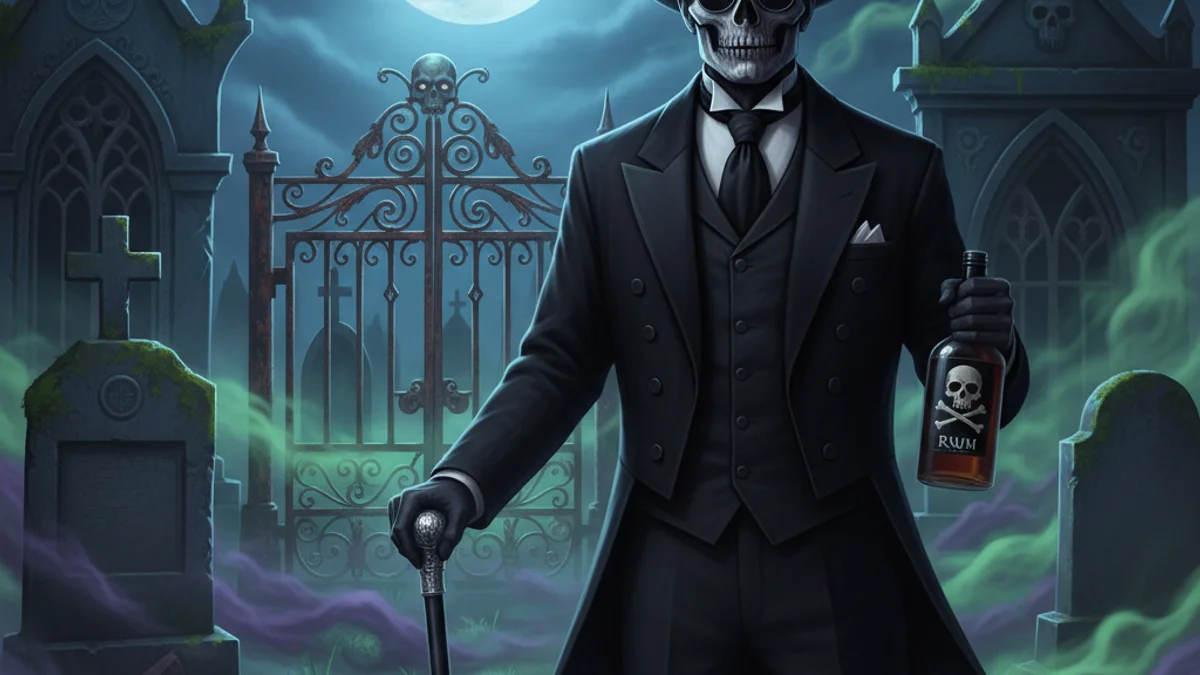
In the vibrant, shadowed heart of Haitian Voodoo, Baron Samedi stands as the ultimate guardian of the crossroads. Dressed in his signature black tailcoat, tall top hat, and dark glasses, with cotton stuffed into his nostrils as if prepared for his own burial, he is the master of the cemetery. While many fear the grave, the Baron treats it with a mix of solemnity and raucous humor. He spends his time drinking rum infused with twenty-one hot peppers and smoking cigars, waiting for those whose time has come. He is the head of the Guédé family, the spirits of the dead, and no soul can cross into the underworld without his permission. He is a judge who cannot be bribed, yet he is also a protector. If a person’s time has not truly come, the Baron refuses to dig the grave, sending the soul back to the land of the living to finish their work. He reminds us that while death is certain, the transition is a sacred dance that honors the life lived.
Death is the ultimate equalizer that ignores status or wealth, urging us to respect the cycle of life and live with purpose.
Questions about this story
What is the moral of Baron Samedi?
The moral is that death is an inevitable part of the human experience that should be met with respect rather than fear. It teaches that life is precious and should be celebrated while we have it.
Who is Baron Samedi in Haitian Voodoo?
He is one of the Loa, specifically the spirit of death and the head of the Guédé family. He guards the cemeteries and decides who passes into the afterlife.
What are Baron Samedi's common symbols?
He is typically represented by a top hat, a black frock coat, dark glasses, cigars, and rum infused with hot peppers. His face is often depicted as a skull.
Is Baron Samedi considered evil?
No, he is not evil; he is a wise, if crude, judge. He ensures that the dead stay dead and protects the living from malevolent spirits.
Advertisement


Good night.
